A McCombs Ph.D. Rises to the Top
Patrick Hopkins marks first anniversary as business dean at Indiana University
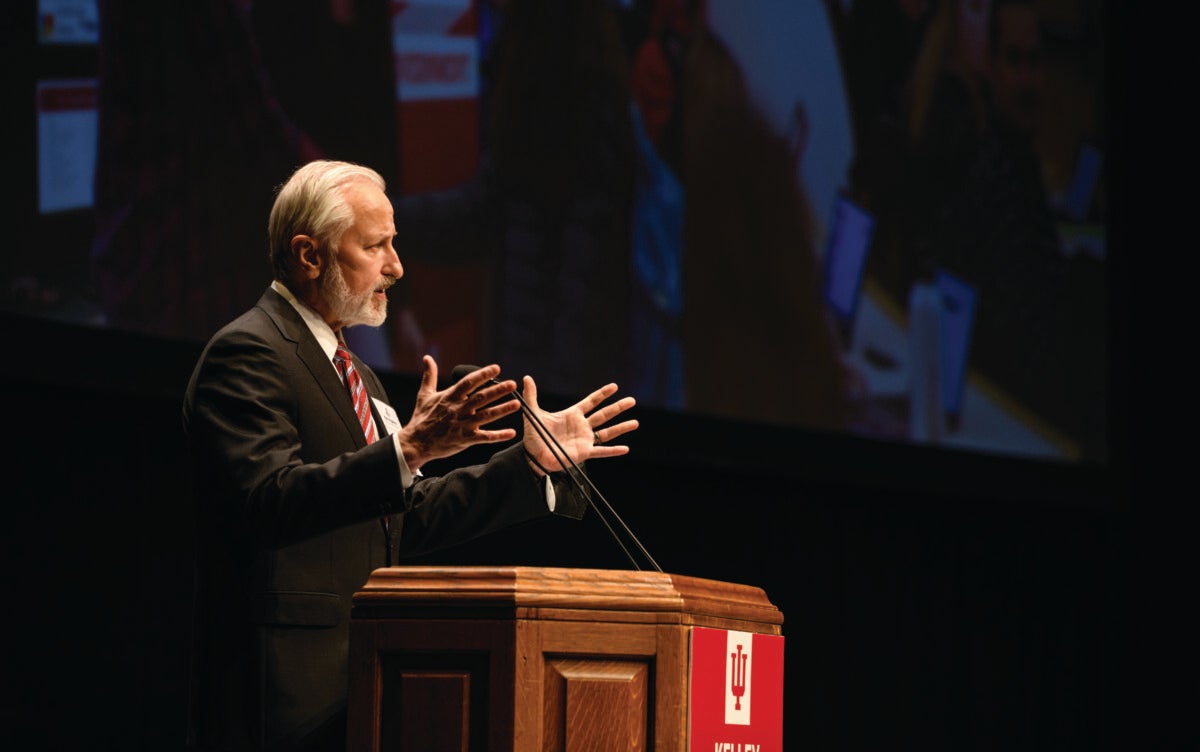
dean as a way of giving back to the institution that’s been home for nearly 31 years.
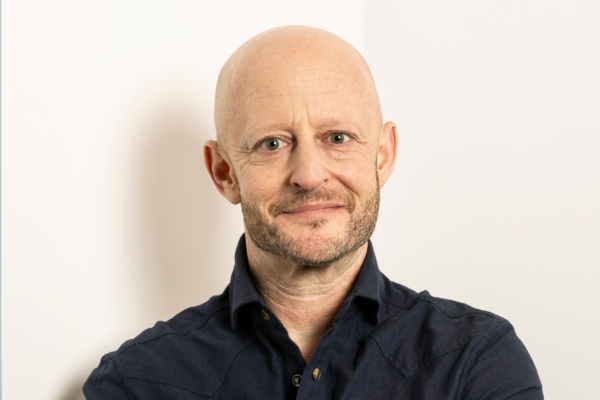
Patrick Hopkins, Ph.D. ’95, became a self-professed “reluctant administrator” after nearly 20 years as an accounting professor.
The dean of Indiana University’s Kelley School of Business recently marked his one-year anniversary at the school’s helm. Reflecting on his career, he relishes his role in providing authentic mentorship and guidance to students, helping them embrace hard work, higher-level concepts, and a true pursuit of knowledge, he says.
“I got into this business because of my belief in education and in the students,” Hopkins says. “It was the mentorship that drew me in.”
He joined the business school as a faculty member just after earning his Ph.D. at UT. At McCombs, professor Bill Kinney taught him precision in research design, professor Lisa Koonce instilled a relentless work ethic, and professor Eric Hirst encouraged creativity and bold ideas — a trio of complementary mentors he credits for his research success.
At Indiana University, he was perfectly content teaching financial and other accounting courses. “I never considered leadership,” Hopkins says. “I just thought I’d be a research-active professor and retire in the classroom.”
When the business school’s associate dean asked Hopkins to take over as graduate accounting program chair, he almost laughed. Hopkins replied he wasn’t qualified for the job, though the associate dean disagreed. Hopkins took the role, which involved oversight of about 180 graduate students.
I feel like I hit the lotto
Patrick Hopkins, Ph.D. ’95
Several years later, he was asked to lead the 10,000-student undergraduate program. Again, Hopkins responded that he wasn’t qualified but ended up accepting the position after a few months of persuading. Then came the call to fill the role of associate dean. “At each turn, as I was asked to take on an administration role, I’d avoid it,” he says. “This time, I said ‘There’s nothing about me that’s dean-y.’”
His supervisors, however, saw his leadership potential. He had an excellent understanding of the school; he wasn’t afraid to make and learn from mistakes; he had earned the respect of his colleagues; and he had nurtured strong relationships with alumni and donors. “People I trusted just built a case,” he says. He sees his role as dean as a way of giving back to the institution that’s been home for nearly 31 years.
And, like other leaders in academia, Hopkins is now wrestling with the role of generative artificial intelligence in education.
“Having those skills and competencies is going to be really important, and we want our students to be effective, efficient, responsible, and ethical users of these technologies,” he says. “They’re integrated throughout the entire curriculum.”
Still, universities and professors can’t cede everything to AI, he adds. “We have to keep the human in the loop and retain that key judgment.” Striking this balance will require faculty members to stay nimble. And students will need to hone critical thinking skills, teamwork, and emotional intelligence.
Hopkins says corporations will need to invest in early-career professionals to stay competitive. “You have to have some sort of organizational and institutional memory that allows people to move forward,” he says. “I’m optimistic about where we go with the technology.”
Another major focus for Hopkins is ensuring Kelley’s financial stability and fundraising success, especially amid rising costs and constrained revenue in today’s higher education environment. Despite the massive challenge, he says he is right where he wants to be. “I feel like I hit the lotto,” he says. “I’m extremely fortunate that the Kelley School of Business found me and that this profession found me.”
About this Post
Share: