McCombs Helps Expand Austin Sunshine Camps
School’s Golub Capital Nonprofit Board Fellows are helping more local children create summer memories
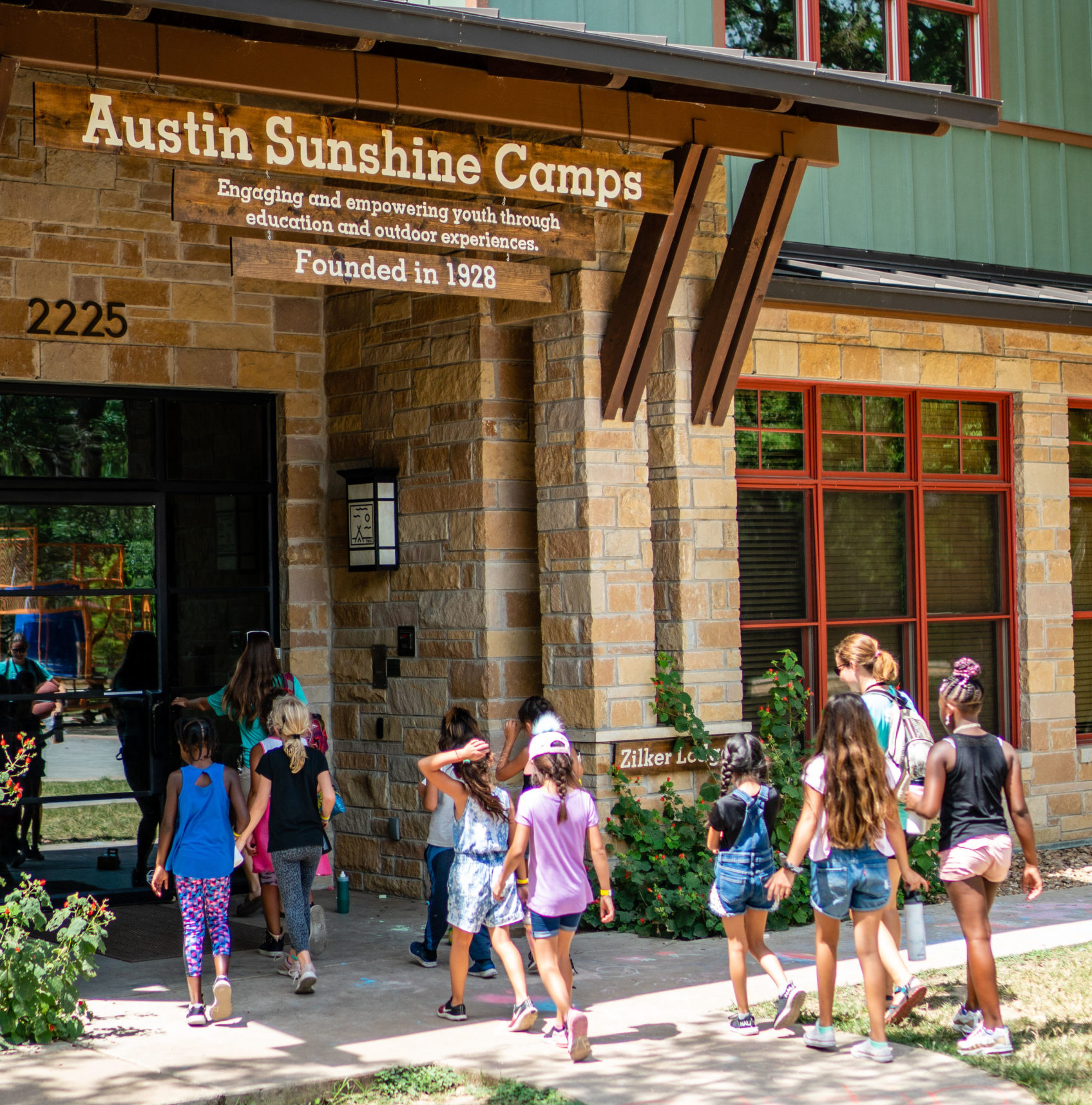
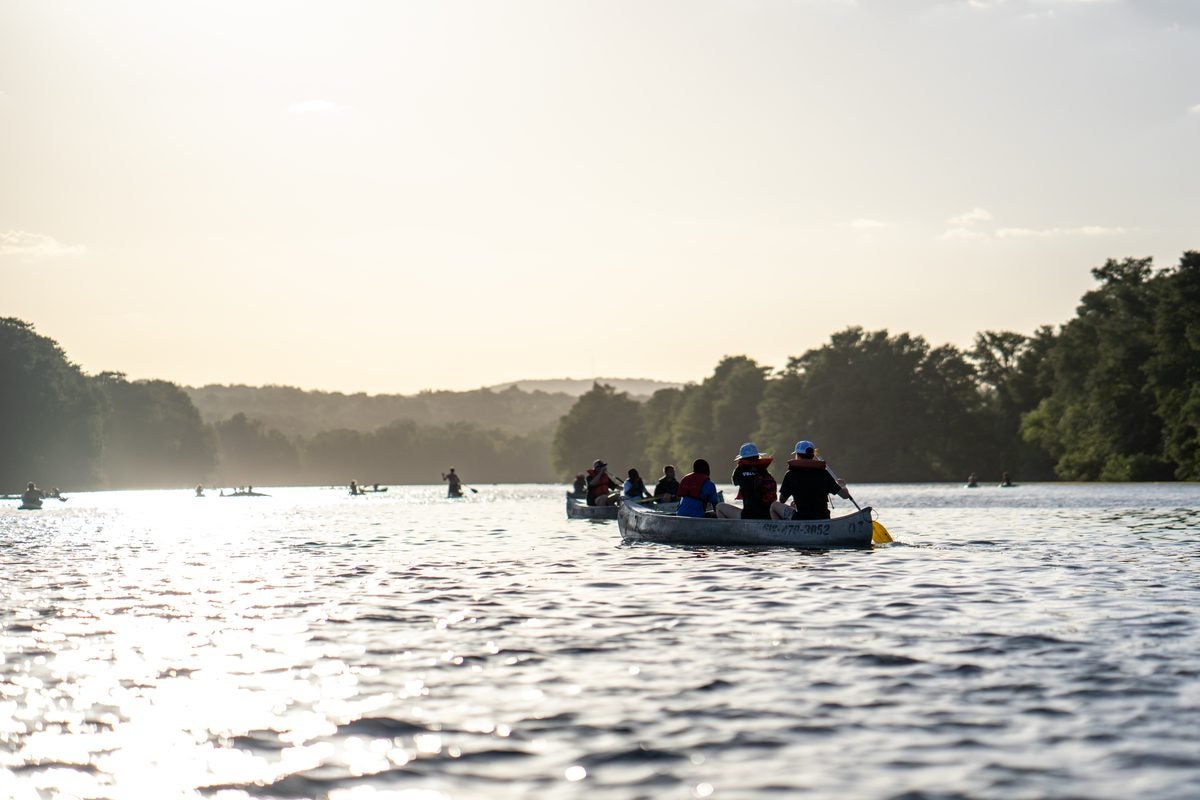
Each summer, more than 500 children from low-income families and foster care spend a week swimming, canoeing, hiking, and making arts and crafts at Austin Sunshine Camps. The nonprofit offers free overnight camp to children ages 8 to 15, with the goal of providing a safe place to build confidence, friendships, and a sense of belonging.
The organization’s leaders have been laying the groundwork for expansion during the past several years, hoping to reach more of the roughly 40,000 eligible youths in Central Texas. “We want to grow. We want to serve more campers,” says David Roberts, chief development officer of Austin Sunshine Camps.
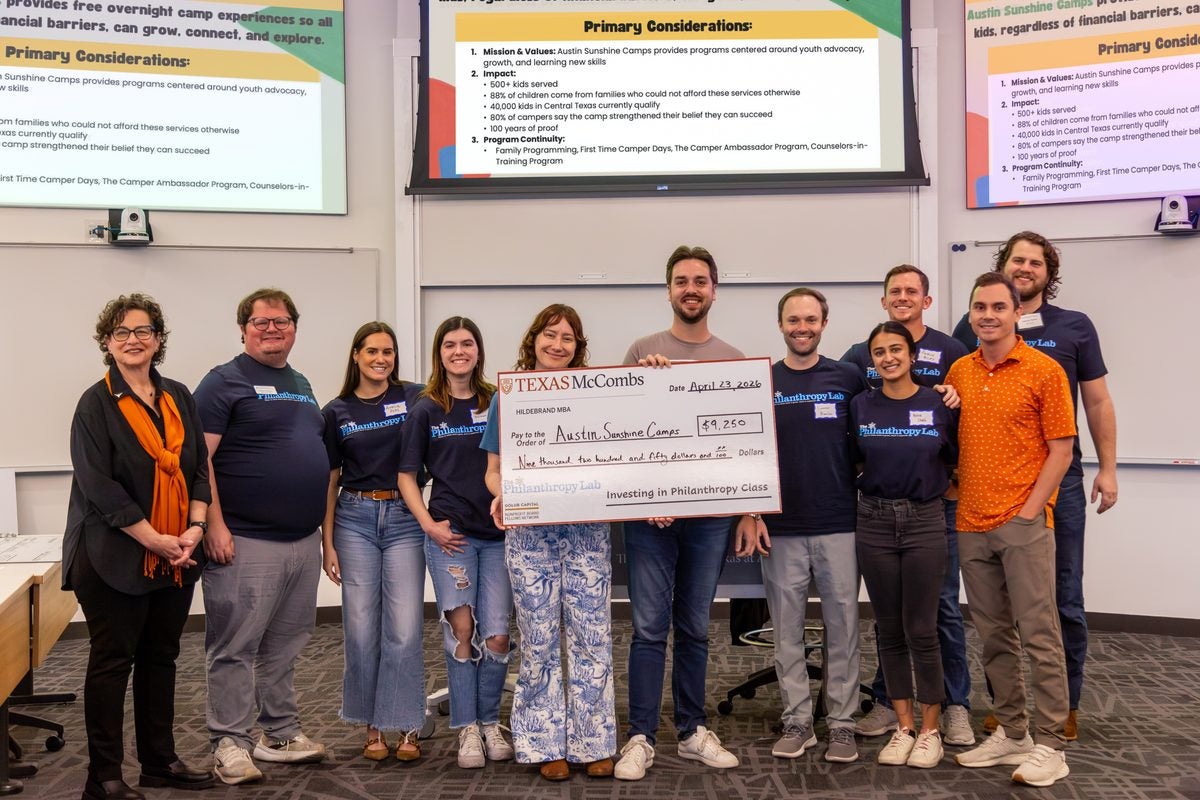
Helping turn that ambition into action, Hildebrand MBA students at The University of Texas at Austin’s McCombs School of Business have connected with the camps through the school’s Golub Capital Nonprofit Board Fellows Program. The recently expanded program places select MBA students on local nonprofit boards as nonvoting members to complete strategic projects during the academic year.
A Legacy To Build On
Austin Sunshine Camps was founded in 1928 by volunteers from the Young Men’s Business League of Austin, originally providing camp to children from impoverished families at a time when tuberculosis was widespread and physicians commonly prescribed fresh air, rest, and sunlight as part of treatment.
Today, the organization still serves children facing economic hardship, but the outdoor experiences are designed less as a medical remedy than as a way to promote confidence and social development. It operates two campsites with a $2 million annual budget and a year-round staff of 12. During the summer, that staff is supplemented by seasonal employees and more than 500 volunteers.
Year-round programming helps first-time campers get acclimated ahead of summer. Children and their parents visit the campsite to meet the staff and learn about programs and policies — an effort, leaders say, that has reduced no-show rates, improved retention, and decreased early departures.
Funding comes from individual donors, grants, and corporate sponsorships, as well as rentals at the organization’s 21,000-square-foot lodge in Zilker Park. The venue hosts weddings and corporate events when camp is not in session, introducing new supporters to the group’s mission.
A Path to Expansion
Austin Sunshine Camps had long hoped to expand, but it lacked the time and bandwidth to map out how. When board President Patrick Olson became assistant director of full-time MBA admissions at McCombs in 2021, he saw an opportunity to connect the nonprofit’s goals with the business school’s talent.
In 2023, two board fellows from McCombs joined the board of Austin Sunshine Camps, where they served on the Expansion Committee to analyze paths for growth. “In the nonprofit world, you’re so focused on surviving, serving as many people as possible, and maintaining the quality of services, you don’t always have the luxury of being able to step back and innovate,” Roberts says.
As a board member, he says that the idea of tackling an expansion project while also trying to pass a budget and focus on strategy felt “impossibly large.” Nonprofit Board Fellow Mary Kate Mandel, MBA ’24, and another fellow evaluated options ranging from partnering with another camp to building a new site. They also worked with the Texas Real Estate Center at McCombs to develop cost projections.
Their final report outlined projected capacity, facility needs, and long-term operating costs, providing what Roberts described as both a framework and a playbook for growth. The analysis proved critical when a family offered to donate land. Using the fellows’ projections, the organization was able to demonstrate the site’s viability. “If we had to start from scratch when that opportunity fell in our laps, we probably would have just been guessing,” Roberts says.
Since then, Austin Sunshine Camps has continued to move forward with its expansion plans. “Throughout the entire process, we’ve been referencing the work of the board fellows and that Expansion Committee every step of the way,” Roberts says.
Now a consultant with Boston Consulting Group, Mandel says the fellowship strengthened her ability to synthesize complex discussions and translate them into strategy. The experience changed her perception of nonprofit board service, making it feel accessible earlier in her career, she says.
“Before I joined the Nonprofit Board Fellows program, I had the impression that you had to be at a certain tenure in your career to serve on a nonprofit board,” Mandel says. “But I realized there’s no reason to wait until I’ve checked a bunch of boxes to be part of a nonprofit board. That was encouraging to realize as I move forward in my career.”
Expanding Volunteer Capacity
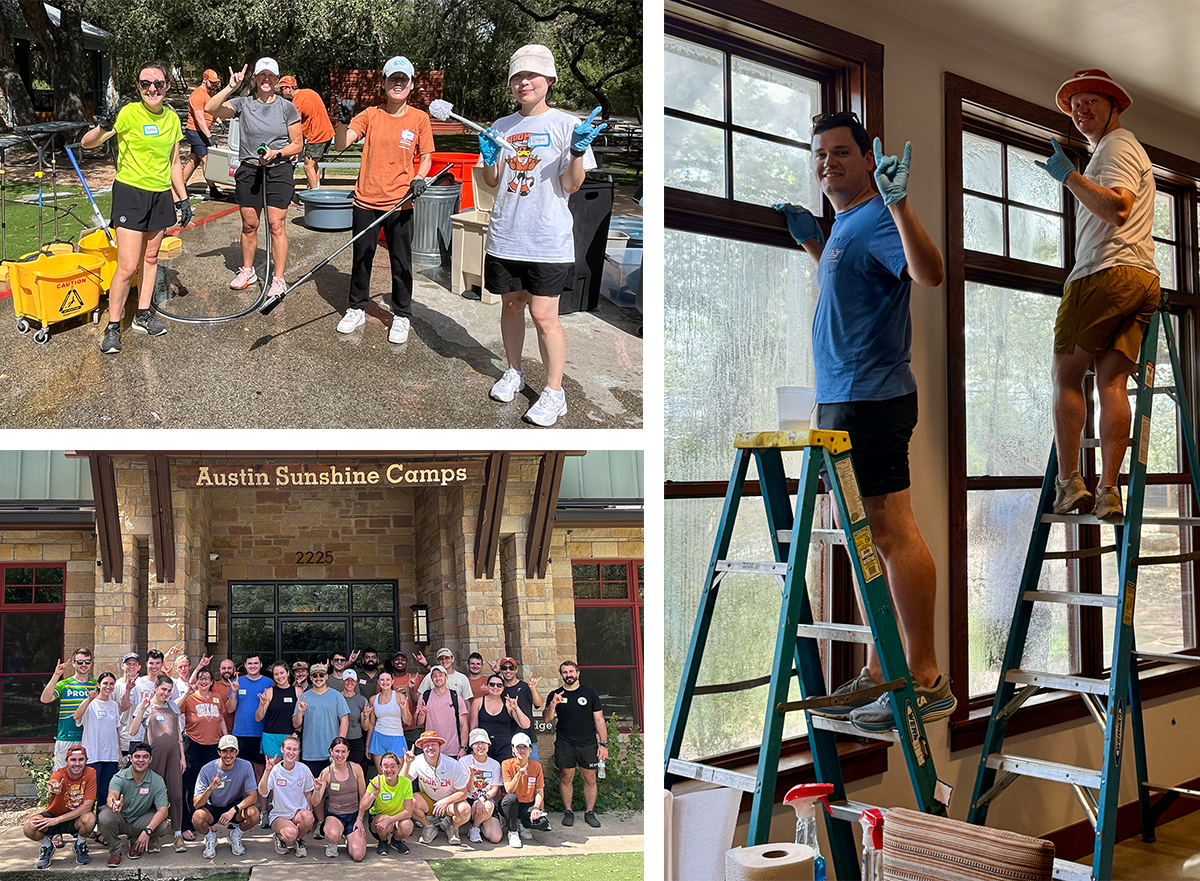
Austin Sunshine Camps relies heavily on volunteers to operate its programs, making recruitment essential. Nonprofit Board Fellow Michael Madigan, MBA ’25, and a partner created a universal playbook to help replicate the successful student volunteer pipeline program at UT at other local colleges and universities.
“The primary goal is to get students to be trained as volunteer camp counselors,” Madigan says. “It’s also getting the word out about Austin Sunshine Camps to build a community of individuals who support the nonprofit; some might donate funds if they can’t volunteer.”
Beyond the volunteer initiative, the fellowship offered Madigan a valuable education in nonprofit leadership. He says that attending board meetings gave him a window into behind-the-scenes conversations about long-term growth. “It was always interesting to see the dynamics there and how a nonprofit leader can do so much with limited resources,” he says.
Now head of operations at Teero, a dental software startup, Madigan says he often thinks about observations he made as a Nonprofit Board Fellow. “I witnessed many different dynamics on the board and how to navigate tricky situations, and I apply that in my job today.” He also applies a broader lesson. “It’s a mindset: You can do more than you think with the limited resources you have,” Madigan says.
Building Alumni Relations
In 2025, Olivia Schrantz, MBA ’26, and another board fellow helped develop a strategy to engage the organization’s thousands of alumni. Because most campers are minors, staying in touch has been difficult, Olson says.
The fellows analyzed ways to build an alumni community and connect former campers with current ones. They also researched how to create mentorship opportunities and tap alumni for fundraising and support.
Among their recommendations was a proposal to involve campers while they’re at camp, rather than trying to track them down later. Schrantz says very little data had been collected about campers, so the fellows suggested integrating alumni data with their current system.
They recommended adding alumni groups to the nonprofit’s social media presence. The pair also pitched an idea to create a post-camp program that would offer resources to recent alumni for navigating the path to college or the workforce.
Olson says all the fellows’ work will have a lasting impact on the nonprofit. “Everything has been about scalability and sustainability –– how do we serve more campers?” Olson says. “All three projects have been focused on helping us grow in a way that’s flexible for whatever opportunities arise in the future.”
Story by Laura Gatland
About this Post
Share: