The Teacher
Preparing Accountants for an Uncertain Future
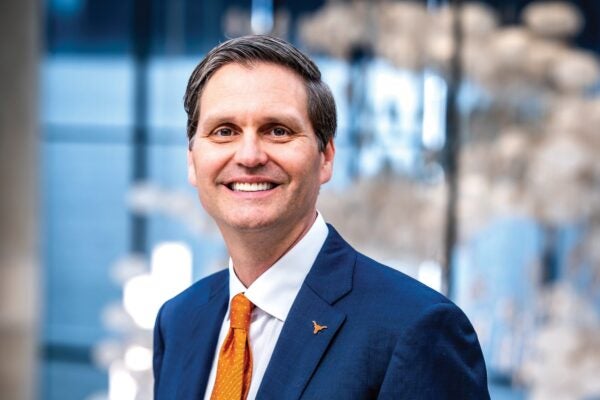
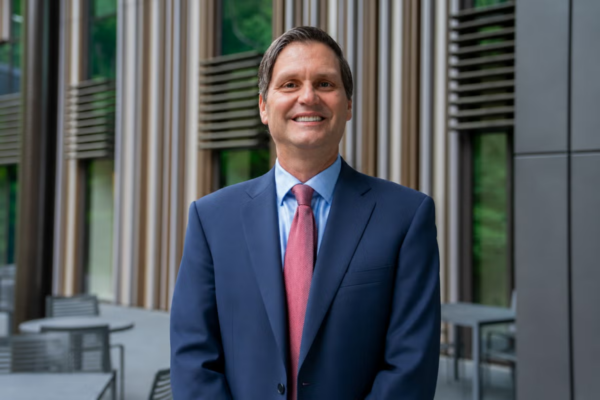
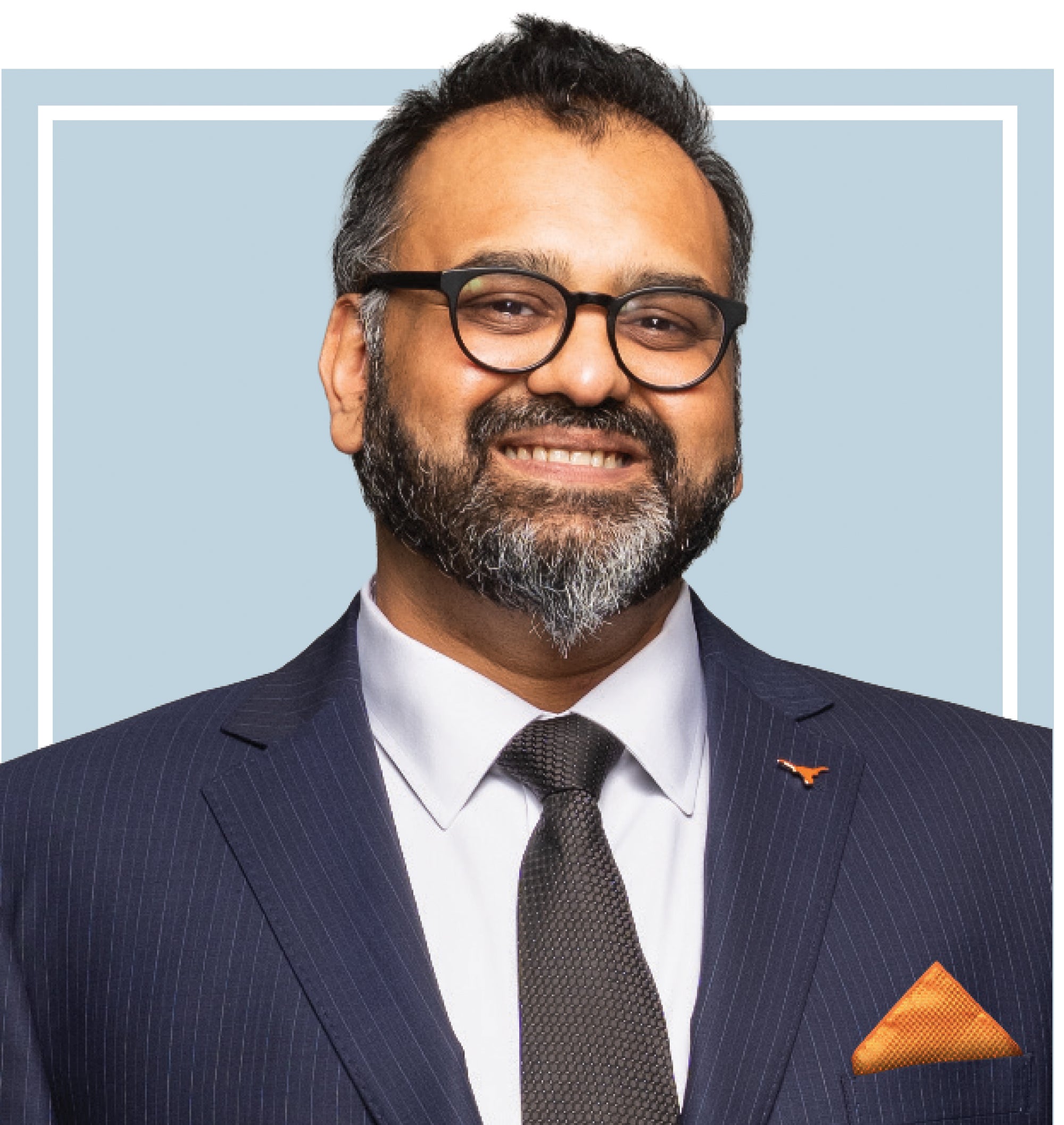
Saad Siddiqui, Clinical Assistant Professor
When Saad Siddiqui begins the first session of the McCombs course Fundamentals of Managerial Accounting, he poses a question to his students: “If you were to open up a business, hypothetically, what would that business be?”
This year, common answers were coffee shop, Etsy shop, and social media influencer. As the year goes along, Siddiqui, a clinical assistant professor of accounting since 2023, works their business ideas into his classroom examples.
He’ll ask an aspiring influencer to balance the production cost of a quality online video versus the income. If a sponsor offers $1,000, and the work takes 50 hours, what’s the rate per hour? Is it worth it? What other metrics should they consider?
That’s one way he brings accounting to life for students who might not fully appreciate its usefulness. Siddiqui’s goal is to prepare them not just for accounting jobs, but for a profession that is constantly changing.
“If I make accounting relevant for them, then their interest in it automatically accrues,”
Siddiqui says.
For those who aren’t accounting majors, he points out that anything they do in business will require some knowledge of the subject. “Hopefully, you’re going to get to a managerial level fairly soon,” he says. “Once you have some budgets and department-level responsibilities, you’re going to have to engage with accounting to be successful.”
Siddiqui’s perspective goes back to his first accounting job, when his clients included mom-and-pop restaurant franchisees. Ninety percent of restaurants fail within three years, he notes — sometimes because they let accounting slip.
“I once called up a client and said, ‘Hey, you have a sales tax bill that’s due,’” he recalls. “They completely lost it, because they hadn’t prepared. They didn’t realize that all the sales tax that they were collecting needed to be paid back.”
Accounting for Technology
Perhaps the most important way in which the profession is changing is that it’s gone high tech. Information technology has vastly expanded accountants’ power to analyze a company’s finances and gain insights from data.
Siddiqui’s introduction came a decade ago, when he was associate director of economic modeling for the Public Company Accounting Oversight Board, a quasi-public nonprofit that regulates auditors.
He addressed a problem with inspections of large accounting firms: Which audits should inspectors focus on, since they can’t cover them all? Teaching himself about machine learning, Siddiqui worked on a program that ingested vast amounts of financial data and identified companies that had the highest likelihood of irregularities.
He carries that practical attitude into another of his classes, Information Technology for Accounting and Control. His students learn programs such as Alteryx, a data analytics platform, and Power BI, for turning data into charts and other visualizations.
But the overall goal is less to learn specific programs than to use IT to solve problems. For Siddiqui, technology isn’t an end in itself. It’s a way to prepare students for a profession where the tools are constantly evolving.
“If they encounter a problem at work, they know that there is probably a tool that can fix it,” he says. “They may not know exactly how, but they should be confident in their ability to start the project.”
A guiding principle is the 20-hour rule. Although it might take thousands of hours to become expert with a tool, he says, a person can usually become competent in only 20 hours of focused study.
Siddiqui often teaches a new program by assigning a problem and then coaching students as they put in their 20 hours.
He incorporates technology, as well, into his own classroom presentations. He likes to show videos from the TV show “Shark Tank,” in which potential investors grill entrepreneurs about their financial projections.
He’s also experimenting with the AI app NotebookLM to create animations, such as moving numbers. “It’s another way to punch up my game,” he says.
Accounting for Change
In a business world of rapid change, a major teaching challenge is to prepare students for accounting jobs that don’t exist yet, besides traditional roles such as audits and taxes. These days, many of his graduates become financial analysts, part-time financial officers for startups, or entrepreneurs themselves.
Technologies evolve, too. Tools students learn today may be obsolete by the time they’re out working. Siddiqui’s solution is to teach them how to learn: to equip them with experience in mastering new tools.
One thing that doesn’t change, he stresses, is basic accounting know-how. “Technology can change completely in three years, but being a critical thinker is probably still going to be relevant,” he says.
That’s true even with the rise of artificial intelligence, he adds. AI may automate entry-level jobs, but it might make higher-level skills even more important, such as identifying relevant information, posing the right prompts, and reviewing the work it produces.
Beyond the skills and tools of accounting, Siddiqui’s goal as a teacher is to instill an attitude: Numbers don’t need to be scary.
“People carry around perceptions that accounting is not their thing or numbers are not their thing,” he says. “My biggest hope for my students, once they take my class at the introductory level, is that they never say that again.”
—Steve Brooks
Explore the stories



About this Post
Share: