To Make AI More Fair, Tame Complexity
Biases in AI models can be reduced by better reflecting the complexities of the real world
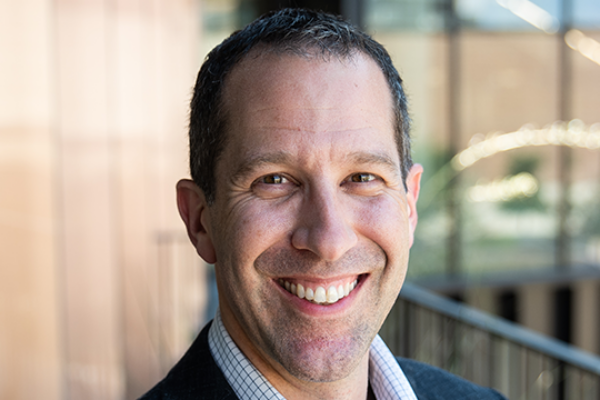
Based on the research of Hüseyin Tanriverdi

In April, OpenAI’s popular ChatGPT hit a milestone of a billion active weekly users, as artificial intelligence continued its explosion in popularity.
But with that popularity has come a dark side. Biases in AI’s models and algorithms can actively harm some of its users and promote social injustice. Documented biases have led to different medical treatments due to patients’ demographics and corporate hiring tools that discriminate against female and Black candidates.
New research from Texas McCombs suggests both a previously unexplored source of AI biases and some ways to correct for them: complexity.
“There’s a complex set of issues that the algorithm has to deal with, and it’s infeasible to deal with those issues well,” says Hüseyin Tanriverdi, associate professor of information, risk, and operations management. “Bias could be an artifact of that complexity rather than other explanations that people have offered.”
With John-Patrick Akinyemi, a McCombs Ph.D. candidate in IROM, Tanriverdi studied a set of 363 algorithms that researchers and journalists had identified as biased. The algorithms came from a repository called AI Algorithmic and Automation Incidents and Controversies.
The researchers compared each problematic algorithm with one that was similar in nature but had not been called out for bias. They examined not only the algorithms but also the organizations that created and used them.
Prior research has assumed that bias can be reduced by making algorithms more accurate. But that assumption, Tanriverdi found, did not tell the whole story. He found three additional factors, all related to a similar problem: not properly modeling for complexity.
Ground truth. Some algorithms are asked to make decisions when there’s no established ground truth: the reference against which the algorithm’s outcomes are evaluated. An algorithm might be asked to guess the age of a bone from an X-ray image, even though in medical practice, there’s no established way for doctors to do so.
In other cases, AI may mistakenly treat opinions as objective truths — for example, when social media users are evenly split on whether a post constitutes hate speech or protected free speech.
AI should only automate decisions for which ground truth is clear, Tanriverdi says. “If there is not a well-established ground truth, then the likelihood that bias will emerge significantly increases.”
Real-world complexity. AI models inevitably simplify the situations they describe. Problems can arise when they miss important components of reality.
Tanriverdi points to a case in which Arkansas replaced home visits by nurses with automated rulings on Medicaid benefits. It had the effect of cutting off disabled people from assistance with eating and showering.
“If a nurse goes and walks around to the house, they will be able to understand more about what kind of support this person needs,” he says. “But algorithms were using only a subset of those variables, because data was not available on everything.
“Because of omission of the relevant variables in the model, that model was no longer a good enough representation of reality.”
Stakeholder involvement. When a model serving a diverse population is designed mostly by members of a single demographic, it becomes more susceptible to bias. One way to counter this risk is to ensure that all stakeholder groups have a voice in the development process.
By involving stakeholders who may have conflicting goals and expectations, an organization can determine whether it’s possible to meet them all. If it’s not, Tanriverdi says, “It may be feasible to reach compromise solutions that everyone is OK with.”
The research concludes that taming AI bias involves much more than making algorithms more accurate. Developers need to open up their black boxes to account for real-world complexities, input from diverse groups, and ground truths.
“The factors we focus on have a direct effect on the fairness outcome,” Tanriverdi says. “These are the missing pieces that data scientists seem to be ignoring.”
“Algorithmic Social Injustice: Antecedents and Mitigations” is published in MIS Quarterly.
Story by Omar Gallaga
About this Post
Share: