What I’m Reading: ‘Big Red’
What Red McCombs teaches us about learning-driven ambition
By Dean Bradley R. Staats
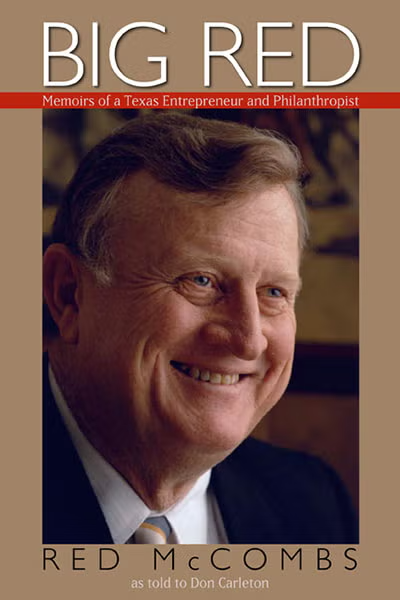
I was recently given a copy of Red McCombs’ second memoir, “Big Red: Memoirs of a Texas Entrepreneur and Philanthropist,” by his daughter Marsha and his grandchildren Joe and Anna. I’m grateful they did. I knew pieces of the remarkable story of our school’s namesake, but reading his 2010 accounting in his own words gave me a much richer appreciation for how he approached business, leadership, and life.
The primary theme of the book that jumped out at me — one that I’ve noticed again and again when meeting with alumni, faculty, staff, and students at our school — is purposeful, learning-driven ambition. Red, who died three years ago at age 95, wanted to win; he was constantly looking for the next opportunity to do so and willing to push hard to achieve it. But his ambition wasn’t simply about beating someone else; it was about seeing what could be better, acting on it, learning from the results, and then pushing himself further.
A few lessons, in particular, stuck with me:
Curiosity creates opportunity. Again and again, Red asks why things work the way they do. As a young car salesman, he questions why cars are sitting unseen in a warehouse rather than out on the lot, where customers could see them and they were more likely to sell. He pursues insurance, real estate, sports, movies, and other businesses because he is curious about how they worked and where value could be created. He isn’t constrained by “this is how we’ve always done it.”
Learning requires being willing to be wrong. I appreciated Red’s vulnerability. He repeatedly shares stories about getting things wrong: He underestimates Volkswagen; he initially dismisses Japanese automakers as a serious competitive threat; his childhood peanut business teaches him the painful difference between revenue and profit. He doesn’t edit these mistakes out of his story. He understands that we learn from failure and that others can learn from our failures.
Understand where value really comes from. Red’s experience investing in Hollywood is a great example of this. He isn’t particularly interested in the movies, premieres, or the glamour. What interests him is the deal structure: core elements such as knowledgeable partners, favorable access to opportunities, and an attractive balance of risk and potential return. Across industries, he keeps looking beneath the surface to understand the underlying economics.
Know when to go for it, and when to get out. Red is clearly a risk-taker, but he isn’t reckless. His experience with Lloyd’s of London is a striking example. After reading a seemingly small news story about asbestos liability, he thinks through the potential consequences and decides to resign from Lloyd’s. That decision ultimately protects him from enormous potential losses. His conviction gets him into opportunities; judgment often tells him when to leave them.
The customer gets the final vote. Red’s reflections on Detroit and the rise of foreign automakers are a powerful reminder of what happens when organizations become too confident about what they already know. Starting in the 1970s, Detroit dismisses competitors and assumes customers will continue behaving as they always have. They don’t. Red’s lesson is that organizations don’t get to decide what customers should value; customers do.
Relationships matter more than transactions. For all the deals that Red describes in the book, some of the most powerful moments have nothing to do with business. His story about his brother Gene, his commitment to supporting him, and the influence Gene continued to have on his life reveals another side of Red. Ambition and achievement mattered enormously to him, but so did loyalty, family, partnership, and keeping your word.
The phrase I’ve seen most associated with Red is “Go for it.” After reading “Big Red,” I hear more in these three words than I did before. They aren’t simply a call to take risks or pursue bigger things; they are a challenge to be ambitious enough to see possibilities, curious enough to question what is, humble enough to learn when you’re wrong, and determined enough to act when you see the opportunity. So, go for it!
Dean Staats is reading a new book every month and sharing his insights. Read them all here.
About this Post
Share: