What I’m Reading: ‘AI for Good’
The book ‘AI for Good’ suggests that learning by doing may be a better strategy than a grand AI plan
By Dean Bradley R. Staats
In transitioning into the dean role, I’ve sought advice from many people. One of them, a trusted mentor through my whole career, Jim Dean, told me about a habit he’d followed as a leader: Read a book a month, then reflect on what he’d learned and share it with the people around him.
I’m stealing Jim’s idea (with attribution)!
It’s also, more or less, the argument of my own book, “Never Stop Learning”: Careers today don’t reward the people who know the most; they reward the people who know how to keep learning. Jim’s habit is a small, deliberate system for doing exactly that. So, starting now, I’m going to try to read a book a month and write a bit about what stuck.
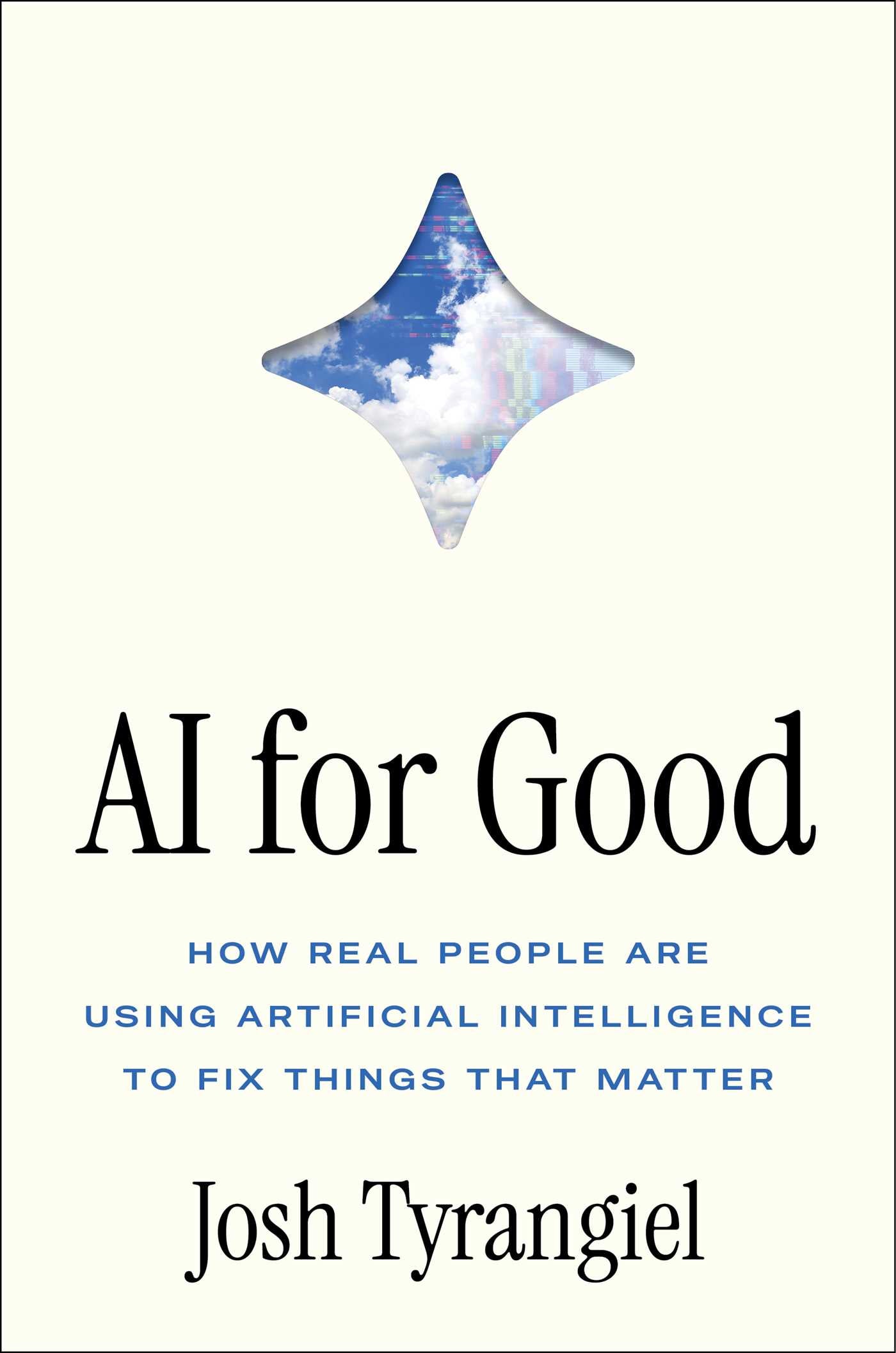
For book one, the choice felt obvious. Artificial intelligence is the thing every leader I talk to, in higher education, in business, everywhere, is thinking about. So, I started with Josh Tyrangiel’s “AI for Good: How Real People Are Using Artificial Intelligence to Fix Things That Matter.”
The book is refreshingly uninterested in the two loudest AI narratives, the utopian one and the doomsday one. Instead, Tyrangiel goes looking for the teachers, doctors, and government workers actually using AI to solve specific, tangible problems, usually with no technical background at all. A few things from it have stuck with me, and a surprising number of them map directly onto how I’m thinking about this job.
It’s not a big bang; it’s “festina lente.” The Latin phrase means “make haste slowly,” and it’s a better description of the book’s real argument than anything about disruption. The people succeeding with AI aren’t the ones making sweeping declarations; they’re making small, deliberate moves and letting the evidence accumulate. I call it “radical incrementalism.” It’s a useful corrective to the pressure every leader feels to have A Big AI Strategy Announcement. Sometimes the strategy is: Try something small. See if it works. Tell people honestly what you found.
Trust is the most expensive commodity. This is the line I keep coming back to. Any tool, AI or otherwise, is only as useful as the trust people have in it and in the person introducing it. That’s doubly true in a university, where trust among faculty and staff members is built over years and can be spent in an afternoon. Whatever we do with AI here, the process matters as well as the substance.
Don’t mandate before you’re convinced. The book is candid that at some point, institutions do need to require things; you can’t get everyone there through invitation alone forever. But it’s careful about sequencing and process: explore first, build real conviction about what actually needs to change, then mandate. Mandating before you’ve done the exploring is how you get compliance without belief (and maybe not even that). That’s a trap I want to actively avoid.
Change is always about the people, not the technology. Every case study in the book that was a success worked because people on the ground, a specific teacher, a specific worker, decided to try something and stuck with it. The tool was necessary but not sufficient.
There’s real productivity in struggle. This one lands close to home, because it’s basically a chapter of my own book. The instinct with a new tool is to make things frictionless immediately. But some of the struggle, sitting with a hard problem before reaching for the answer, is where the actual learning happens. AI makes it easier than ever to skip that struggle. It’s worth being deliberate about when to let people (including myself) sit in it a little longer.
It doesn’t need to be perfect to be useful. Tyrangiel leans on British statistician George Box’s old line, “All models are wrong but some are useful,” as a kind of permission slip. Waiting for AI to be flawless before using it thoughtfully is its own kind of failure to learn.
None of this amounts to a grand unified theory of AI in higher ed. But that’s sort of the point, and it’s the same point Jim was making to me: You don’t learn by waiting until you’ve got it all figured out. You learn by reading the book, trying the small thing, and telling someone honestly what you found.
On to book two. Any suggestions?
About this Post
Share: