Leading Forward: Jade DeKinder
Builds market-relevant, career-ready master’s programs
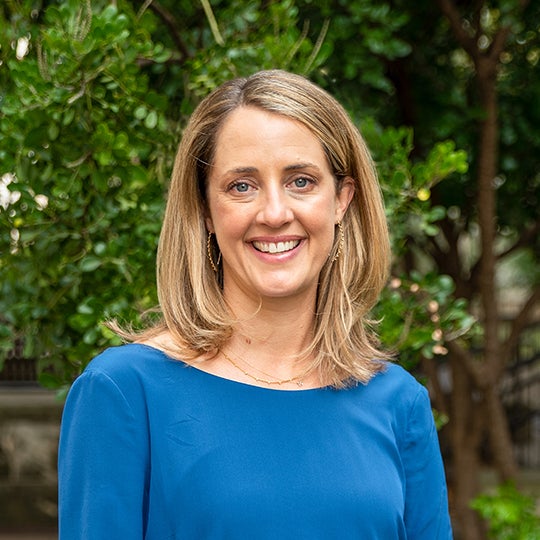
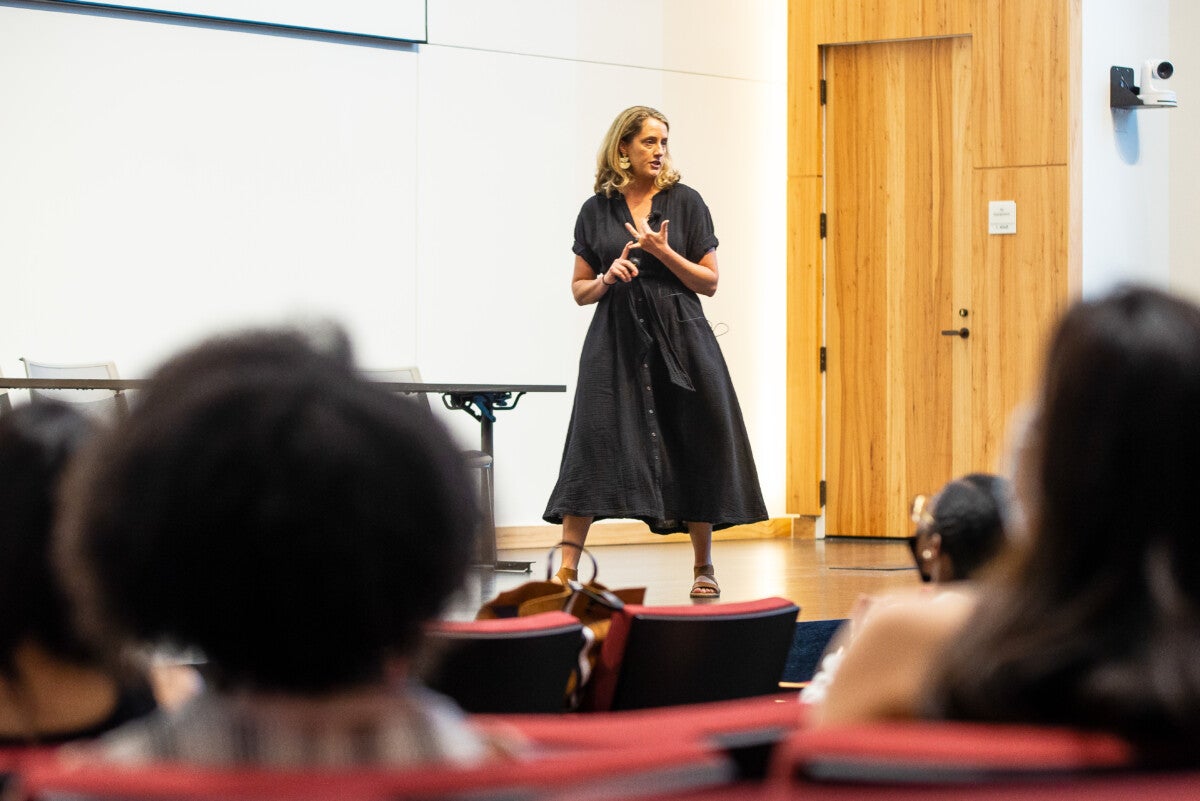
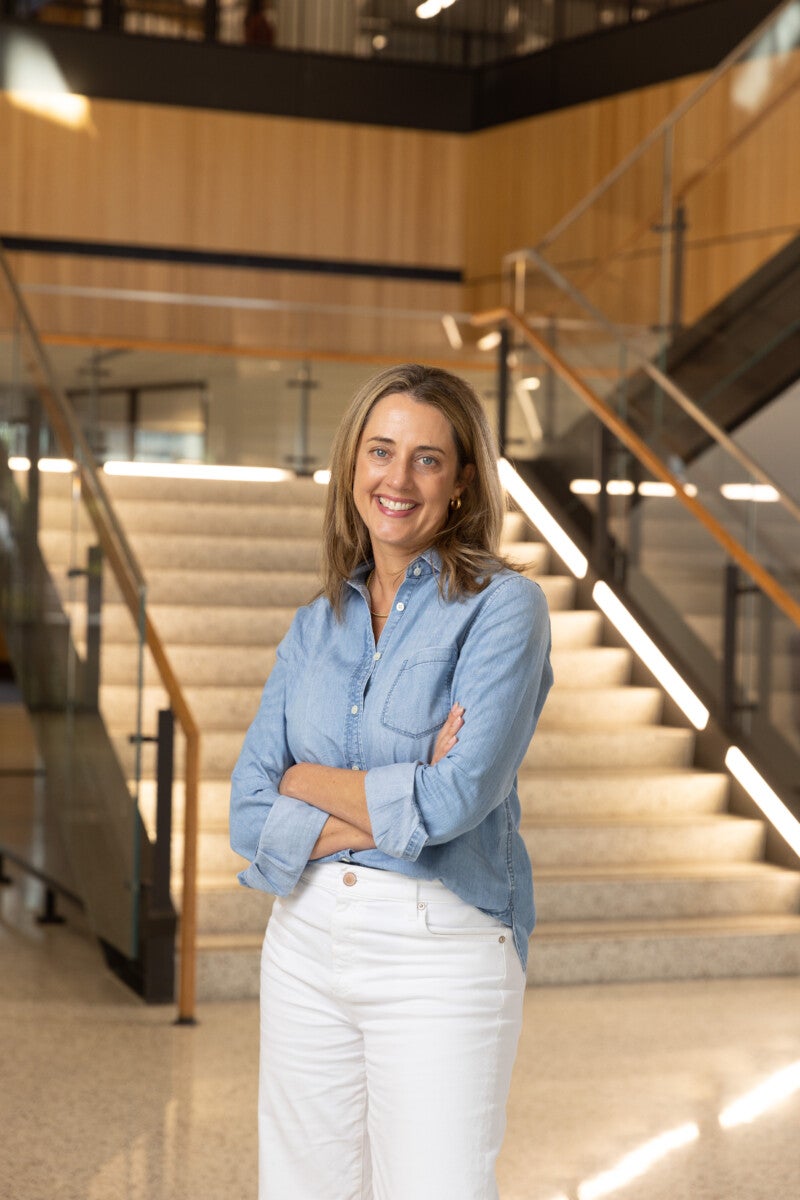
In industries where tools and technologies evolve by the month, curriculum can’t stand still. Say hello to Jade DeKinder, the leader helping McCombs M.S. programs move at market speed.
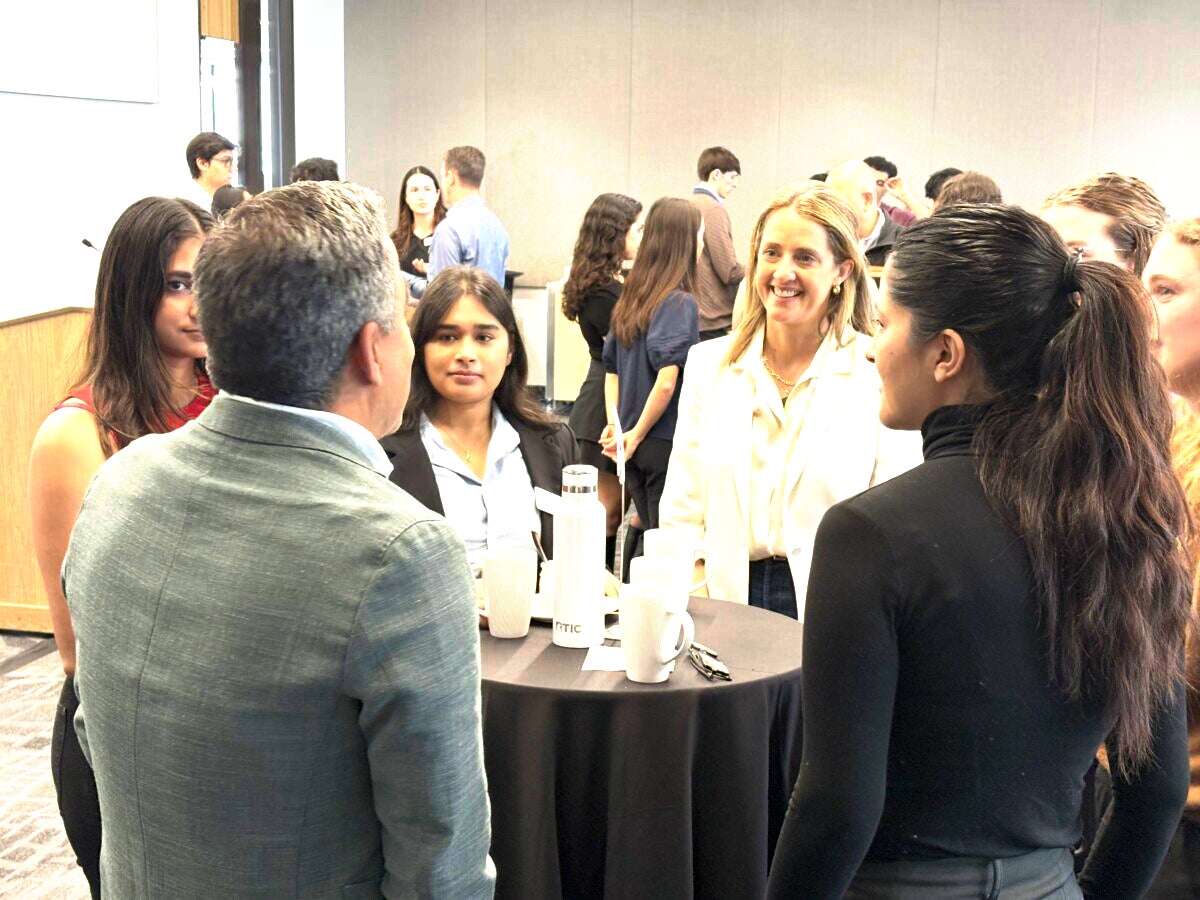
DeKinder leads a deliberate “listen-validate-update” cycle that keeps the portfolio aligned with real hiring expectations. Advisory councils made up of senior industry leaders across consulting, banking, technology, CPG, and financial services meet regularly to review emerging tools, evolving workflows, and shifting skill demands, translating those insights directly into curriculum updates.
Title: Associate Dean for Master of Science Programs
Works closely with: M.S. program directors (MSBA, MSITM, MSF, MSM), admissions and student success teams, career management, corporate and employer partners, faculty leads, and experiential learning/capstone sponsors
Years at UT: 19
Hometown: Cooper City, Florida
Education: Bachelor’s degree with highest honors, economics, Emory University; Ph.D., marketing, Emory University’s Goizueta Business School
How do you decide which new skills and courses belong in the M.S. portfolio so graduates are job-ready in fast-moving fields such as analytics, tech, and finance? What market signals matter most, and how do you validate them with employers and alumni?
We decide what new skills and courses belong in the M.S. portfolio through a deliberate “listen-validate-update” cycle grounded in employer input and outcomes. Our strongest signal is our advisory councils. Each M.S. program has its own council of senior industry leaders across multiple industries, including consulting, banking, tech, CPG, and financial services. They come to campus twice per year and spend significant time with us reviewing job requirements, emerging tools, and evolving workflows, then translating those needs into curriculum updates. For example, they have been instrumental in shaping how we incorporate AI into the curriculum, most recently agentic AI.
We validate these insights with market data from our job outcomes each year. In partnership with our data analysts and our Career Management/Corporate Relations team, we conduct in-depth analysis of historical placement trends — roles, industries, and skill demands — to identify consistent shifts rather than short-lived hype.
Finally, we survey recent alumni to understand which skills they are using on the job, what gaps they experienced, and what content is becoming less relevant. That feedback helps us add, remove, or redesign content and determine the right format — new courses, workshops, or modular offerings — to keep graduates job-ready.
What’s a structural change you’ve made to improve the M.S. student experience at scale, and what measurable impact did it have?
A major structural change we made to improve the M.S. student experience at scale was launching our M.S. in Business Analytics in a fully online format — our first online degree program at Texas McCombs. The shift wasn’t “put the program on Zoom.” We spent two years in intensive design and build work with iDesign to adopt best practices in online pedagogy, course architecture, and student support. The resulting model blends weekly live, instructor-led classes with purposeful asynchronous learning and includes five required on-campus immersive weekends to deepen cohort connection, team-based work, and the McCombs community experience. We also built the online format so students still access the elements that drive outcomes: experiential capstones, dedicated student experience staff, and full career coaching and employer engagement.
We measure impact through engagement and scale indicators (participation, retention, student feedback, utilization of coaching/services, and career outcomes). This structure enabled us to expand access and geographic reach while maintaining a highly connected, high-touch experience.

How are you weaving AI fluency across the M.S. curriculum so students can use it responsibly and competitively on day one?
We’re weaving AI fluency across our M.S. portfolio in a way that balances responsible use with real, job-ready capability. We start with clear expectations around academic integrity and professional ethics: what appropriate AI assistance looks like, how to document and validate AI-supported work, and how to protect data privacy and confidentiality in business settings. From there, we focus on applied-skill-building. Students learn how to use AI tools to accelerate analysis, improve decision-making, and communicate insights clearly — while still demonstrating their own critical thinking.
Our McCombs M.S. in IT management is at the forefront of this effort, offering hands-on exposure to the emerging technology ecosystem, from AI and machine learning to cloud computing, with an emphasis on practical implementation and business value. Our M.S. in business analytics has also evolved dramatically, so students graduate ready to use AI alongside statistical analysis and data mining to solve real business problems. Students learn to clean, model, and interpret large datasets, then translate results into actionable recommendations — skills that map directly to day-one expectations in tech, consulting, finance, and retail.
- Hidden campus gem: I love the free coffee at O’s Campus Café! It’s a bright moment in my day because I typically go with one or more of my colleagues, and I always enjoy seeing the wonderful O’s staff.
- Favorite Austin hangout: Lake Austin! I love being on the water — typically with friends or family and an opportunity to jump in the water and cool off in the summer!
- Burnt orange gear: My M.S. programs umbrella. We don’t get rain often, but when we do, I am always super happy to have my burnt orange umbrella.
About this Post
Share: