Leading Forward: Cory Wilburn
Powers innovation through technology and digital solutions

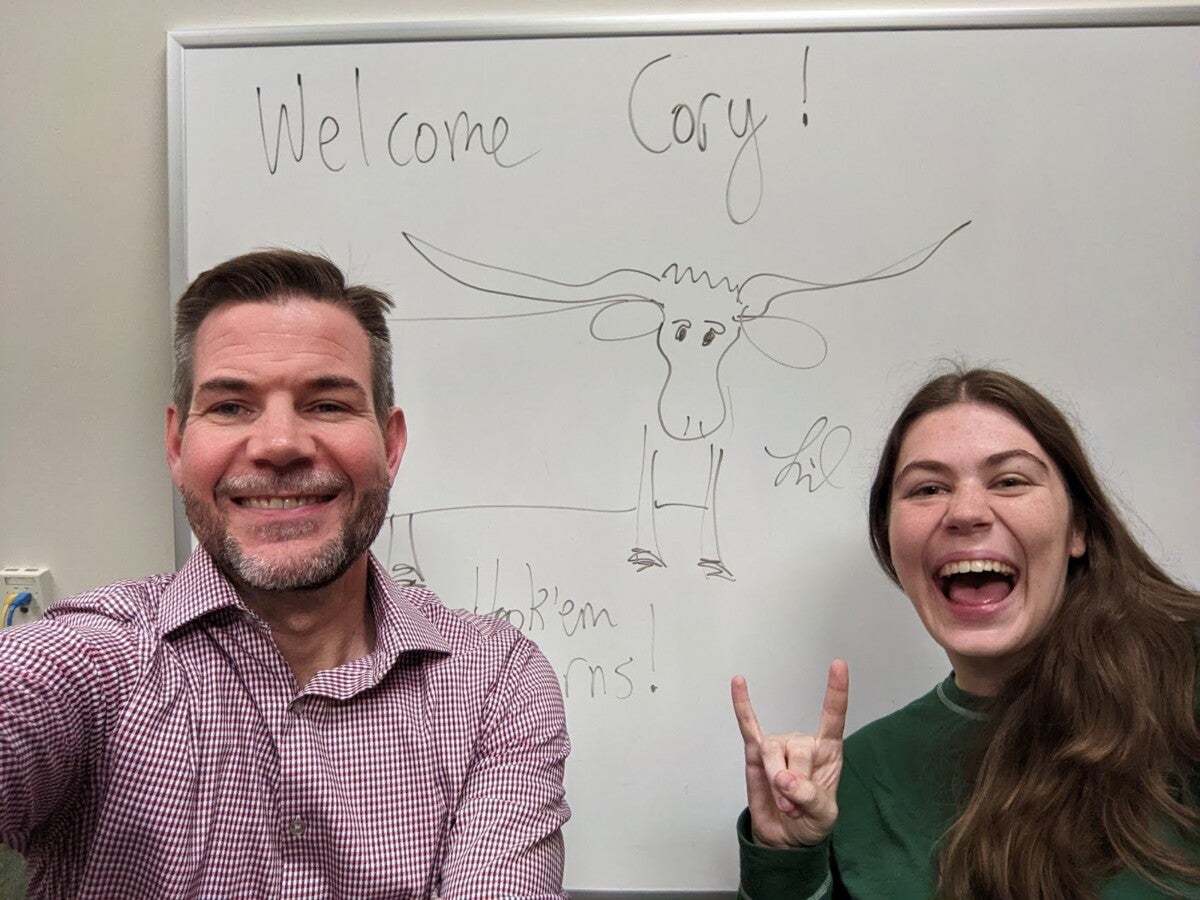
If you’ve ever wondered who helps keep the technology behind the McCombs School of Business running smoothly, say hello to Cory Wilburn.
Cory Wilburn, Chief Information Officer at McCombs, leads the teams responsible for technology infrastructure, cybersecurity, enterprise systems, and digital innovation across the school.
Title: Chief Information Officer
Works closely with: Technology infrastructure teams, IT security, digital innovation staff, academic technology support, and enterprise systems management across the school
Years at UT: 3
Hometown: I consider Austin home — I was born in the Dallas-Fort Worth metroplex but have lived in Austin over 30 years.
Education: B.A. ’94, Texas Tech University
First job: First job ever, Copy Craft Print and Copy Shop; first professional job, public relations for a company named FirstNet
Where are you investing first to modernize the school’s tech stack, and how will those choices improve the daily experience for students, faculty, and staff?
We are investing first in modernization that makes technology simpler, more reliable, and easier to use across McCombs. That starts with three priorities: moving off legacy systems, updating the tools and systems people use every day, and building a modern data and analytics platform. On the systems side, we are replacing older, hard-to-maintain tools with modern platforms, often using trusted software as service products. Where a standard product does not fit, we are building simple, purpose-built solutions using modern cloud approaches. This reduces friction for users and gives our teams a more supportable environment.
At the same time, we are strengthening how McCombs manages and protects data so leaders and teams can make decisions faster, with more confidence. Over time, this also creates a foundation for analytics and responsible use of artificial intelligence. The day-to-day impact is straightforward: fewer workarounds, more reliable services, faster support, and a smoother experience for students, faculty, and staff.
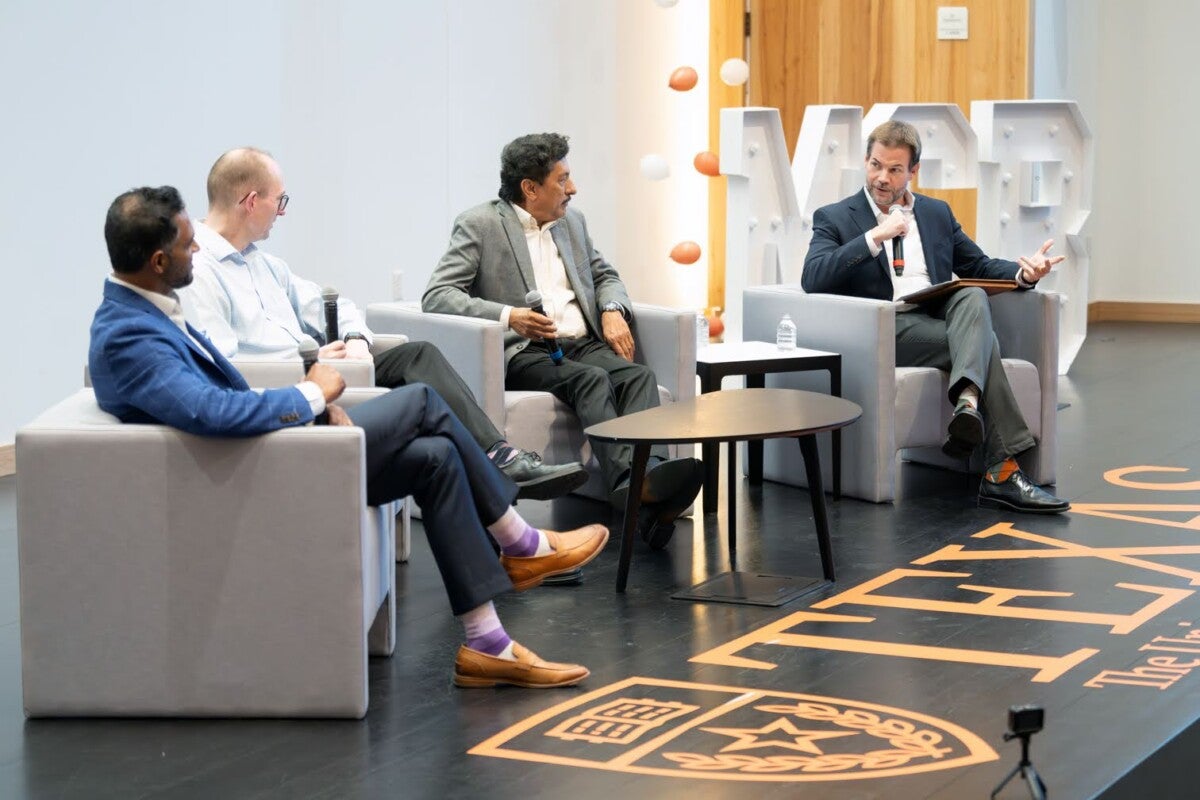
How are you balancing innovation (AI, analytics, digital classrooms) with reliability and cybersecurity — especially as McCombs expands into Mulva Hall?
We balance innovation with reliability and cybersecurity by using a simple rule: We move fast on ideas, but we scale only what we can operate safely and consistently. We invest in innovation with clear guardrails. For analytics and AI, we focus on four outcomes: improving key student-facing processes such as application and enrollment, helping students learn to use these tools responsibly as they enter the job market, ensuring faculty members have the capabilities they need for research, and using AI to make administrative work more efficient so staff can spend more time on high-value contributions.
For digital classrooms, the goal is not the technology itself, but the overall experience. We design spaces that are dependable, easy to use, and geared toward modern teaching, whether in person, hybrid, or highly interactive. Reliability matters because if the basics are not solid, innovation becomes frustration. As we expand into Mulva Hall, we will apply the same standards from day one: dependable infrastructure, secure-by-design defaults, and technology that is easier to support at scale.







What’s your framework for prioritizing enterprise technology projects when demand exceeds capacity, and how do you define value for the school?
In technology, demand almost always exceeds capacity. There are more good ideas than time and people to deliver them. So, we rely on a formal but flexible governance process to make decisions transparently and keep work aligned to what matters most.
At McCombs, our Technology Advisory Committee includes representatives from the school’s major programs. The committee reviews proposals, clarifies the problem we are solving, and recommends priorities. Senior leadership makes the final call, so investments stay aligned with the school’s goals. Each proposal is supported by a business case. We compare options and document risks, costs, and expected benefits. We look at impact on students and the student experience, support for faculty teaching and research, compliance and cybersecurity considerations, and operational improvements that make services more reliable and easier to support. We also consider the short- and long-term financial implications of a project, including where it reduces technical debt by retiring older systems. We define value delivered as measurable progress for students, faculty, and staff, plus a technology environment the school can sustain. I’m drawn to work that makes me feel like I’m contributing to something that makes the world a little better.
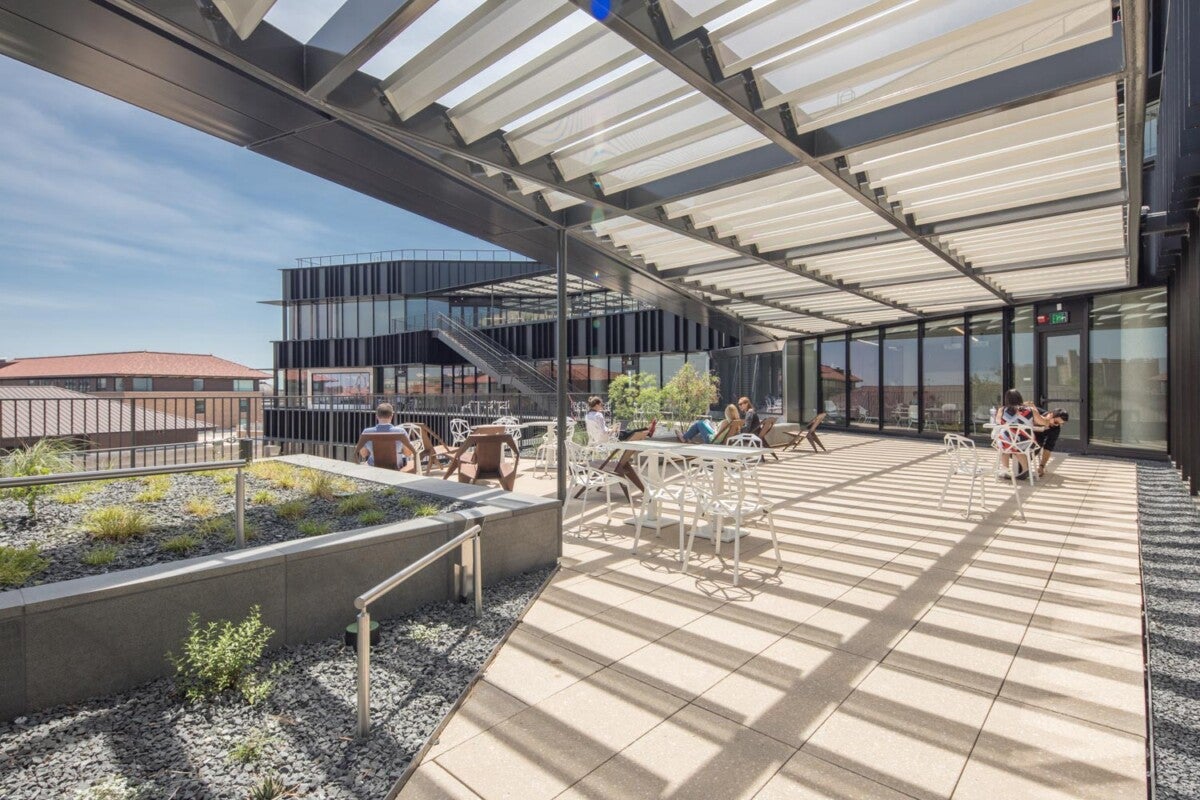
- Hidden campus gem: The terraces outside Rowling Hall during midmorning in the spring or fall.
- Favorite Austin hangout: Any number of fun patios and rooftop bars.
- Burnt orange gear: I’m a simple guy — I love a comfortable burnt orange T-shirt. I also like wearing UT socks when I’m at an event where I’m speaking.
About this Post
Share: