‘College GameDay’ Host Talks Ambition, Honesty
ESPN’s Rece Davis shares lessons on college football and ways to build a career in sports media
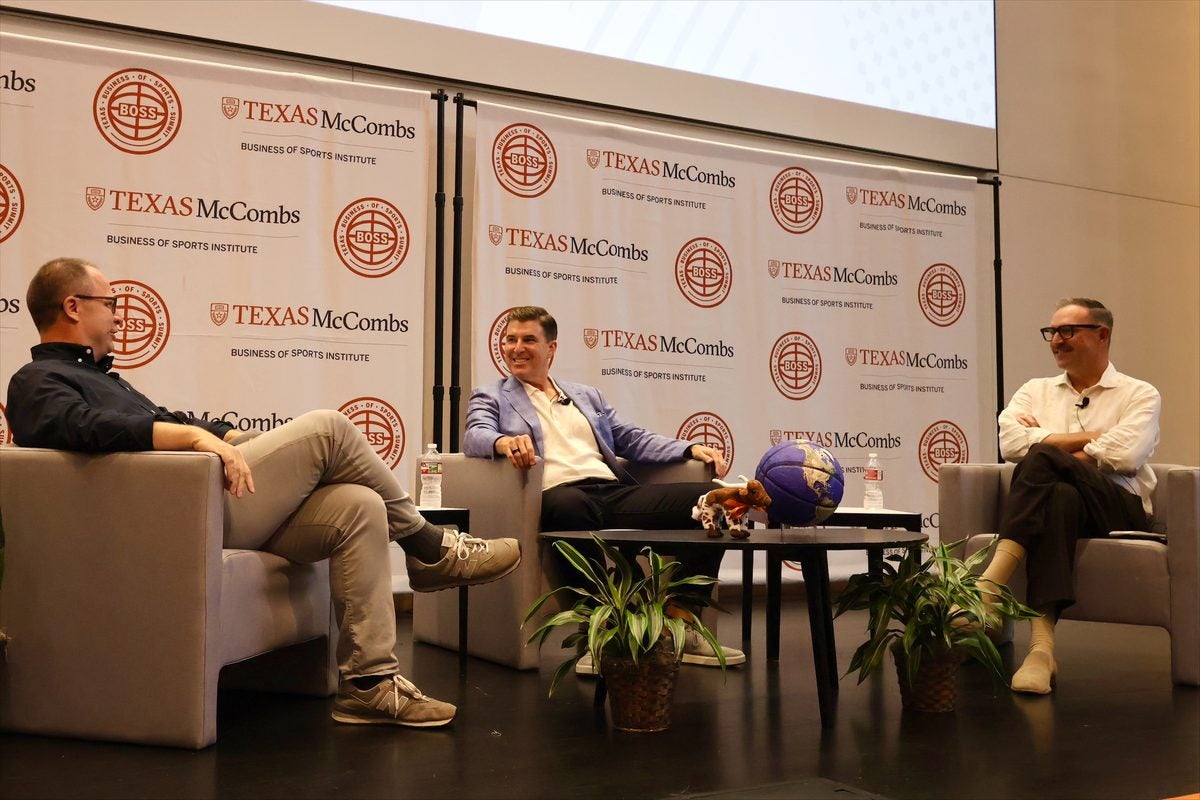
One of sports media’s top voices visited The University of Texas at Austin campus ahead of the “gargantuan” match between the Texas Longhorns and the Ohio State Buckeyes to talk about college football and the Longhorns, and to offer advice for students looking to follow in his footsteps.
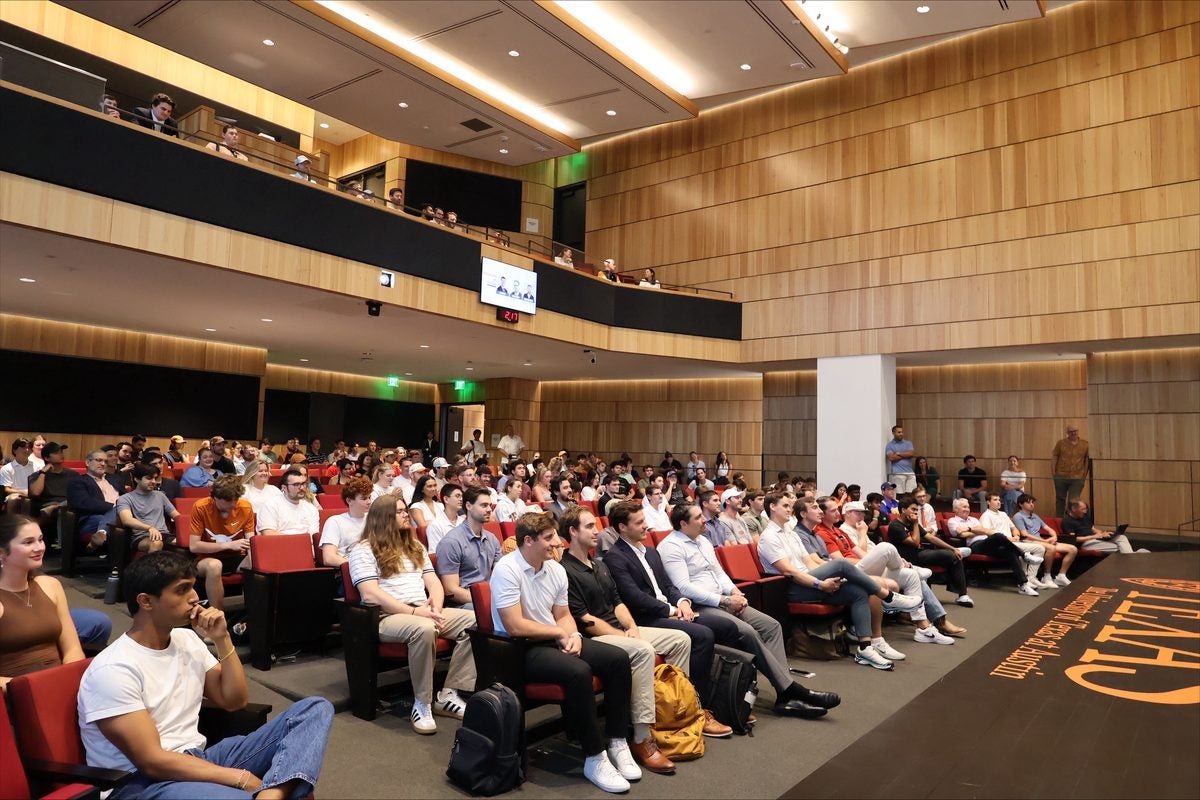
More than 200 eager Longhorns fans — including alumni, faculty, and staff, but mostly sports business students from across the University — gathered at Rowling Hall’s Crum Auditorium to listen to a conversation with Rece Davis, host of ESPN’s “College GameDay” on Sept. 11.
The pop-up event was organized by the Business of Sports Institute (BOSI) ahead of its yearly summit happening Oct. 23. Davis was joined in conversation by UT clinical assistant professor and executive director of BOSI Kirk Goldsberry, as well as The Ringer’s editor-at-large Bryan Curtis, B.A. ’00.
Texas against the big opponents
“I think Texas should aspire to have the best team in the country,” Davis said early in the conversation. He praised quarterback Arch Manning along with the rest of Texas’ ‘national championship-type roster’” and explained the importance of scheduling big matches.
Nonconference games with tough opponents such as the Buckeyes could come at a cost later in the season, and some would advise the Texas football committee to avoid them to ensure reaching the playoffs, Goldsberry said.
Davis, however, assured the audience that lowering the stakes is not necessarily the best way to go. “Players want to play Ohio State; they don’t want to play Texas State,” he said. “The athletes want to play the big games; that’s what they get jacked up for.”
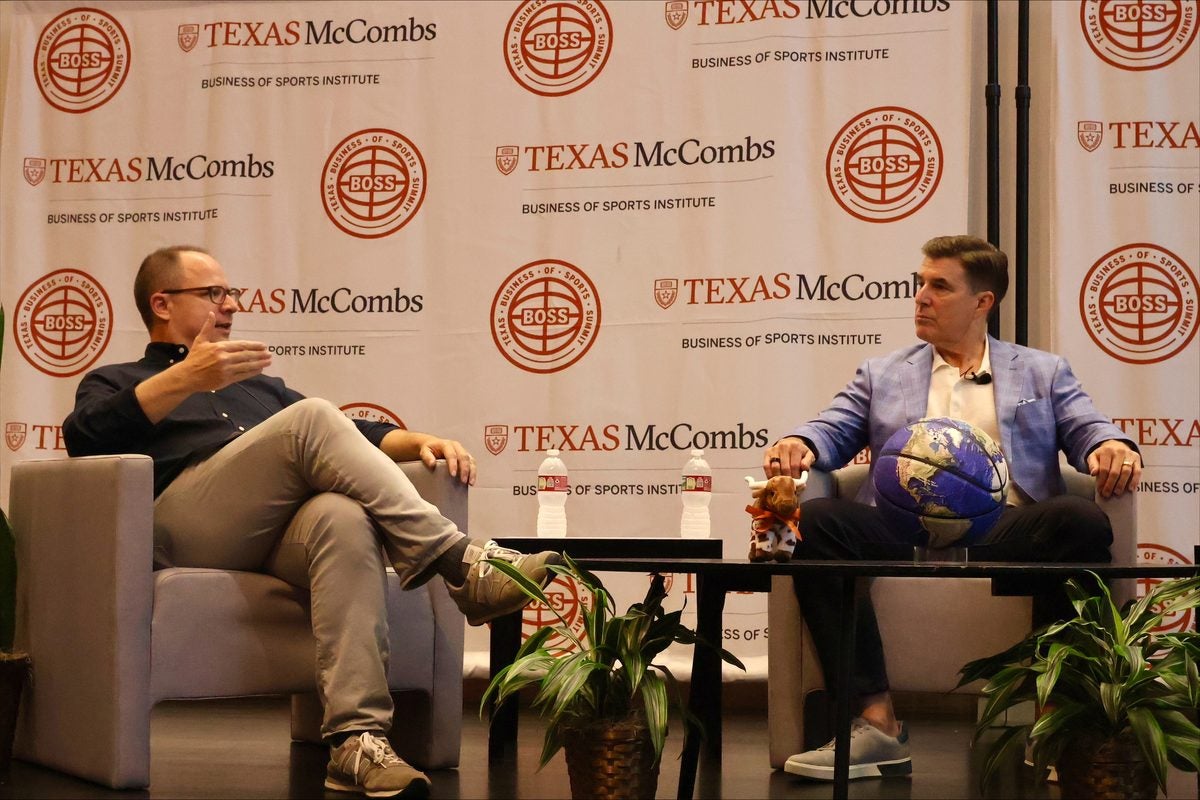
What it means to be a ‘student-athlete’
The recent shift in the “balance of power” to favor student-athletes and their agents makes some people uncomfortable, Davis said. But he asserted that the decision to allow universities to pay students has made college football more honest and professional, considering student-athletes have always been paid, even if not directly.
There needs to be “full acceptance that this is a professional enterprise,” Davis said. “These are professional athletes; they’re not children. Don’t say, ‘He went pro.’ He’s already pro!”
The term student-athlete has a special meaning for Curtis, who recalled his days on campus, saying he felt a meaningful connection with football player and former Longhorn Ricky Williams because they both were “here for the same reason.”
“At its best, it’s a term of what makes college football special, and what makes actually going to the school that you root for very, very special,” Curtis said. “Everybody in this room went to school with Arch Manning, and that is something that is very, very cool.”
‘College GameDay’s’ role in the league
As the host of the most popular college football pregame shows, Davis said honesty stands as his No. 1 priority. The show has grown and persevered through nearly 40 years because the it approaches the subject matter with authenticity, he said.
“I think we’re still there to celebrate the traditions, to hold firm to the pageantry and the things that have made the sport great, but also be honest of our critiques of it when it’s appropriate,” Davis said.
Final advice for students
To end the event, Davis addressed the audience, encouraging everyone who is interested in building a career in sports media to take advantage of the tools now available to them.
Mainly he stressed the importance of building their own platforms — to practice and perfect their craft by getting content out into the world.
“Let it always be something you do and something that you work at as hard as you can and something that you find joy in, but never let it define who you are. Because it’s not. It all goes away.”
Story by Raul Flores
About this Post
Share: