Business Outlook Series 2026
Experts Highlighted Future Trends in Real Estate, Energy and AI
The McCombs School of Business recently wrapped up its 2026 Business Outlook Series, bringing together experts in the energy and real estate sectors. Hosted in Dallas and Houston, the events featured panelists who shared their takes on future risks and opportunities within their industries. This was the 13th year the events — co-sponsored by the Federal Reserve Bank of Dallas — have been part of McCombs.
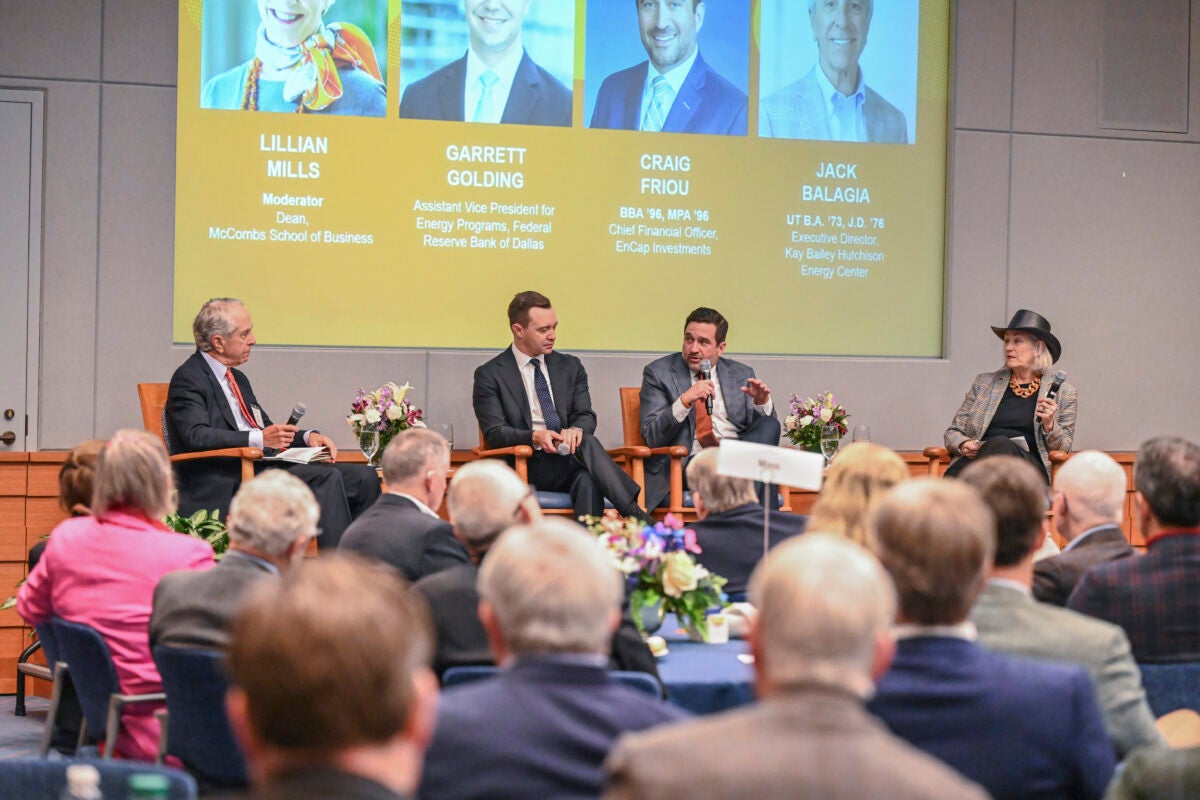
On Feb. 12, the Houston branch of the Federal Reserve Bank of Dallas hosted the first program, titled “Energy: Reliability, Responsibility, and Resilience in a Transforming Economy.” Panelists for the Houston event were Garrett Golding, assistant vice president for energy programs for the Federal Reserve Bank of Dallas; Craig Friou, BBA, MPA ’96, chief financial officer for EnCap Investments; and Jack Balagia, B.A. ’73, J.D. ’76, executive director of the Kay Bailey Hutchison Energy Center and adjunct professor for The University of Texas at Austin School of Law. Dean Lillian Mills introduced and moderated the panel discussion before opening the floor to the audience for questions.
“We appreciate alumni, industry partners, and friends for [hosting the] Houston Business Outlook event,” she said. “I have so enjoyed … working with Daron Peschel and the Houston branch of the Dallas Fed because their leadership long before me and long into the future makes these [events] possible. It is a crown jewel of things McCombs does.”
Speakers dove into topics such as global economic drivers in the oil, gas, and other energy sectors. Asked what the future of energy looks like, Golding acknowledged that it was a complicated issue and that we will need to rely on a myriad energy sources to fuel the future.
“We need more of everything,” he said. “That’s why we have funds that invest in oil and gas. We have funds that invest in energy transition.”
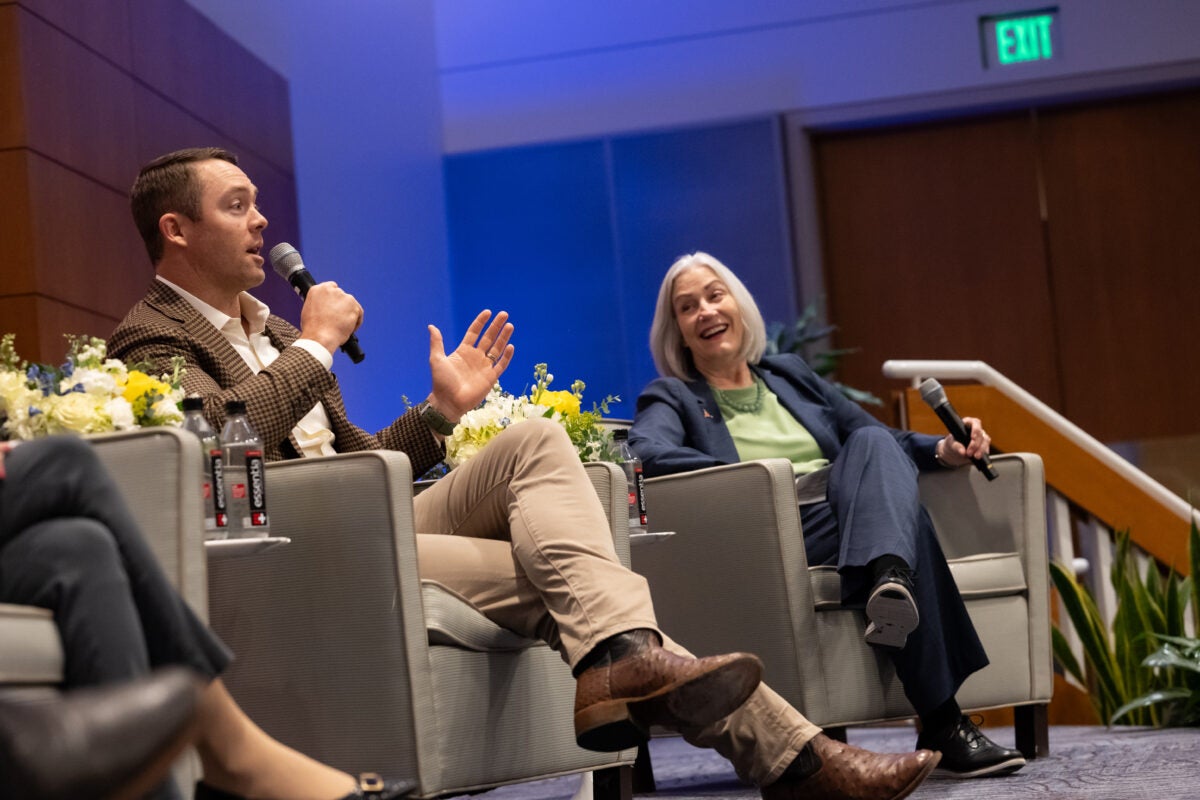
The following week on Feb. 18, the Business Outlook Series 2026 continued at the Federal Reserve Bank of Dallas–Dallas Branch, where the focus shifted to the future of real estate.
Titled “Real Estate: Demand, Development, and the Future of Texas Cities,” the sold-out event featured a panel that included Laila Assanie, senior business economist for the Federal Reserve Bank of Dallas; Colt McCoy, B.S. ’09, owner and principal for HPI Fort Worth; and Greg Hallman, Ph.D. ’96, professor of finance instruction and director of the Texas Real Estate Center at the McCombs School of Business.
Mills, who served as moderator, addressed the packed house before opening the discussion.
“Greg Hallman, my colleague, brought me to tears last night when he was telling a group that the American university is one of the shining stars that fuels our global economic engine,” she said. “I’ve been dean almost six years, and it’s the most proud thing I’ve done in my life.”
Before diving headlong into the impact real estate has on markets and what the future of that sector looks like, the conversation turned to football, with former Longhorn quarterback and McCombs alumnus Colt McCoy fielding the first question.
Asked what surprised him most when entering the real estate field after a career in football, he spoke candidly.
“Starting a business is completely different than playing in the NFL,” he said. “[Football is] very structured and very regimented. Starting a business is the opposite of that. It’s not routine; it’s not structured. There’s nobody telling you exactly where to be or what to do. Honestly, living through that has been one of the biggest challenges in understanding how to build a team.”
Other areas of focus during the discussion were how the real estate market is trending, particularly as it relates to office space.
“The market has been tough in the hot cities because of new supply in both office and multifamily,” Hallman said. “But I’m starting to feel a little bit better about office and the market as a whole.”
One subject popped up at both Business Outlook events: the impact of artificial intelligence.
Whether it had to do with data centers and their impact on energy and real estate, or AI startups and their effect on industry, feelings about the emerging technology were mixed.
But all the experts agreed that one key element was required to ride the AI wave: flexibility.
To learn more about the 2026 Business Outlook Series, visit the webpage.
Story by Miranda Bradley
About this Post
Share: