The Leader
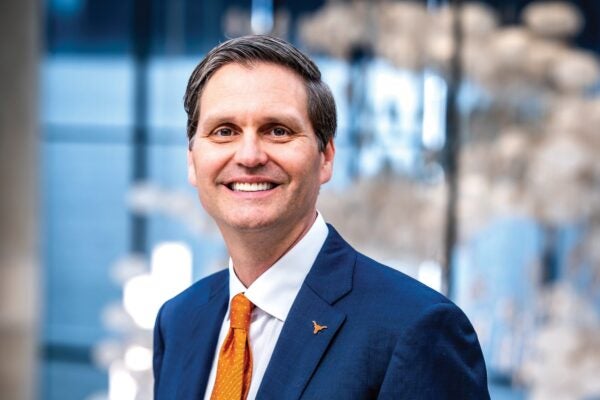
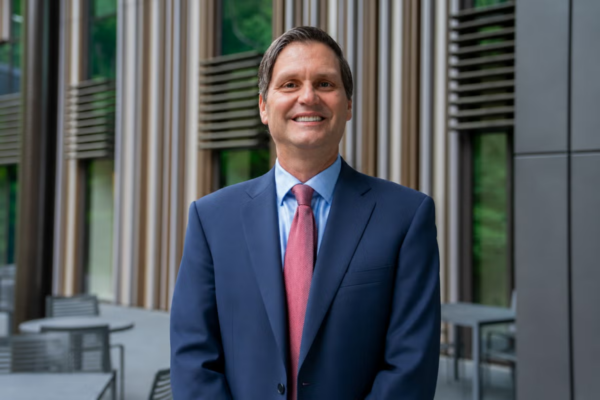
From Scholar to Dean and Back, Lillian Mills, Outgoing Dean and Professor of Accounting, McCombs School of Business
Lillian Mills
Ask Lillian Mills about her time as dean, and she won’t start with rankings or fundraising totals. She’ll start with how she thinks.
Long before she led one of the country’s top business schools, Mills built her career as an accounting scholar focused on how decisions are made under uncertainty: how organizations interpret incomplete information, manage risk, and act with consequences in mind. It’s the kind of thinking that defines modern accounting. And, as she discovered, it also defines leadership.
“When folks ask what is different about my dean job versus my scholar-educator job,” Mills says, “I say for 40 years I built my reputation in depth and gravitas — a global expert in accounting for income taxes.”
That work required precision and specialization. “That is prioritizing being 5 miles deep but 1 inch wide,” she says.
The dean role demanded something different. “As dean, I was now 5 miles wide and 1 inch deep. I can think and discuss across energy prices, sports, real estate, entrepreneurship … and geopolitical issues.”
That shift from depth to breadth mirrors the evolution of accounting itself.
Expanding the Scope of Accounting
Mills stepped into the deanship in 2020 at a moment of disruption, guiding McCombs through the uncertainty of COVID-19 and into a period of growth and investment. The role required conditions any accountant would recognize: decisions with incomplete data, competing priorities, and long-term consequences.
But for Mills, the most lasting impact wasn’t operational. It was intellectual. “I hope my new breadth will be useful to help my colleagues increase their accounting impact,” she says, “by opening doors and discussions with broader adjacencies.”
In other words, accounting connects to everything. As business becomes more complex and interconnected, the field is expanding beyond technical expertise into strategy, leadership, and cross-disciplinary thinking. Mills’ own transition from scholar to dean and back reflects that shift.
Thinking Like an Accountant
At its core, Mills’ approach to leadership was grounded in how accountants think, focusing on analysis, structure, and incentives. “It helps that I am comfortable with finances and analytics,” she says.
That perspective shaped how she evaluated trade-offs and set priorities across the college, from programming to hiring to capital investments. One moment, she says, captures the mindset. “I asked a vice provost, ‘How will the money flow?’ He said, ‘Why does the business school always ask about the money?’”
She laughs at the memory. “Incentives matter,” she says.
Balancing the System
Mills came to the role as a nationally recognized scholar and former chair of the McCombs Department of Accounting, helping lead one of the top-ranked programs in the country. That background gave her a clear view of what drives institutional success, but also revealed what’s often overlooked. “If the dean is herself a respected scholar, she understands how much of our brand and rankings depend on our scholastic thought leadership,” she says. One role she enjoyed was engaging directly with McCombs’ scholars and introducing them to more alumni and scholars across campus working on similar topics.
Leadership required giving deep attention to the other elements of a successful college. “I have a much deeper appreciation that our student successes and research resources depend on all our lecturers and staff.”
That realization shaped how she thought about resource allocation and organizational health. “I spent significant time thinking about how to deploy scarce resources to balance the production function across contributors, while recognizing the global war for scholastic talent,” she says. “The dean must also be the important leader of morale generally,” she adds. “Tone at the top matters.”
Explore the stories




About this Post
Share: