The Executive
Managing an Accounting Giant Through Change
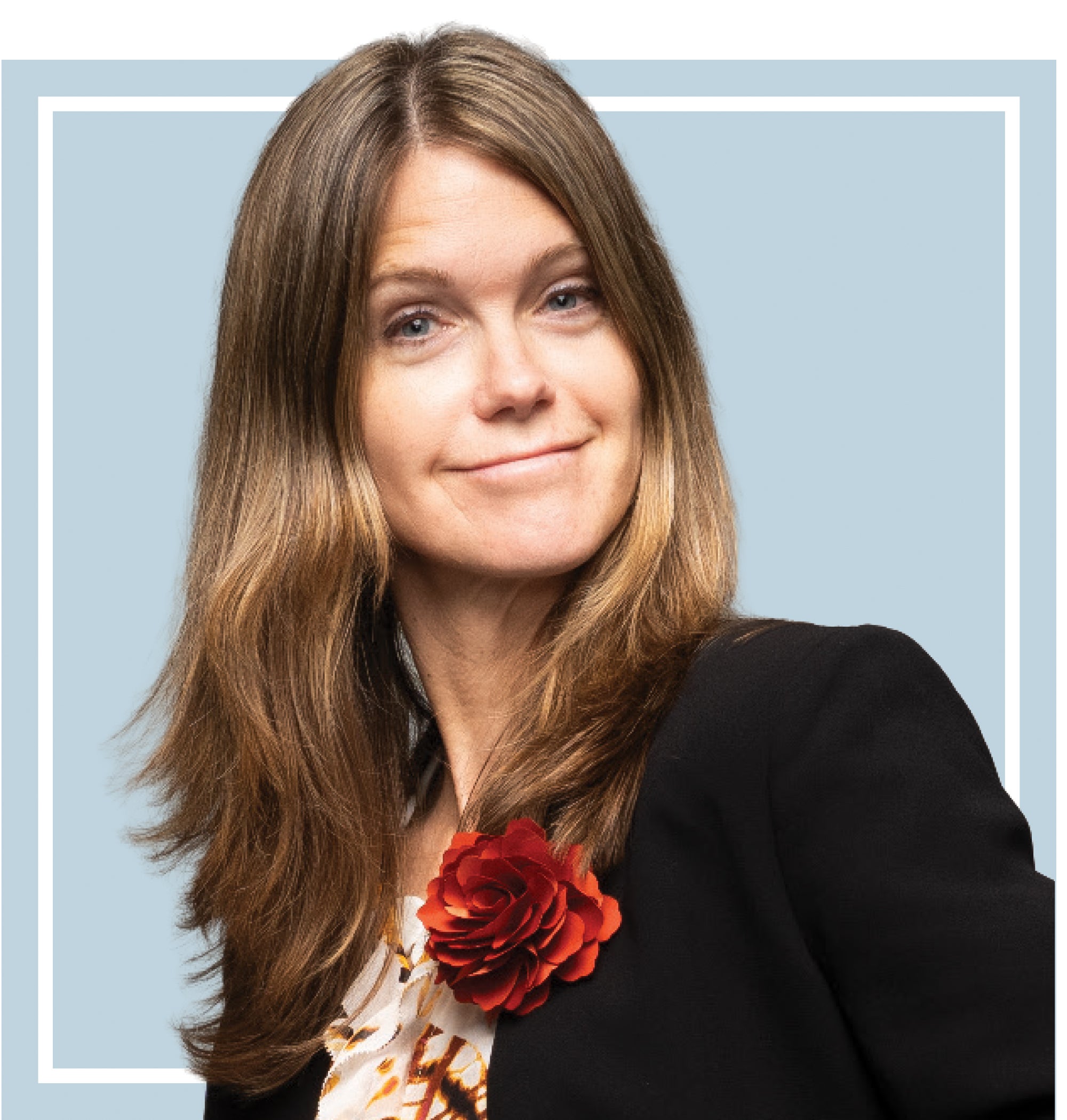
Jenny Koehler, MPA ’02, PWC US Chief Operating Officer of Advisory
During nearly 25 years at one of the Big Four accounting firms, Jenny Koehler, MPA ’02, has seen a lot of change in the profession. Today, she’s involved in one of its biggest changes and challenges: incorporating artificial intelligence.
As U.S. chief operating officer of PwC’s advisory business, Koehler oversees a $12 billion operation, managing about 40,000 people across the country. A major part of her job is a tech-forward strategy that uses AI to serve clients and make them more productive.
The strategy includes expanding a partnership with AI pioneer Anthropic. The company will train and certify 30,000 PwC professionals on its Claude Code and Cowork tools. They’ll gain experience using the tools at PwC and then help set up applications for clients.
“We are at a bit of an inflection point with AI in terms of reshaping work and what we do,” Koehler says. “It can have enormous potential to separate the routine activities from the more judgmental ones.”
She says that by delegating everyday tasks to virtual agents, flesh-and-blood accountants can get more done.
“It allows humans to focus more of their time on the highly judgmental tasks in the field of accounting, anticipate where risks will be, and tailor procedures accordingly,” she says. “It will let them spend more time — probably more smartly — on the higher-risk things.”
AI is not just changing the workload, Koehler says. It’s causing the profession to rethink the skills accountants need.
For a worker to remain relevant, some human skills — such as critical thinking — will be more important than ever, she says. At the same time, professionals must have a strong degree of fluency in technology and using AI.
“The human plus the AI — when the tasks are appropriately kind of split — that’s the future of accounting,” Koehler says. “It’s not just AI and it’s not just the human anymore. We have crossed the chasm where those will go hand in hand.”
Mentoring People in the AI Age
For that reason, the human factor is a crucial part of Koehler’s leadership philosophy, particularly the value of mentorship.
She mentors workers broadly through team management. She also takes a more one-on-one approach.
“I take some individuals under my wing,” she says. “My focus is helping somebody understand the politics, helping somebody understand the stakeholders around them.
“I can give them nudges and coaching on how to show up differently, who to navigate a relationship with, explaining why something is being done or what’s happening around us.”
Koehler’s goal, she says, is to help mentees understand “how they show up as the best version of themselves.”
A key aspect of mentorship is leading by example. “I never would ask my team to do anything I wouldn’t do myself,” she says. “By doing that, it paints the picture of being ‘in it’ with my team. I think that’s super important as a role model.”
Accounting in the Family
Koehler fondly recalls that her first mentor was her dad. He nudged her into accounting after she earned an undergraduate degree in economics.
As an independent financial adviser whose clients included a small number of wealthy individuals, he relied heavily on audit reports.
“I vividly remember sitting in my dorm, and I had a conversation with my father. He said, ‘You know what? The auditor is super important.’ So, he recommended that I think about accounting,” Koehler says.
When she joined PwC in 2001, it was as an auditor.
“Starting my career for the first seven years as an auditor has probably been one of the most important things for me and my job today,” she says, noting attention to detail and analytical rigor as major factors.
It didn’t hurt that she had a natural affinity for numbers. “Numbers make sense to me,” she says. “I think numbers tell a story.”
Today, she’s part of a different story, as accounting has evolved far beyond what she studied at McCombs. To have a successful career, she says, one must combine accounting judgment, technology skills, and industry knowledge.
“You have to become a student of multiple industries,” she says.
Nonetheless, the basic skills she acquired a quarter-century ago are still at the center of her work. “I’m still a CPA to this day and I’m proud of it,” Koehler says.
— Sharon Jayson
Explore the stories



About this Post
Share: