
Discovery Guide
Learn about the artists behind the 71 works of contemporary art housed in Robert B. Rowling Hall
Tim Bavington
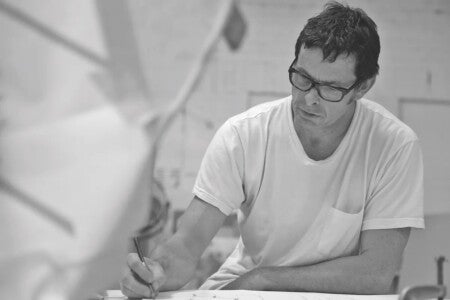
Image courtesy of the artist and Morgan Lehman Gallery
(American, b. 1966)
Level 3, Corridor
London-born, Las Vegas-based artist Tim Bavington is best known for translating music to canvas by assigning sounds to corresponding colors and compositions.
His paintings are reminiscent of Op Art from the 1960s, yet possess the synthetic, digital glow of modern times. In his paintings, Bavington aligns the 12 notes of a musical scale with 12 tones of color from the color wheel. Using synthetic polymer paint, he translates audio — guitar music from The Rolling Stones, Jimi Hendrix, and Oasis — into vertical stripes of color that directly correspond to each note.
A major commission is called “Pipe Dream” in Symphony Park at the Smith Center for the Performing Arts in Las Vegas. Each pipe in this beautiful and colorful sculpture represents a note in the musical masterpiece “Fanfare for the Common Man” by Aaron Copland.
His work is part of collections at the Portland Art Museum, Oregon; the Museum of Modern Art, New York; The Denver Art Museum; and the Museum of Contemporary Art in San Diego, California.
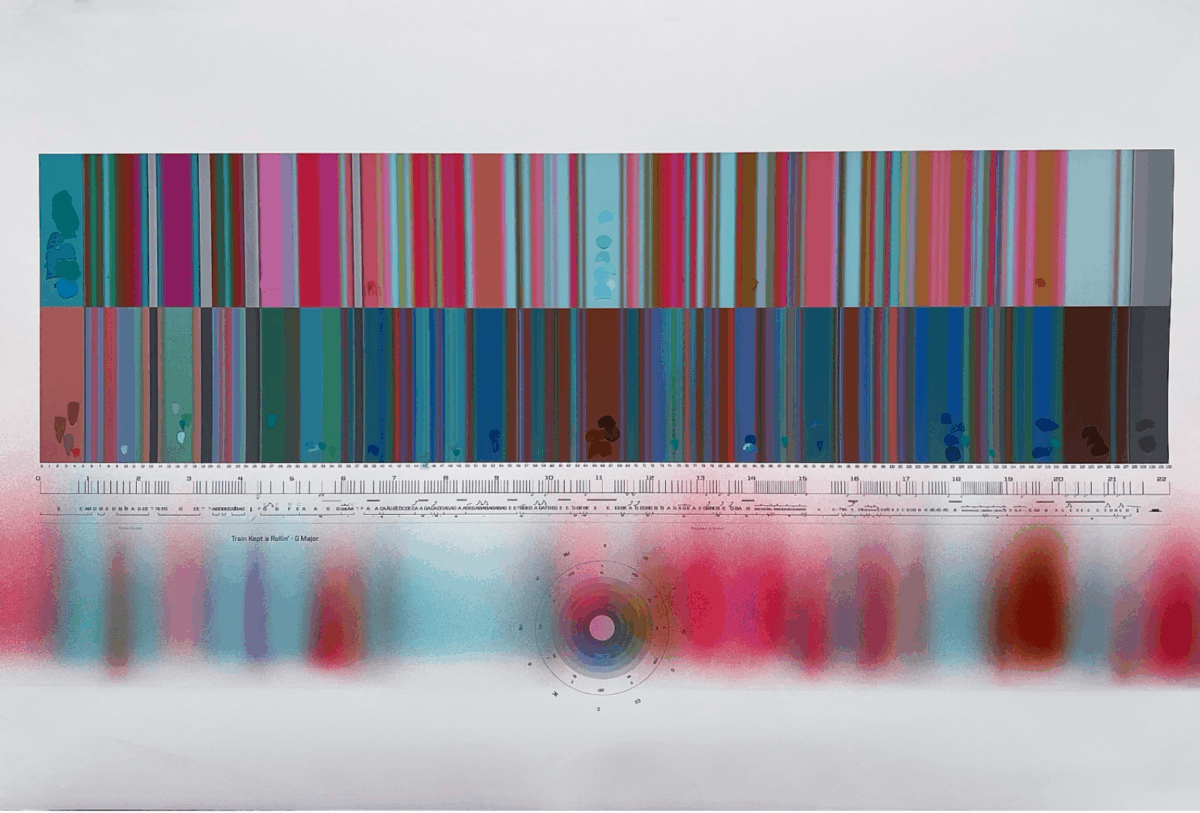
Working study, archival inkjet print with synthetic polymer
24 x 36 inches
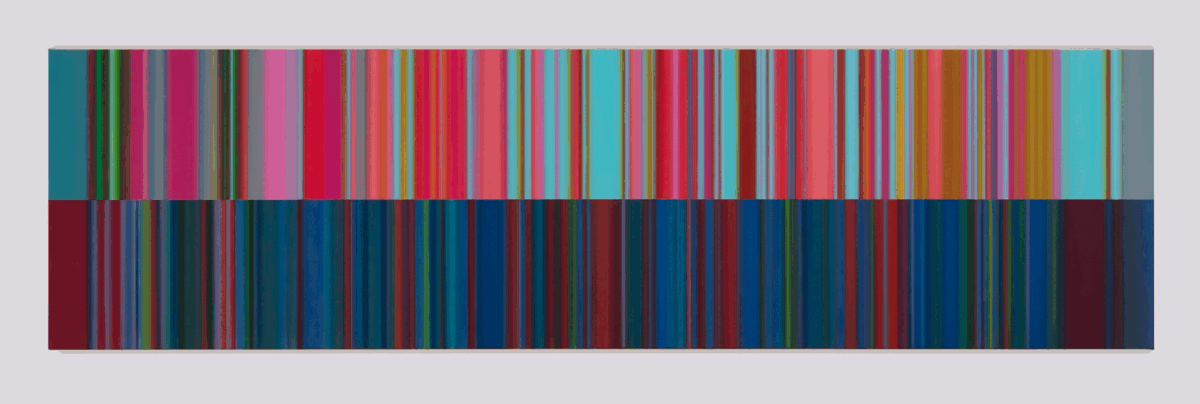
Synthetic polymer on canvas
36 x 132 inches
Suzanne Caporael
(American, b. 1949)
Level 4, Study Room
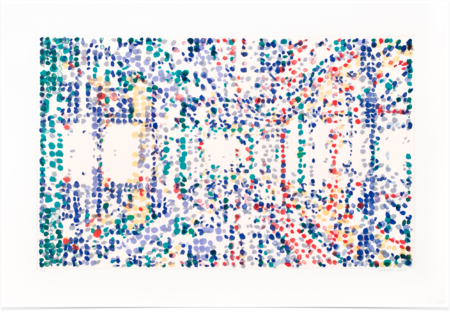
Lithography with pencil on Rives BFK
32 1/4 x 47 inches
Suzanne Caporael grew up on the beaches in California and continues to find herself drawn to bodies of water. Even when her work does not directly reference water, her style of abstraction holds a calm but steady power, like that of a fluid current.
Although not overtly figurative, her work is rooted in reality. She translates concepts such as the periodic table, tree rings, estuaries, ice, and time into stunning visual images.
Caporael, who lives and works in Maine, received a Guggenheim Fellowship (2020) and a National Endowment for the Arts Painting Grant (1986).
Her work is in numerous public and private collections, including the Carnegie Museum of Art, Chazen Museum of Art, Fine Arts Museum of San Francisco, Fogg Art Museum at Harvard University, High Museum of Art, Los Angeles County Museum of Art, Museum of Contemporary Art in Los Angeles, Orange County Museum of Art, Santa Barbara Museum of Art, San Francisco Museum of Modern Art, and the Whitney Museum of American Art.
Elizabeth Chiles
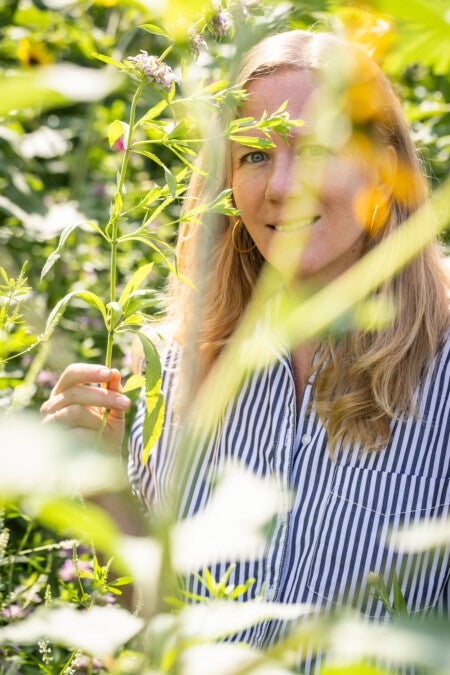
Image courtesy of the artist
(American, b. 1974)
Level 3, Study Room
Elizabeth Chiles’ photography searches beyond the physical to places of peace, contemplation, and connection. She explores the intersections between an embodied human perception, the ever-shifting physical world, and the mysterious world beyond our sensory awareness.
She considers ways in which photography can reshape its plasticity into experiential forms.
“What interests me about a camera is that it is literally a meeting place between an inner and outer world — the place where mental and physical states are woven together. Photography, with its [camera] body and reflective mirror, has a relationship to embodied perception built into its very material, but photography as a discipline is still figuring out how to deal with the body and its experiences.”
She chooses plants and trees as subjects because they “exist in a dual space of materiality and immateriality” and demonstrate a collaborative relationship with nature.
Chiles lives and works in Austin.
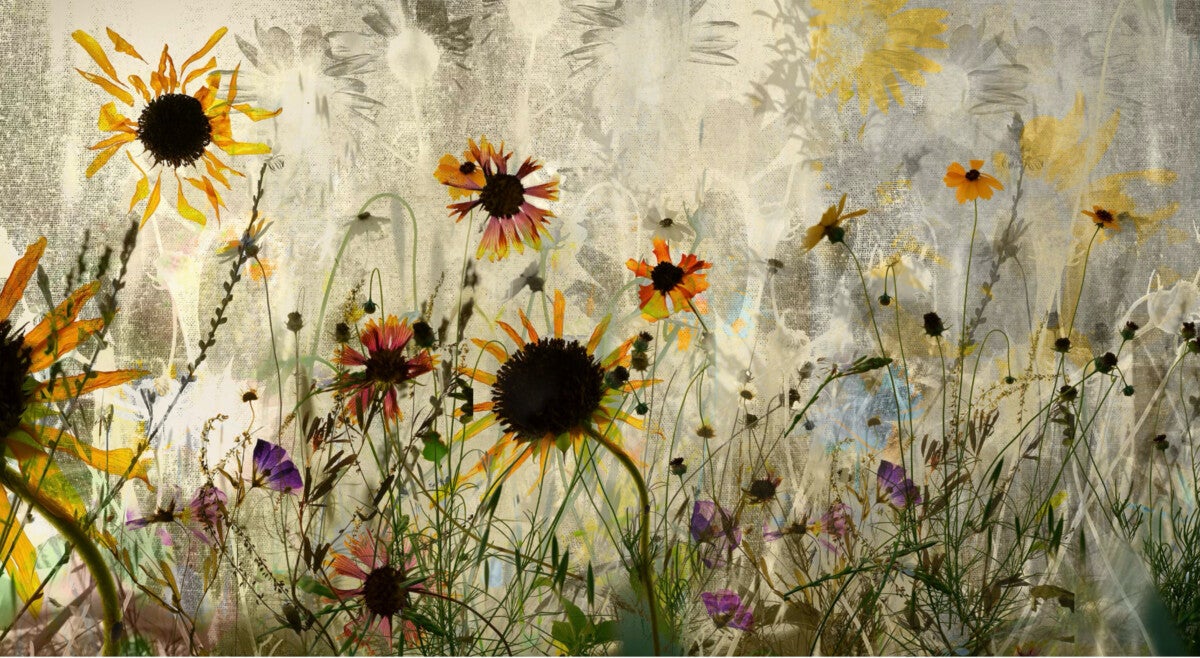
Archival digital print
36 x 67 inches
Erin Curtis
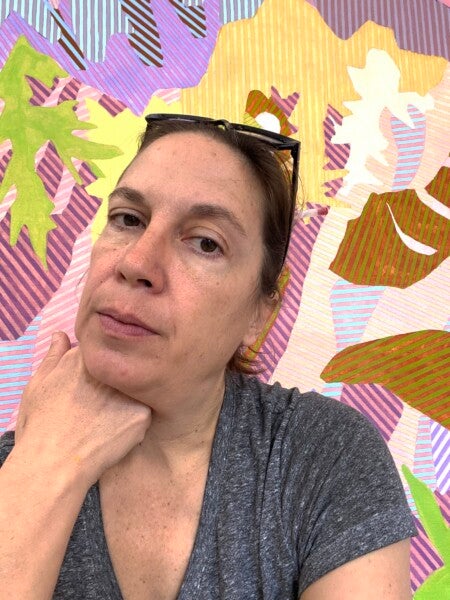
Image courtesy of the artist
(American, b. 1977)
Level 3, Study Room
Erin Curtis’ art explores geometric abstraction and its historical connections to weaving, nature, and ritual. Her work blends utopian ideals of beauty and structure with process and chance.
“Winter Garden” draws inspiration from the gardens surrounding her home and workplace in Austin.
Mainly a painter, she also creates large-scale, site-specific installations and public art projects with a painter’s sensibility. Her paintings involve hand-cut canvases layered over stretchers or painted panels, resulting in dense, vibrant works.
She has created commissioned works for the Chicago Transit Authority; City of Washington, D.C.; Art in Embassies; the City of Austin; and Moody Center for the Arts, Rice University. Curtis has received grants from the Dallas Museum of Art, the Andy Warhol Foundation, the City of Austin, and the District of Columbia.
Solo exhibitions include Galveston Art Center; Conduit Gallery, Dallas; Cal Poly San Luis Obispo, California; and Flashpoint Gallery, Washington, D.C.
Curtis received an MFA from The University of Texas at Austin in 2007.
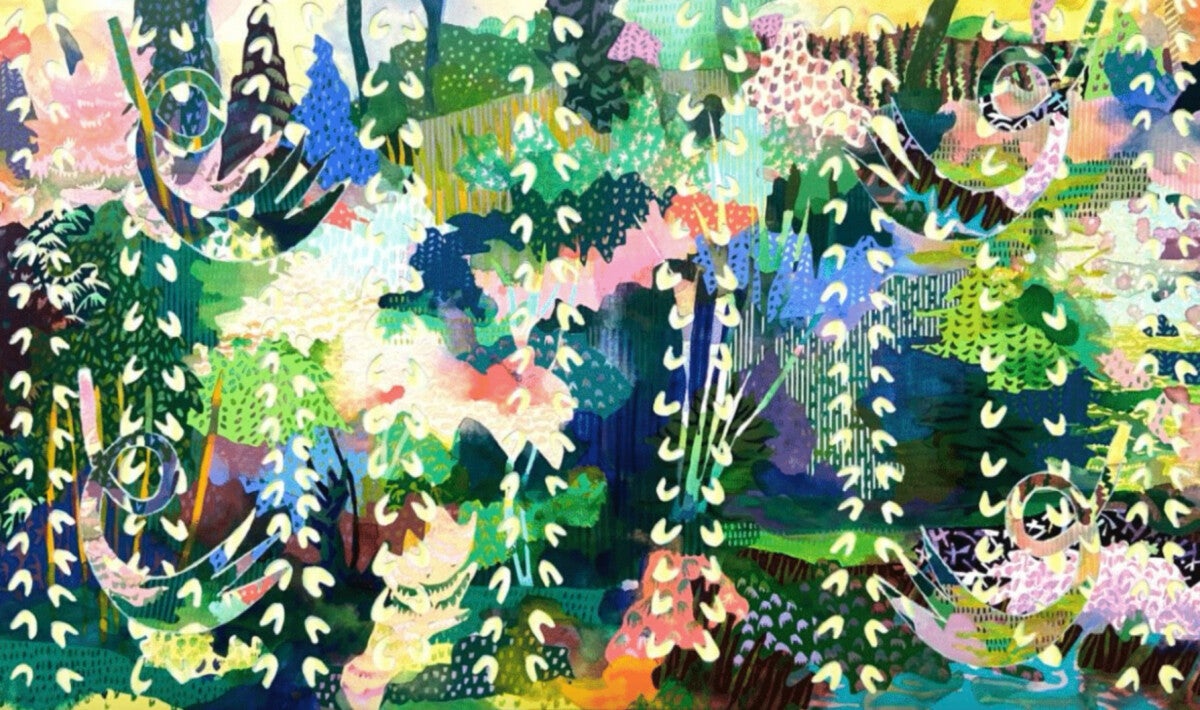
Acrylic on cut canvas
36 x 60 inches
Dahlia Elsayed
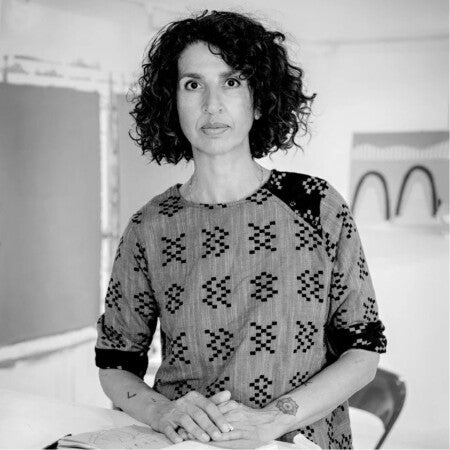
Image courtesy of the artist and Morgan Lehman Gallery
(American, b. 1969)
Level 2, MBA Program Office
Dahlia Elsayed is a multidisciplinary artist whose work merges narrative and landscape into visual compositions that examine personal geography. She uses painting, installation, and sculpture to craft fictional landscapes that combine elements of East and West. These allegorical scenes employ a symbolic vocabulary rooted in cartography and comics.
Her interest in these themes stems from her own experience of displacement across multiple generations of her family.
Elsayed’s work has been exhibited throughout the United States and internationally, including the 12th Cairo Biennale, Robert Miller Gallery, BravinLee Programs, The New Jersey State Museum, and Aljira Center for Contemporary Art.
Her work is in the public collections of the Newark Museum, the Zimmerli Museum, Johnson & Johnson Corporation, and the U.S. Department of State.
She has received awards from the Joan Mitchell Foundation, the Edward Albee Foundation, Visual Studies Workshop, the MacDowell Colony, Women’s Studio Workshop, Headlands Center for the Arts, and the New Jersey State Council on the Arts.
A professor of humanities at CUNY LaGuardia Community College, she received an MFA from Columbia University. Elsayed lives and works in New Jersey.
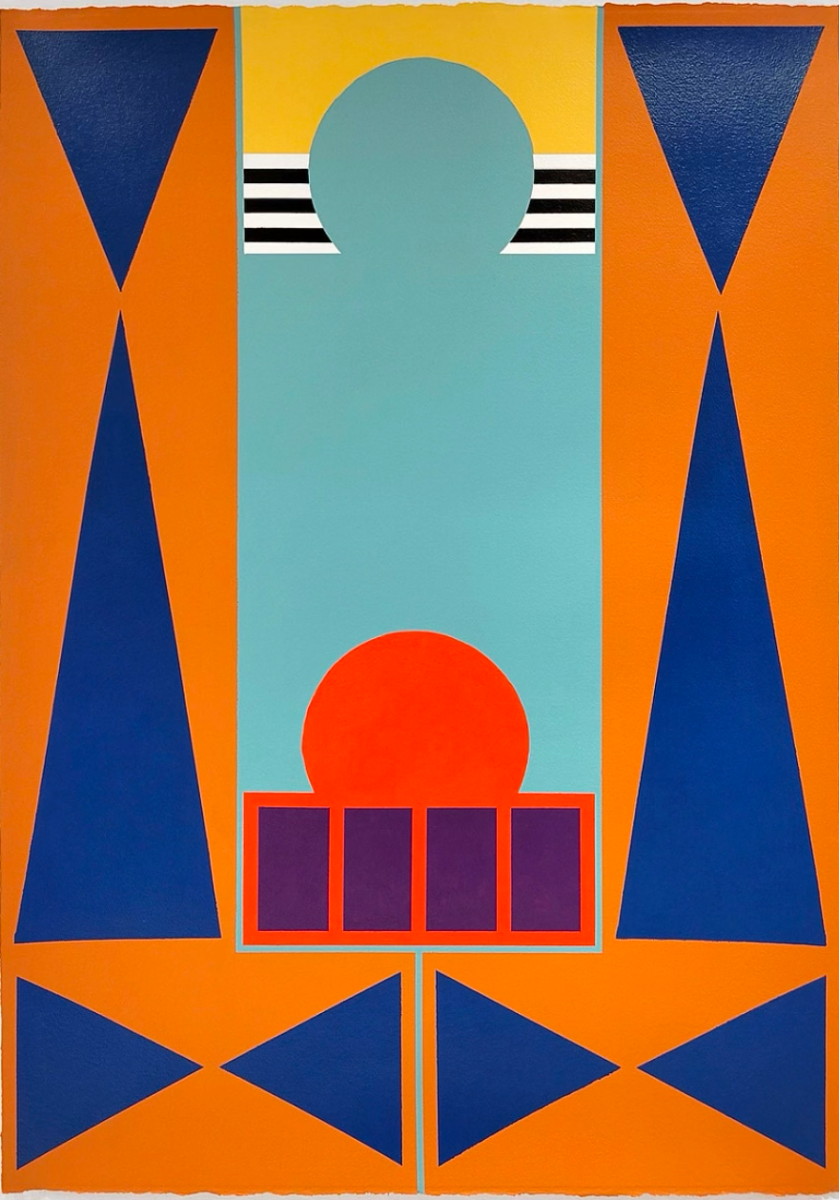
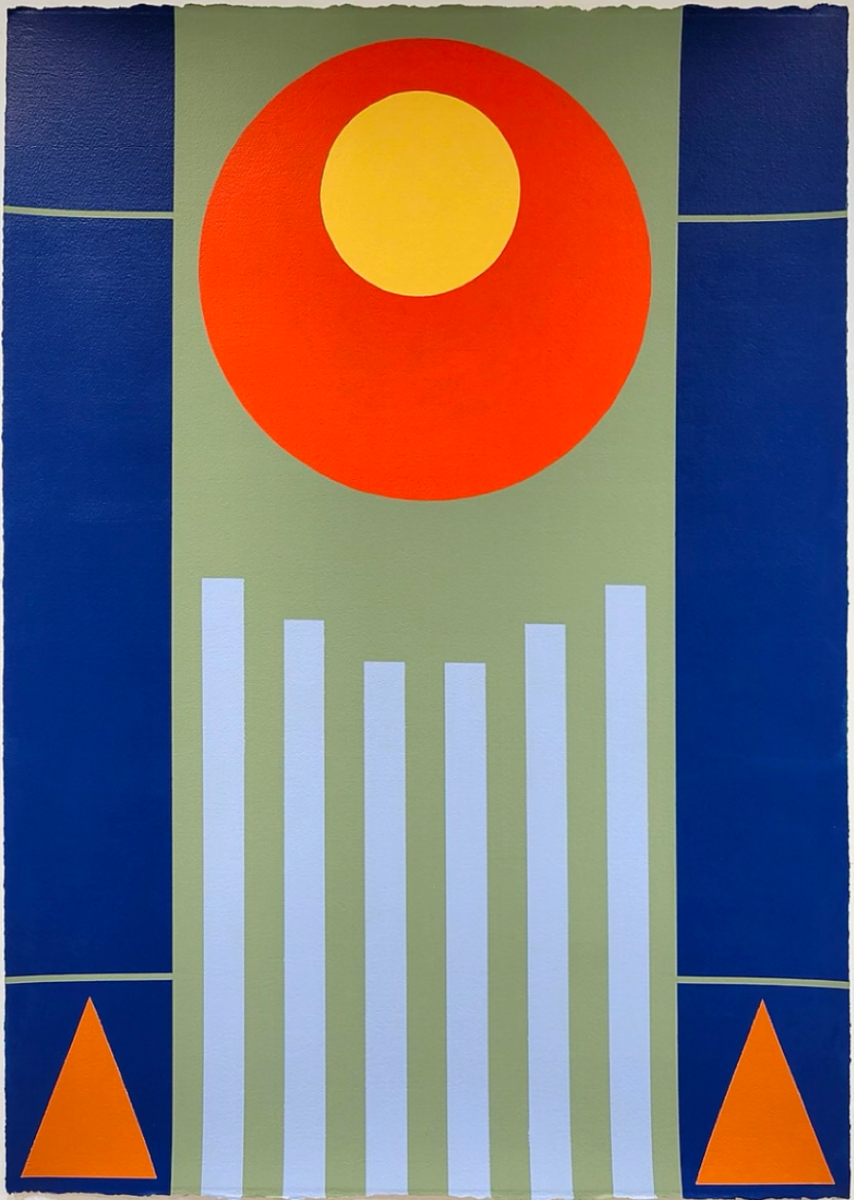
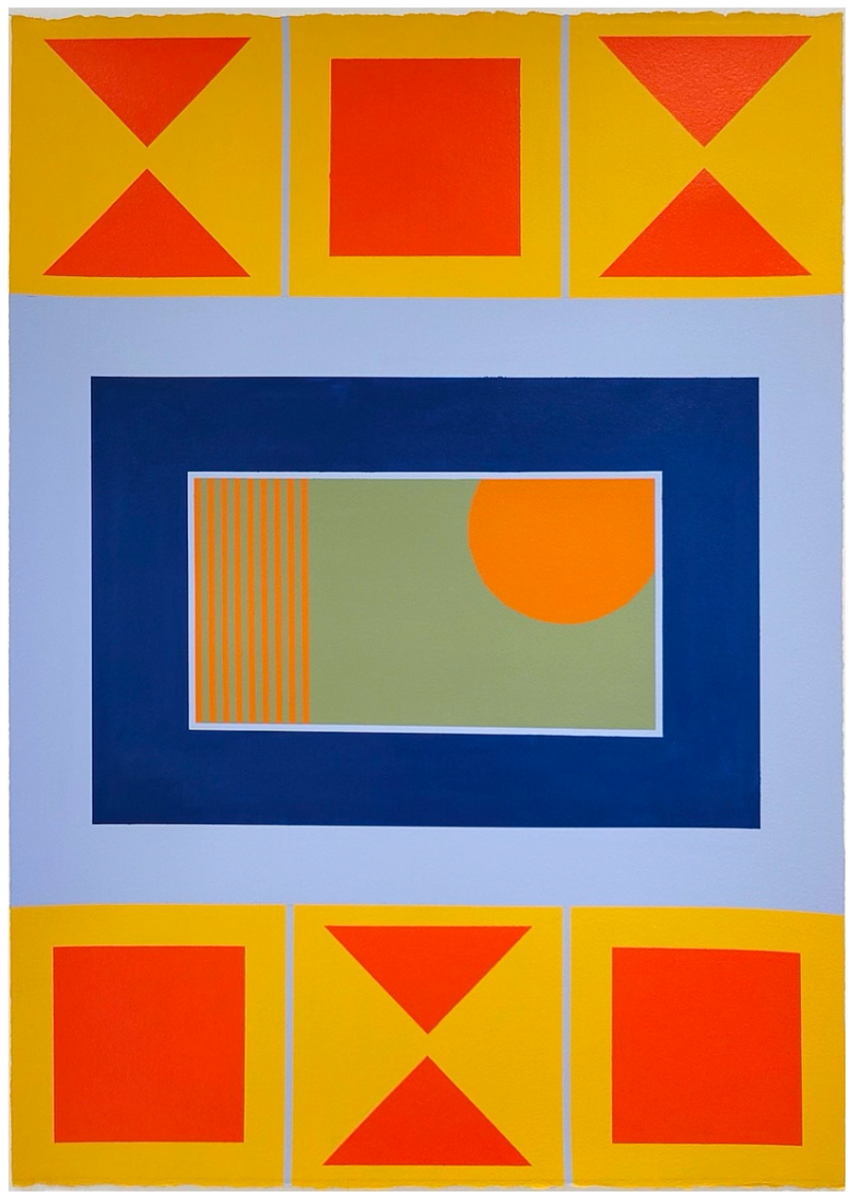
“Loud and Clear,” “Sky Conditions,” “Thick of Things,” 2022
Acrylic on paper
42 x 30 inches each
Nathan Randall Green
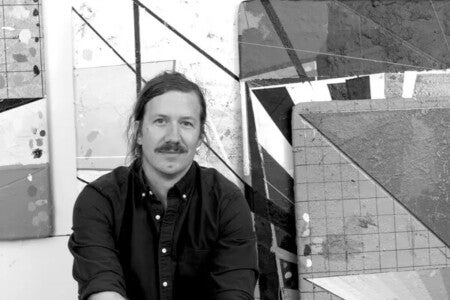
Image courtesy of the artist and Morgan Lehman Gallery
(American, b. 1980)
Level 1, Corridor
Nathan Randall Green’s art is a contemplation of the grandeur and scale of the universe. He takes a tactile approach to his painting by building irregularly shaped, rounded panels rich with surface texture. They are scraped, sanded, patched, and weathered with the history of their making.
Born in Houston, Green received a Bachelor of Fine Arts from The University of Texas at Austin and has painted murals domestically and abroad.
He is a founding member and partner of Okay Mountain Gallery and Collective in Austin and was a curator of education at the Modern Art Museum of Fort Worth. Most recently his work has been exhibited at the Erin Cluley Gallery in Dallas, Morgan Lehman Gallery in New York, Walter Storms Galerie in Munich, Qualia Contemporary in Palo Alto, and SPRING / BREAK in New York.
He has exhibited works in the Austin Museum of Art, Contemporary Art Museum Houston, Dallas Contemporary and participated in artist-in-residence programs in Connecticut, New York, Vermont, Michigan, Illinois, and Dallas.
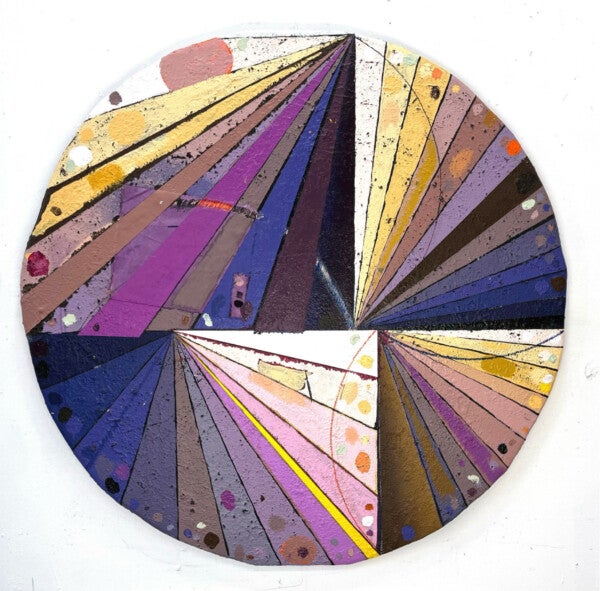
Acrylic and paper pulp on canvas, artist panel
48 x 48 inches
Jacob Hashimoto
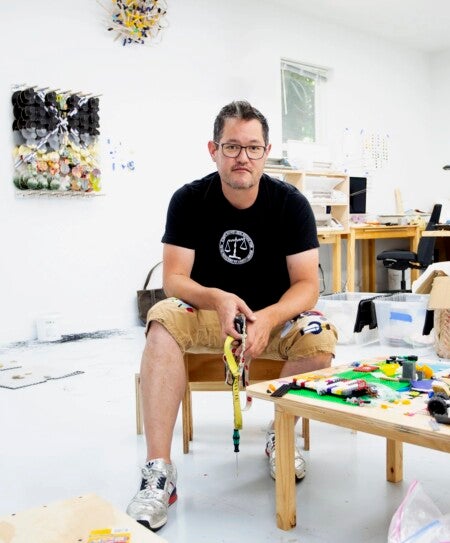
Image courtesy of the artist
(American, b. 1973)
Atrium
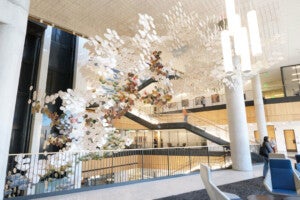
Jacob Hashimoto was commissioned to create“ The Wind’s Gathering Applause,”a monumental, site-responsive installation specifically for the five-story entrance to Rowling Hall. The cloudlike form is designed to be viewed from all sides, with each perspective offering a unique experience of the artwork, which is made from over 5,000 handcrafted bamboo and paper kites coated in resin.
A lexicon of more than 500 graphics was developed by the artist and incorporated into the kites — referencing local landscapes, cultural landmarks in and around Austin, and other symbols meaningful to the University.
Hashimoto is known for creating intricate worlds layered with images drawn from history, culture, technology, and nature. His work references video games, natural and virtual environments, and cosmology, while remaining deeply rooted in art traditions such as landscape-based abstraction, modernism, and handcraft.
His works are included in collections at Art in Embassies, U.S. Department of State; The California Endowment, Los Angeles; Capital One, McLean, Virginia; Fondation Carmignac, Porquerolles, France; Cornell Tech Art Collection, New York; Los Angeles County Museum of Art; McDonald’s Corporation, Chicago; the Metropolitan Museum of Art, New York; Microsoft Corporation, Redmond, Washington; Tacoma Art Museum, Washington; Tokiwabashi Tower Art Collection, Tokyo; and others.


“The Wind’s Gathering Applause,” 2026
Resin, bamboo, screenprints, UV prints, acrylic, stainless steel, and Spectra
47 x 43 x 36 feet
Sarah Anne Johnson
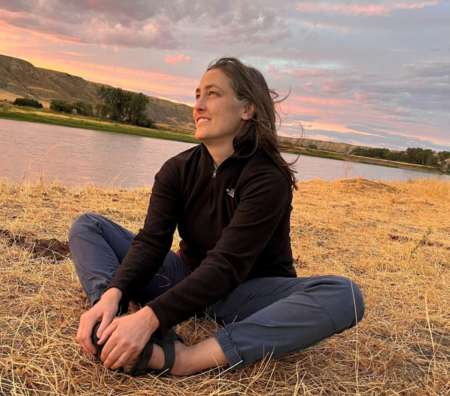
Image courtesy of the artist and
Yossi Milo Gallery, New York
(Canadian, b. 1976)
Level 5, Corridor
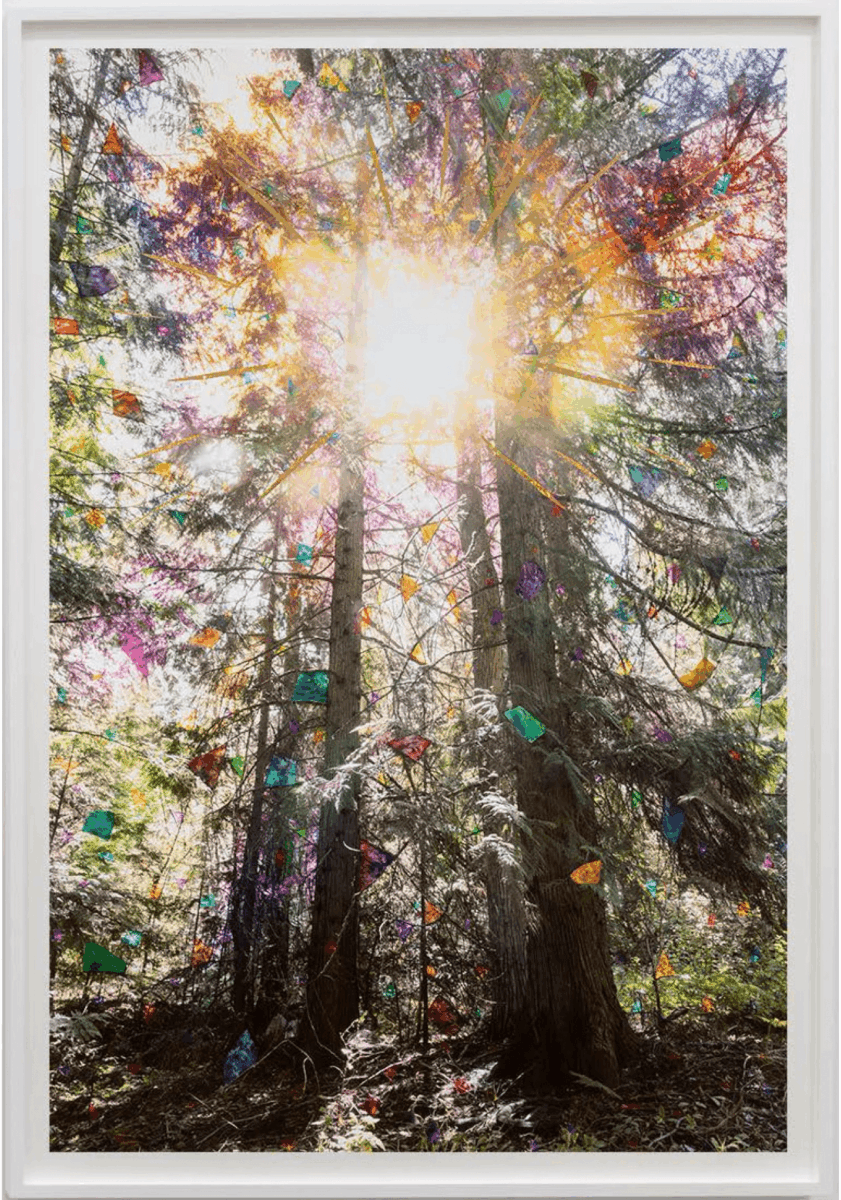
Sarah Anne Johnson’s digitally altered photographs are meant to create a sense of happiness, connection to the landscape, and a feeling of belonging in nature.
Her work references Indigenous knowledge, plant biology, and the impacts of nature on ancient architecture.
She references Canada’s Group of Seven painters and the Hudson River School, both of which depicted landscapes as cathedrals.
Johnson alters photos of the Manitoba woods near her home digitally and manually, using Photoshop, paint, and foil to add bright spots of color and shine between tree branches and tangles of foliage. The resulting kaleidoscopic images are dreamy, psychedelic, and whimsical.
Her work has been featured in group exhibitions across the globe and is held in permanent collections at the Metropolitan Museum of Art, New York; Solomon R. Guggenheim Museum, New York; Phillips Collection, Washington, D.C.; the Hirshhorn Museum and Sculpture Garden of the Smithsonian Institution, Washington, D.C.; North Carolina Museum of Art, Raleigh; Canadian Museum of Contemporary Photography, Ottawa; and Musée départemental d’art contemporain de Rochechouart, France.
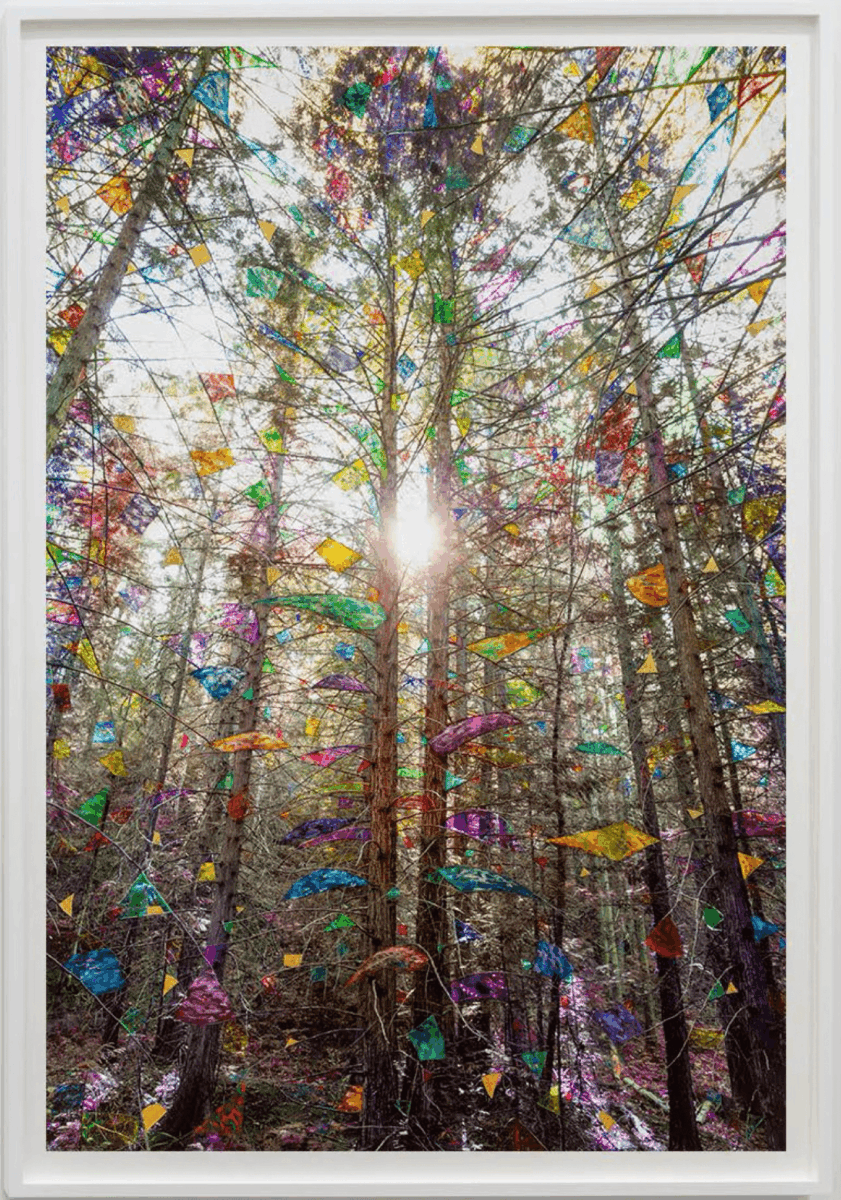
“Glow (Cedar Forest),” 2025
“Sun Burst (Cedar Forest),” 2025
Pigment print with oil paint and holographic tape
Artist’s proof
64 5/8 x 44 5/8 inches framed, each
Jules Buck Jones
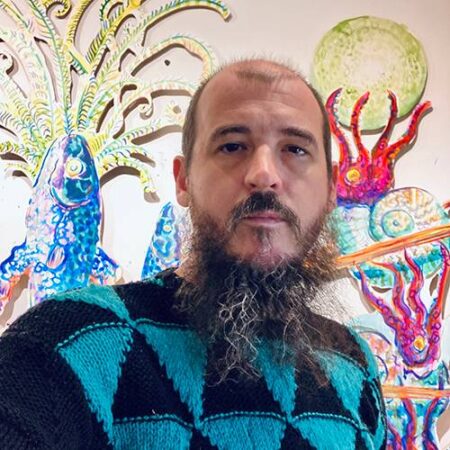
Image courtesy of the artist
(American, b. 1952)
Level 4, Study Room
Jules Buck Jones creates playful and dynamic abstracted images of landscapes, flora, and fauna that focus on the patterns and rhythms of nature. He leans into his lyrical vocabulary of mark-making, washes, and line work to visually bridge the movement of sky, water, earth, and a variety of lifeforms.
He coined the term “rivernacular” to describe this style, which he likens to the transformative power of rivers as they draw, create, and transform the landscape over time. The forms, lines, and patterns repeated in his new and ongoing series of paintings and drawings mimic the grand and granular frequencies that the universe infinitely produces.
Jones has had residencies at Skowhegan (Maine) School of Painting and Sculpture; The Light House Works, Fisher Island, New York; Vermont Studio Center, Johnson, Vermont; Arrowmont, Gatlinburg, Tennessee; and the Everglades National Park, Homestead, Florida.
His work has been exhibited extensively throughout Texas and his native Virginia. Jones currently lives and works in Wimberley and teaches drawing and painting at Texas State University in San Marcos. He earned an MFA from The University of Texas at Austin in 2008.
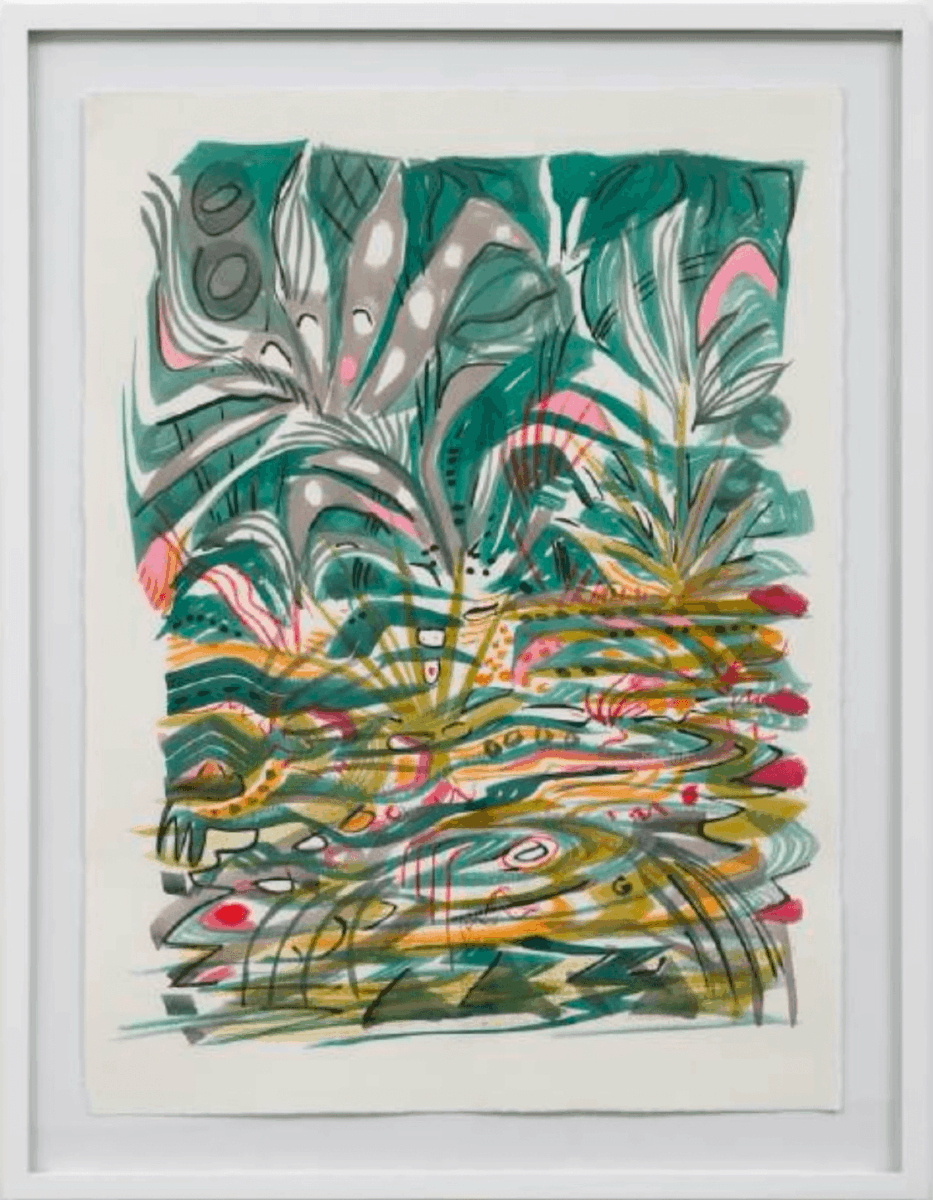
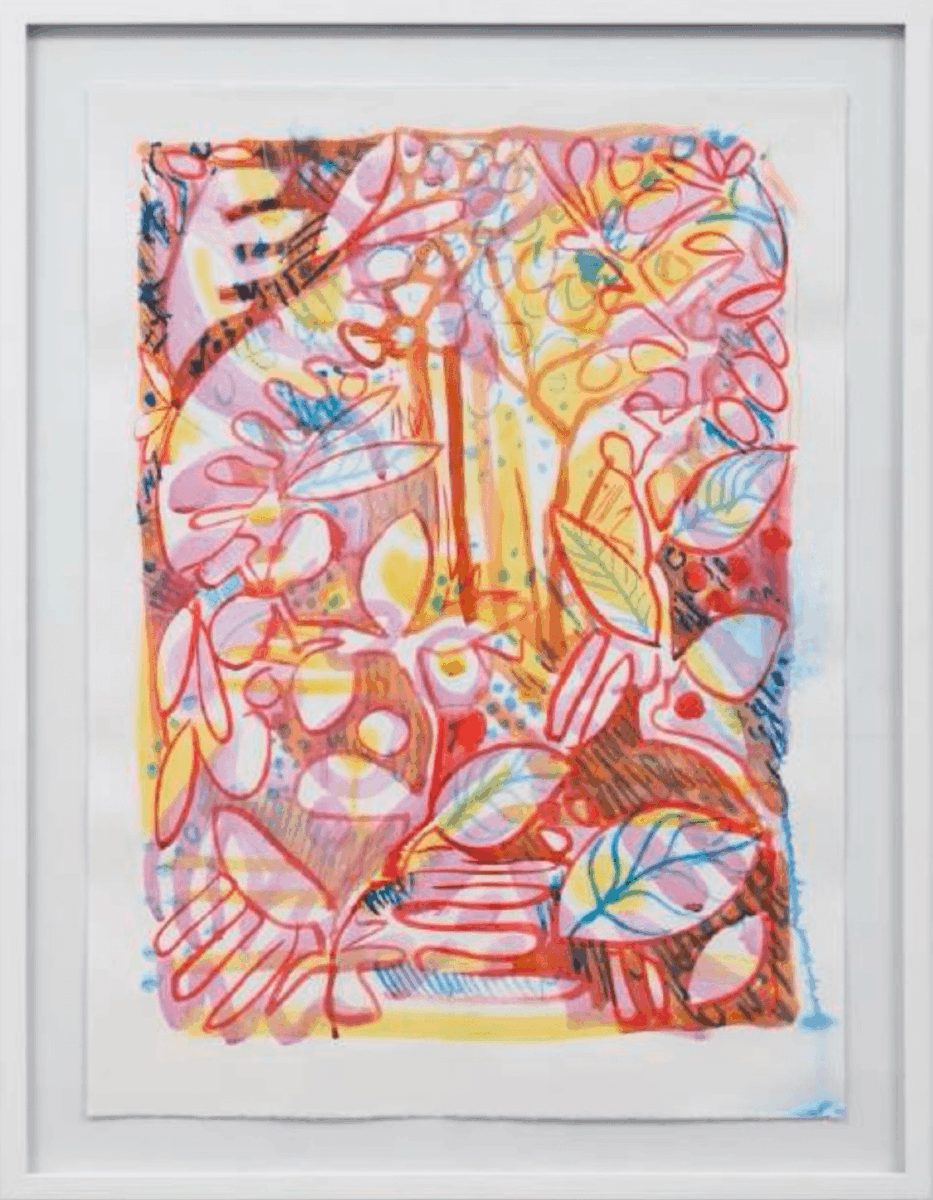
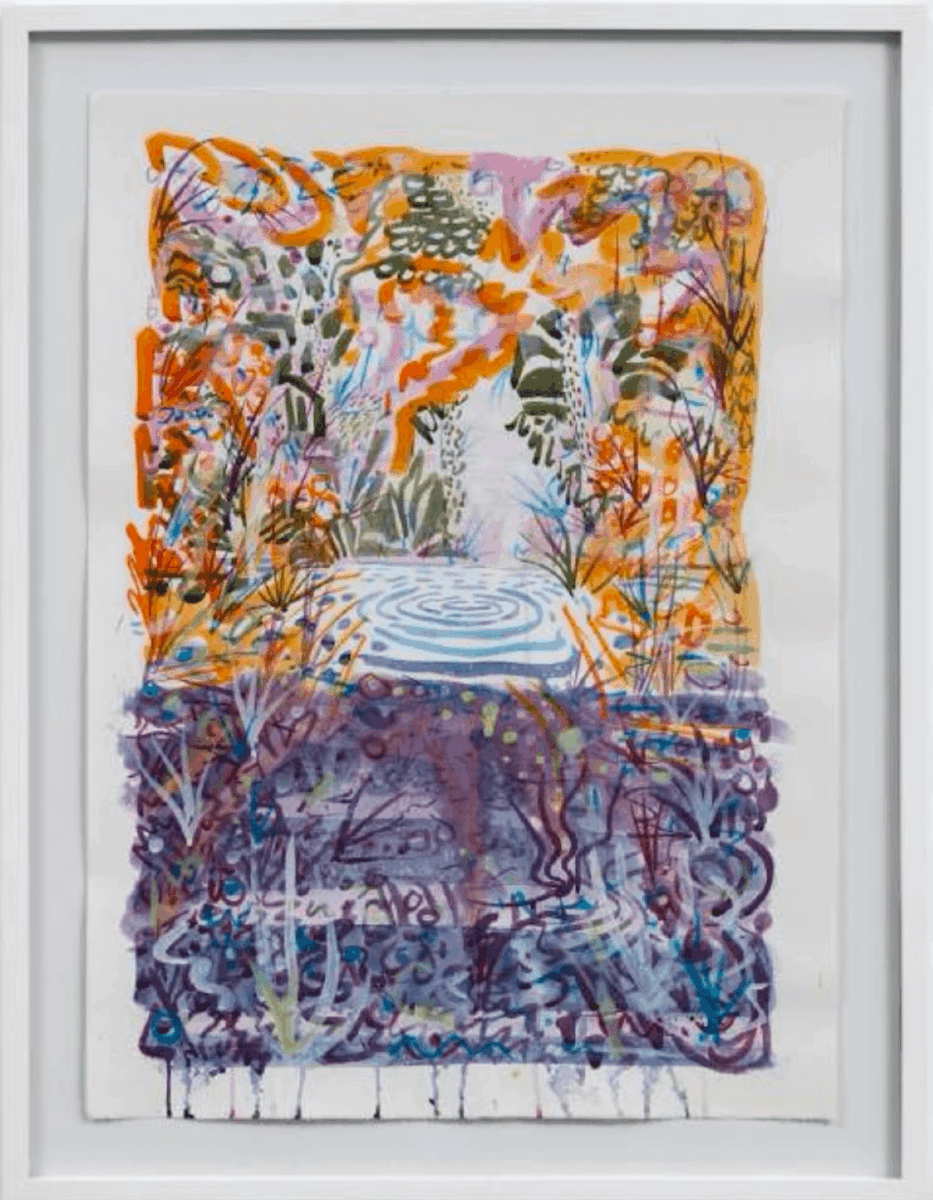
“Shadow Shape,” “Riparian Rhythm,” “Secret Springs 2,” 2024
Watercolor and ink on paper
36 x 28 inches each
Ellsworth Kelly
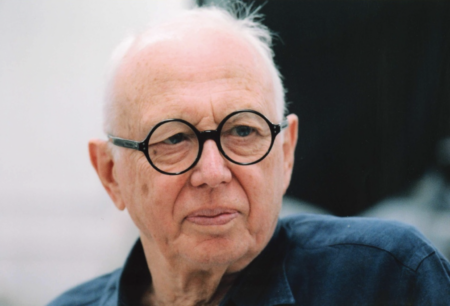
Image courtesy of Gemini G.E.L. Photo © Sidney B. Felsen
(American, 1923-2015)
Level 1, Corridor
Ellsworth Kelly’s innovations of the late 1940s and early 1950s helped reshape abstract art for decades. His development of the monochrome and the multipanel painting, his devotion to integral forms, and his use of chance and seriality would prove central to painting’s break with expressionism in the 1960s.
But his approach to abstraction was also utterly unique, grounded in particulars rather than universals. His use of found compositions — the fold of a cigarette packet or the contour of a grape leaf — opened a new horizon of possibilities. “Everywhere I looked, everything I saw became something to be made, and it had to be made exactly as it was, with nothing added,” he said.
Born in Newburgh, New York, he moved to France in 1948, experiencing a wide range of classical and modern art. He returned to New York in 1954 and two years later had his first exhibition at the Betty Parsons Gallery. The Museum of Modern Art in New York organized his first retrospective in 1973.
Subsequent exhibitions have been held at museums around the world, including the Solomon R. Guggenheim Museum in New York, the Tate Gallery in London, Haus der Kunst in Munich, and the Centre Pompidou in Paris.
“Colored Squares 1” is an exploration of form and color that can be seen translated into physical form in “Austin” (2018), the chapel built on the grounds of the Blanton Museum of Art, a short walk from Rowling Hall. The structure is the only building the artist designed.
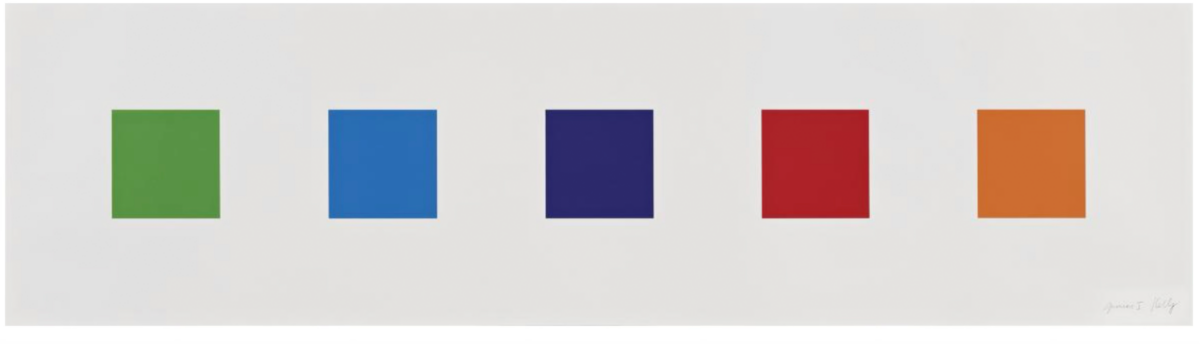
5-color lithograph; Edition of 35
21 x 77 inches
Landry McMeans
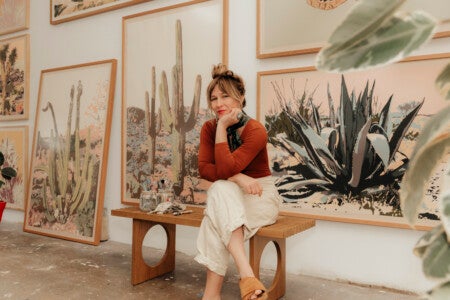
Image courtesy of the artist
(American, b. 1985)
Level 3, Study Room
Landry McMeans lives and works in Austin and has a passion for the American West. Her limited-edition stencil paintings bring to life a sun-bleached dreamworld of iconic Southwest landscapes and its flora and fauna with large-scale, life-size works.
“Nature, largely the desert, is my muse. I have an obsession with color relationships and love the challenge of simplifying an image into its most essential and beautiful parts. I extract what’s necessary and play with color palettes. I enlarge and amplify what is normally small and overlooked to create a powerful, immersive, and serene experience.”
She originally found inspiration for her work from almost a decade of summers touring the Southwest as a musician, making long desert drives from gig to gig on hot summer days.
Her subjects include the ocotillo, a native plant in the southwestern United States, known for its ability to sprout leaves after rainfall and shed them during dry periods, conserving water. Another inspiration is Terlingua, Texas, a historic mining town near Big Bend National Park that began as a small Mexican settlement.
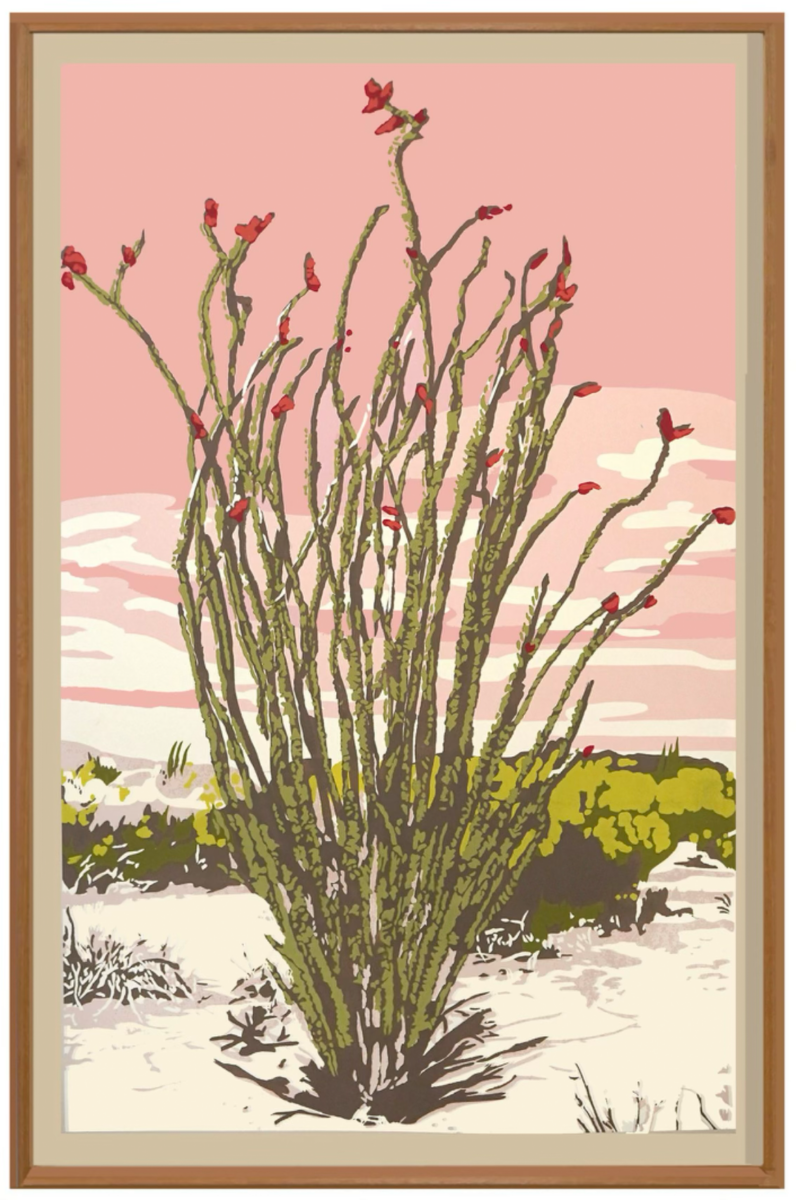
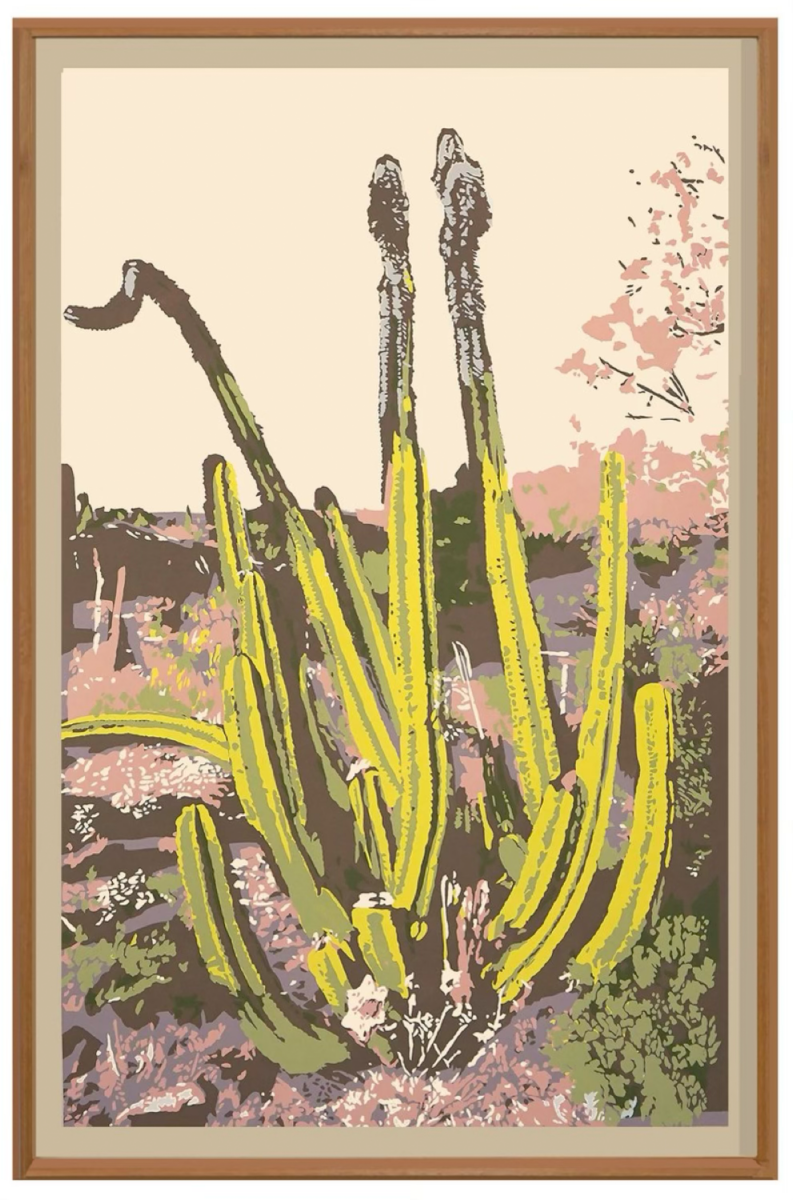
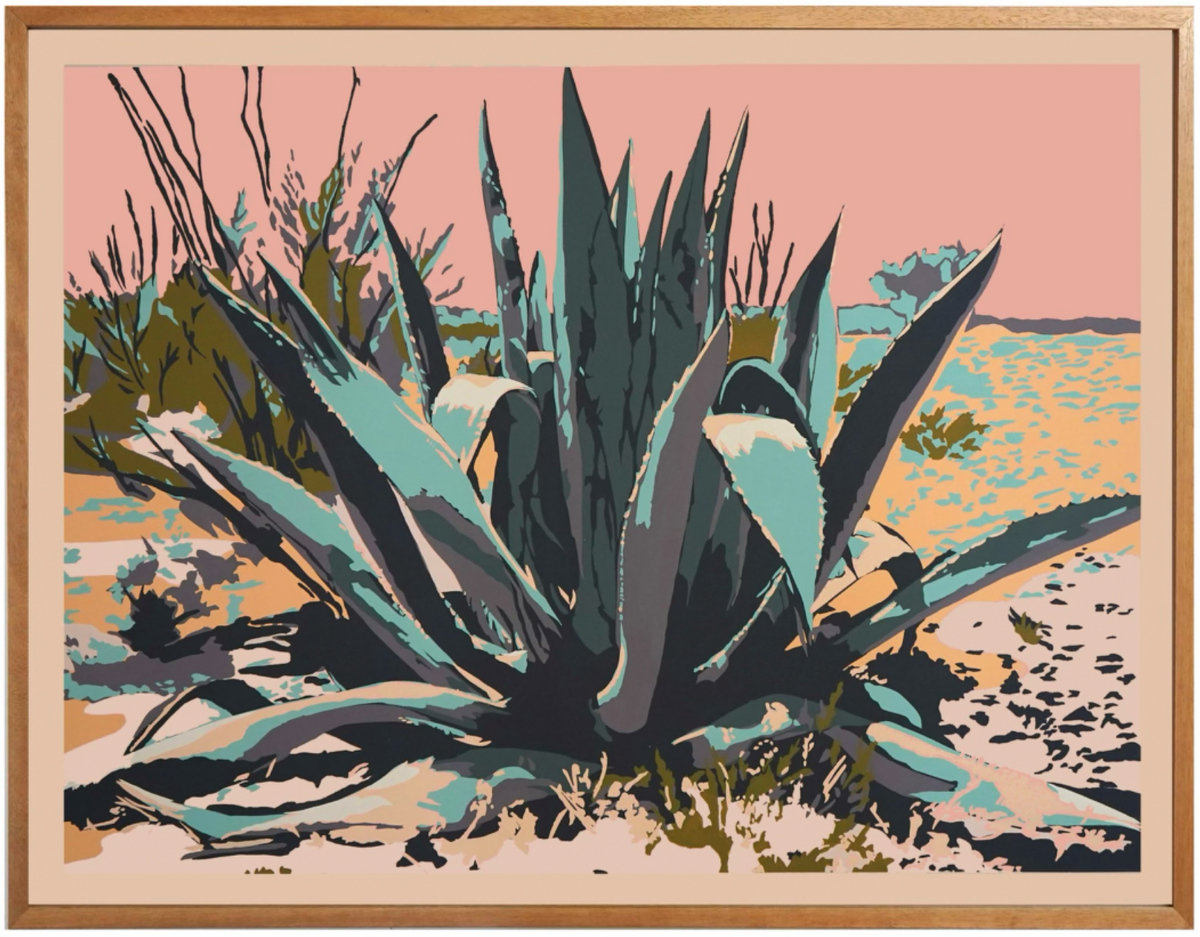
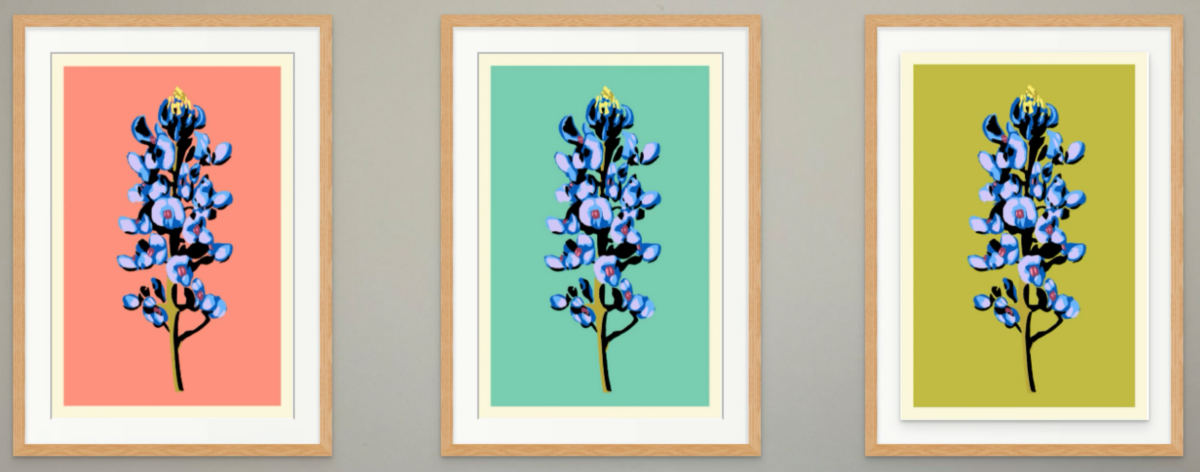
“Ocotillo,” 2025
“Organ Pipe,” 2025
Original hand-cut stencil paintings
65 x 42 inches, each
“Terlingua,” 2025
Original hand-cut stencil painting
38 1/2 x 50 inches
“Bluebonnets,” 2025
Edition stencil painting
30 x 20 inches each
David Nash
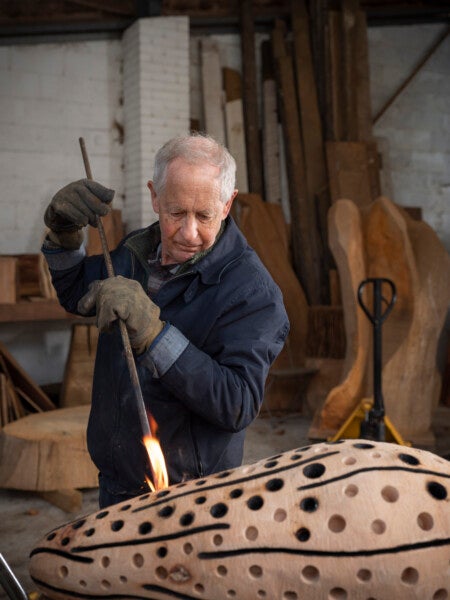
Image courtesy Cristea Roberts Gallery, London Photograph ©Jonty Wilde
(British, b. 1945)
Level 4, Study Room
David Nash is one of Britain’s most prolific sculptors and land artists. His art is inspired by nature, especially the rural landscape around his home in Wales. He mainly uses wood, growing and shaping saplings into domes and grids, and carving fallen trees into sculptures.
He documents his progress through drawings, film, photographs and more recently, pastel stencil editions, which reflect the natural formations and shapes in his sculpture. While many of the works are literal in their connection to nature, Nash’s more abstract pictures allow viewers to bring their own thoughts and interpretations.
His work is held in over 80 public collections worldwide, including the Museum of Modern Art, Caracas; Uffizi Gallery, Florence; Hiroshima City Museum of Contemporary Art; Victoria and Albert Museum, London; Tate Gallery, London; Metropolitan Museum of Art, New York; Solomon R. Guggenheim Museum, New York; Museum of Contemporary Art, Tokyo; and Yorkshire Sculpture Park, Wakefield.
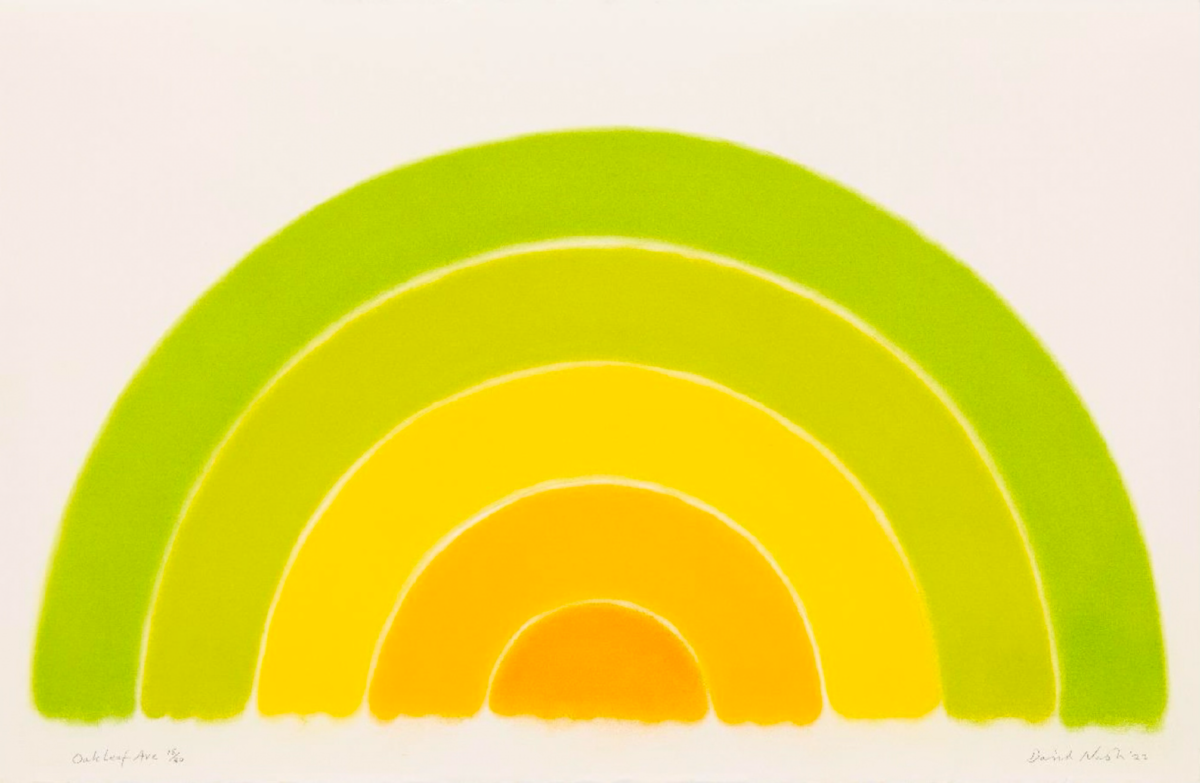
Pastel stencil on Arches
Edition of 30
26 1/4 x 41 inches
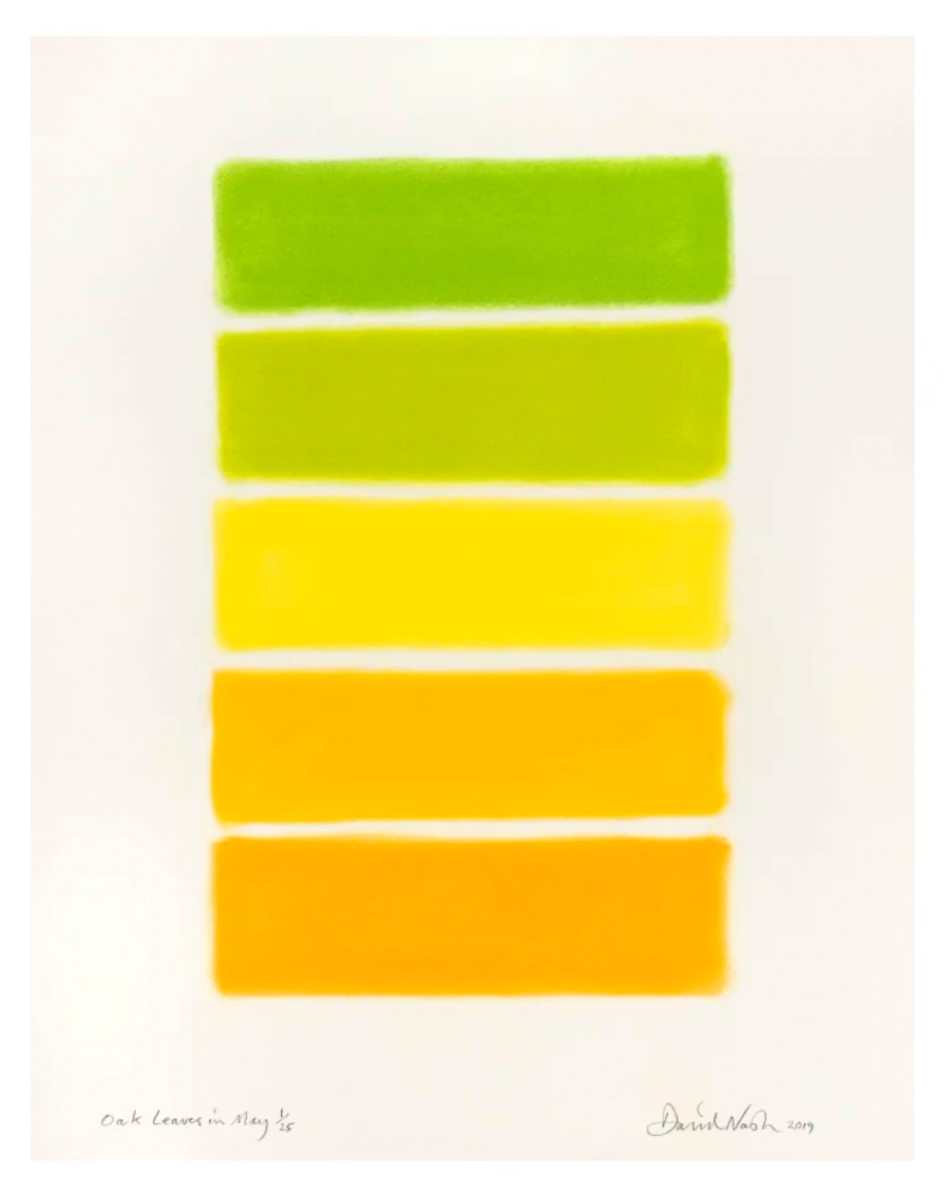
Pastel stencil on Arches
Edition of 30
26 x 20 1/4 inches
Kenny Nguyen
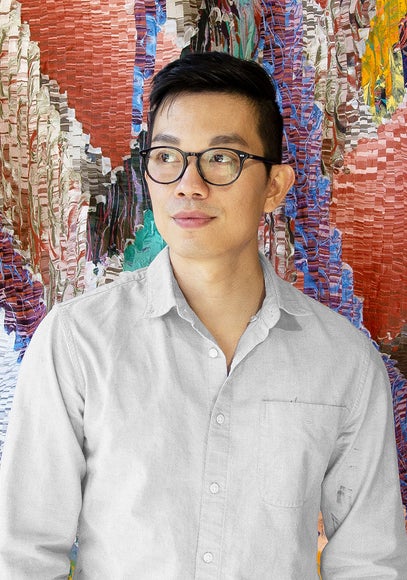
Image courtesy of the artist and Sundaram Tagore Gallery
(Vietnamese American, b. 1990)
Level 1, Corridor
Kenny Nguyen creates expansive, dimensional, mixed-media paintings that center on ideas of cultural identity, displacement, and integration. He grew up on a coconut farm in southern Vietnam and established a career in fashion design. In 2010, he joined his family when they moved to the United States.
Drawing from his experience working with textiles such as silk, Nguyen developed a distinctive technique to produce sensuous, three-dimensional works that he describes as “deconstructed paintings.” He tears swaths of fabric into hundreds of strips that he dips in acrylic paint and adheres to raw canvas.
The paintings are often affixed to the wall with pushpins, allowing him the flexibility to rehang, stretch, or drape each unique installation.
Nguyen has participated in exhibitions at the Sejong Museum of Art, Seoul; CICA Museum (Czong Institute for Contemporary Art), Gimpo, Gyeonggi Province, Korea; Kunstwerk Carlshütte, Büdelsdorf, Germany; LaGrange Art Museum, Georgia; Museum of Contemporary Art, Jacksonville, Florida; Orange County Center for Contemporary Art, Santa Ana, California; and the Rayburn House Office Building, U.S. Capitol Complex, Washington, D.C.
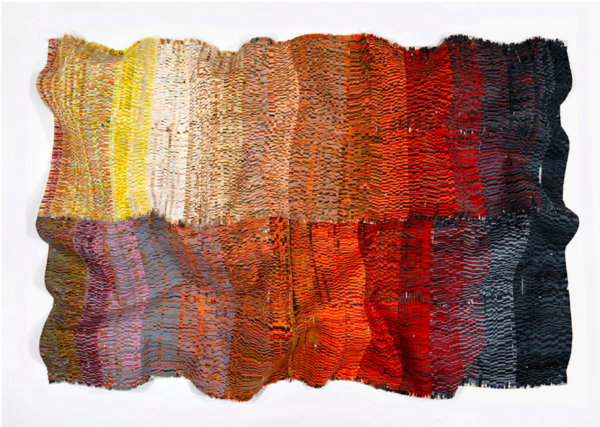
Hand-cut silk fabric, acrylic paint
71 x 109 inches
Odili Donald Odita
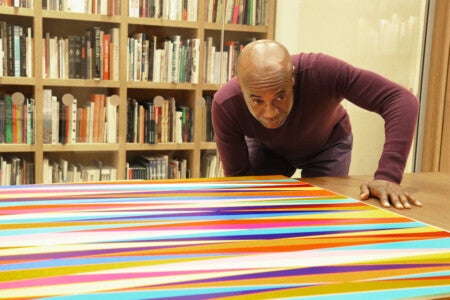
Image courtesy Cristea Roberts Gallery, London Photo ©Darrell Tuffs
(Nigerian American, b. 1966)
Level 2, Corridor
Odili Donald Odita brings heightened awareness to color and space in paintings where abstraction is an optically, physically, and culturally felt phenomenon.
Though they are rooted in a broad range of historical lineages — Africanist approaches to pattern; modernist painting and design; and contemporary conceptual positions, to name a few — his compositions make immediate appeals to the senses in the here and now.
Odita’s take on non-objective art is suffused with connectivity to the world around him, and it arises from memories, philosophical reflections, and meditations on the ways in which political forces shape relationships between perception and form.
Odita lives and works in Philadelphia, and his recent solo exhibitions include the Museum of Modern Art, New York; Abroms-Engel Institute for the Visual Arts, Birmingham, Alabama; Contemporary Dayton, Ohio; Boca Raton Museum of Art, Florida; Virginia Museum of Fine Arts, Richmond; Institute of Contemporary Art, Miami; and Nasher Museum of Art at Duke University, Durham, North Carolina.
His work is in the permanent collections of the Baltimore Museum of Art; Hirshhorn Museum and Sculpture Garden, Washington, D.C.; Pérez Art Museum, Miami; Philadelphia Museum of Art; SFMOMA, San Francisco; and The Studio Museum in Harlem, New York.


“Black Star,” 2024
Silkscreen on Somerset Tub sized Satin 410 gsm paper, edition of 35
43 1/4 x 43 1/4 inches
“Firewall: Fade-out,” 2023
“Firewall: Light,” 2023
“Firewall: Night,” 2023
“Firewall: One,” 2023
Silkscreen prints on Somerset Radiant white 410 gsm paper
47 1/4 x 39 3/4 inches each
Julian Opie

Image courtesy of the artist
(British, b. 1958)
Level 2, Corridor
Julian Opie’s distinctive formal language is instantly recognizable and reflects his artistic preoccupation with the idea of representation and how images are perceived and understood.
“Everything you see is a trick of the light,” Opie writes. “Light bouncing into your eye, light casting shadows, creating depth, shapes, colors. Turn off the light and it’s all gone. We use vision as a means of survival, and it’s essential to take it for granted in order to function, but awareness allows us to look at looking and by extension look at ourselves and be aware of our presence.”
Drawing influence from classical portraiture, Egyptian hieroglyphs and Japanese woodblock prints, as well as public signage and traffic signs, he connects the clean visual language of modern life with the fundamentals of art history.
Opie lives and works in London, and his work can be found in public and private collections including Deutsche Bank, Kunsthaus Zurich, and the Daros Collection, Zurich, Switzerland; ICA and Museum of Fine Arts, Boston; Institut Valencia d/Art Modern, Spain; Kunsthalle Bern, Switzerland; Neues Museum, Germany; Museum of Modern Art, New York; Stedelijk Museum, Netherlands; National Portrait Gallery, London; The Victoria and Albert Museum, London; the Tate Gallery, London; and more.
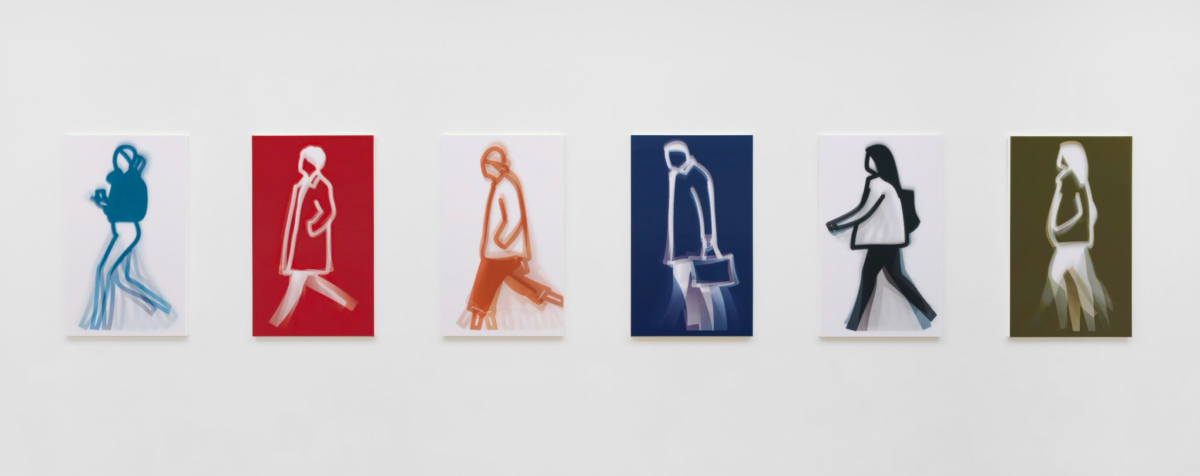
Series of six Lenticular acrylic panels each mounted onto white acrylic
47 1/4 x 28 1/2 inches each
Judy Pfaff
(American, b. 1946)
Level 3, Study Room
An art pioneer of the 1970s, Judy Pfaff creates work that spans disciplines from painting to printmaking to sculpture to installation.
Drawing on a rich array of spiritual, botanical, and art historical imagery, Pfaff works with an unusual range of materials, moving effortlessly between two- and three-dimensional forms.
Each installation considers the specific spatial geometries of the room, the ceiling, even the street out the window, so that no two shows are ever alike. Pfaff and her crew may labor for months or years for shows that last days or weeks, setting her apart from those who may rely on sales of discrete objects.
Her pieces reside in the permanent collections of Museum of Modern Art, Whitney Museum of Art, Tate Gallery, Brooklyn Museum of Art, and Detroit Institute of Arts, among others. Her awards include the Lifetime Achievement Award from the International Sculpture Center, the MacArthur Foundation Award, and the Guggenheim Fellowship.
Pfaff lives and works in Tivoli, New York.
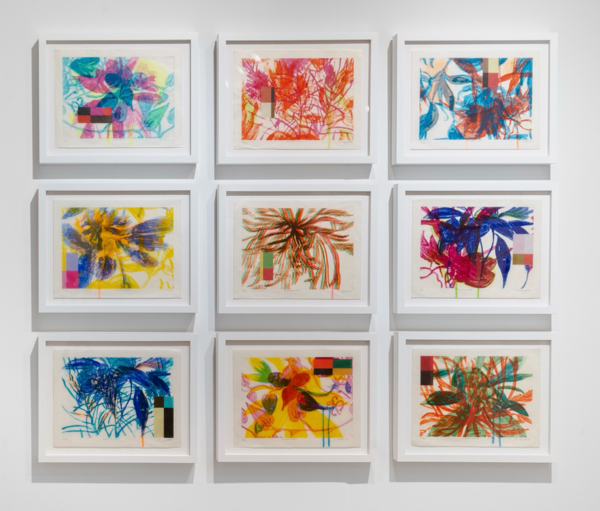
Intaglio, shellac, acrylic paint, and archival inlet on Kozo
10 x 13 inches each
Robert Rauschenberg
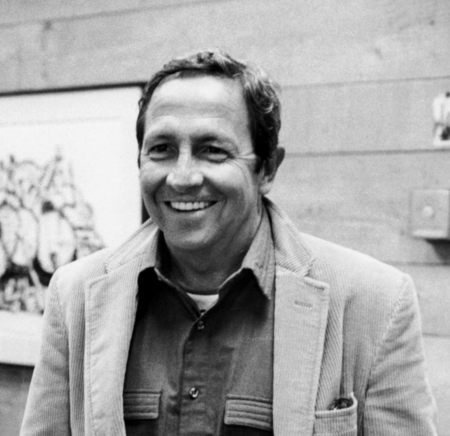
Image courtesy of Gemini G.E.L. Photo © Sidney B. Felsen
(American, 1925-2008)
Level 1, Corridor
During his 60-year career, Robert Rauschenberg’s work was inspired by wide-ranging experiences, lifelong collaborations, and a spirit of experimentation with new materials and techniques.
Although reluctant to be identified with any specific movement, he has been called a forerunner of practically every postwar artistic development since abstract expressionism.
He revolutionized the picture plane through the inclusion of everyday objects, which he termed “gifts from the street,” redefining and expanding the boundaries of what could be considered an artwork.
Rauschenberg was born in Port Arthur, Texas. His most profound formative experience was at the experimental Black Mountain College in North Carolina, where he enrolled in 1948 alongside fellow artist and his future wife Susan Weil. There, he studied under painter and Bauhaus teacher Josef Albers and met composer John Cage and choreographer Merce Cunningham, who became longstanding friends and artistic collaborators.
In 1970, he founded the nonprofit Change Inc. to help artists with emergency expenses. Later, he funded the Rauschenberg Overseas Culture Interchange project, touring 10 countries to spark cross-cultural dialogue and understanding through the creative process.
His work can be found in public and private collections around the globe.
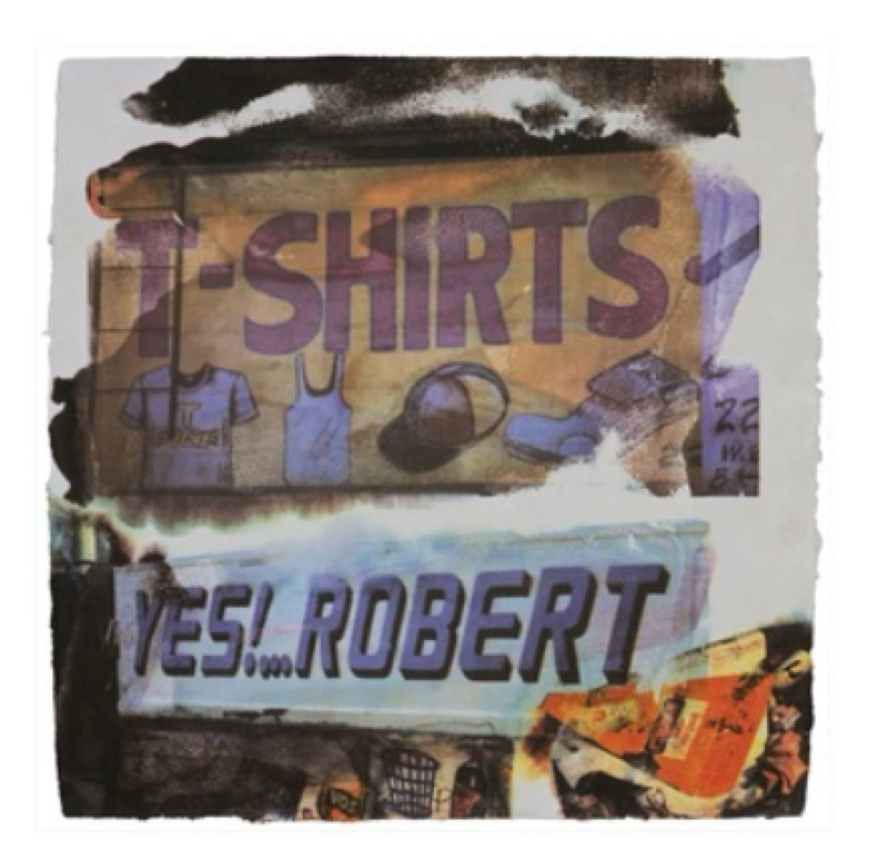
Color screenprint
20 1/2 x 20 1/2 inches
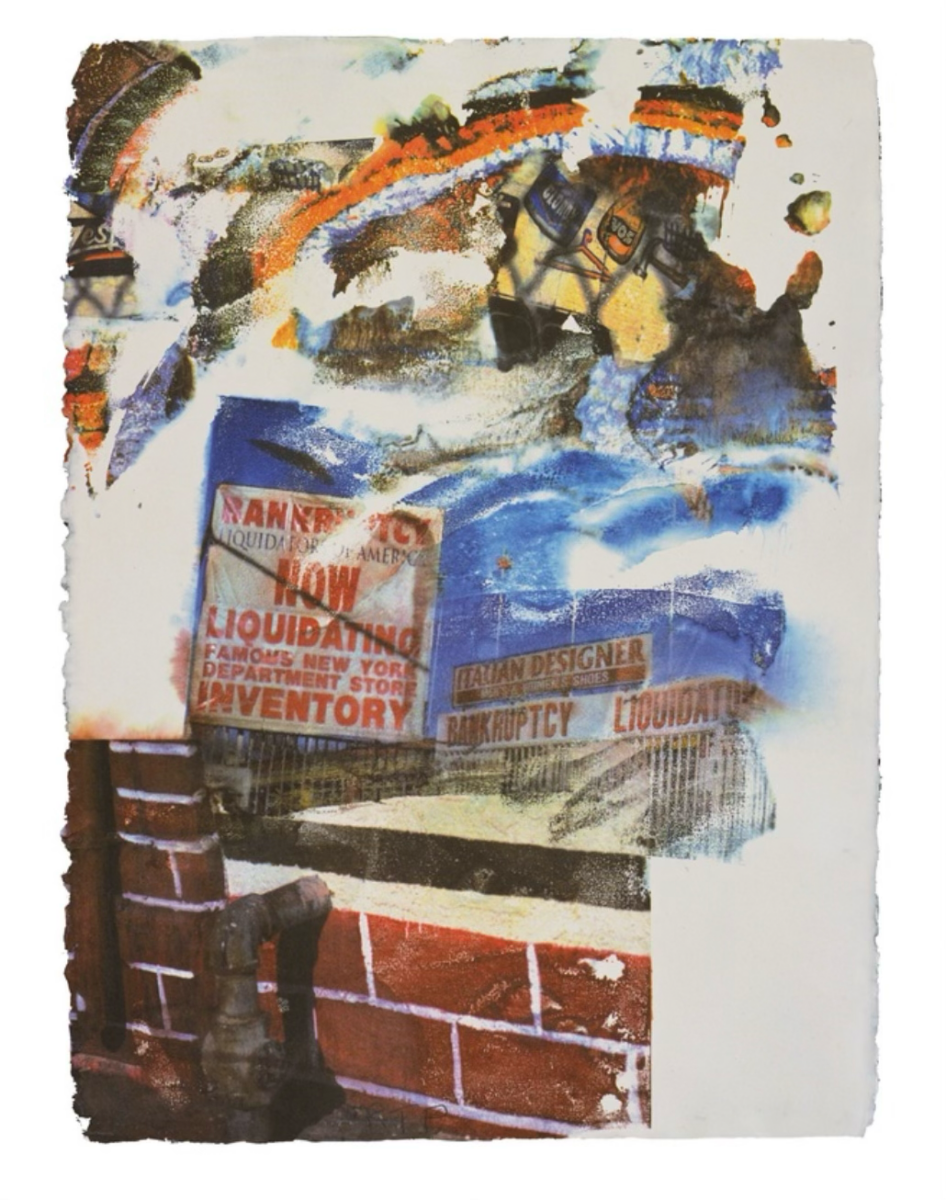
Color screenprint
32 x 23 1/2 inches
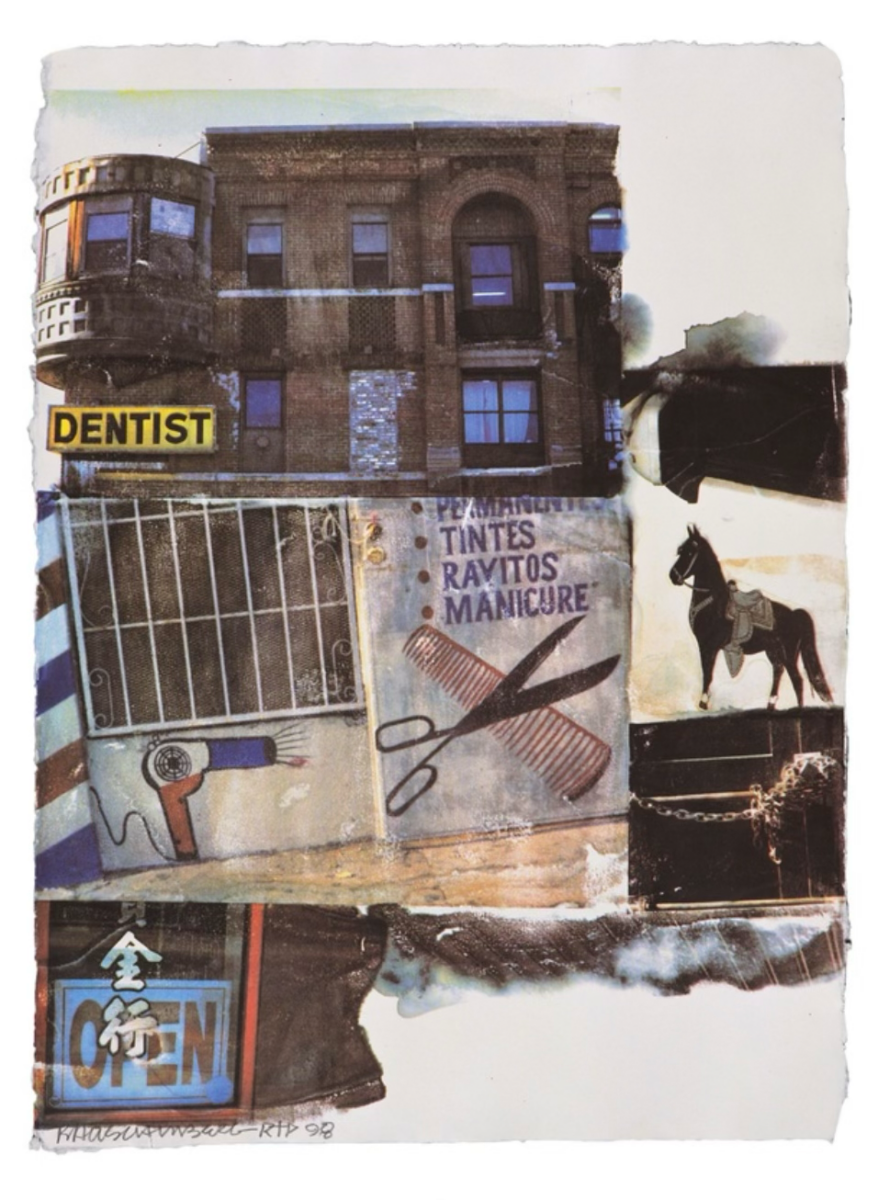
Color screenprint
32 x 23 1/2 inches
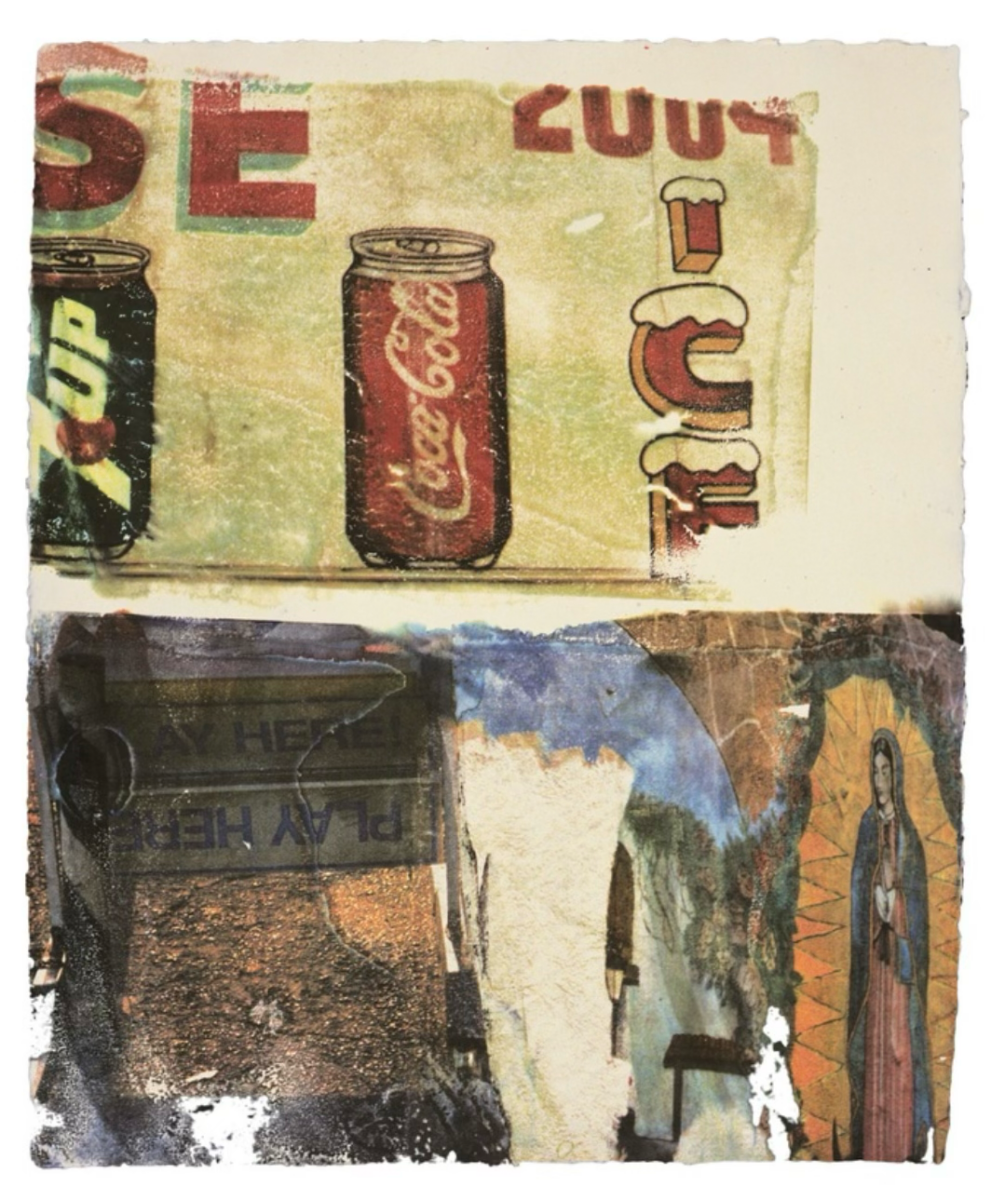
Color screenprint
24 1/2 x 20 3/4 inches
Raymond Saá
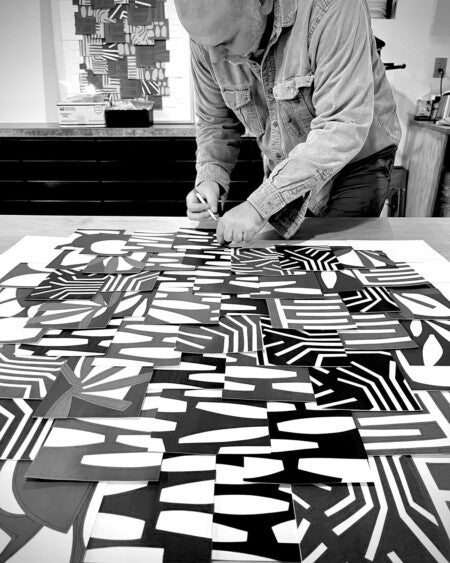
Image courtesy of the artist and Morgan Lehman Gallery
(American, b. 1972)
Level 3, Study Room
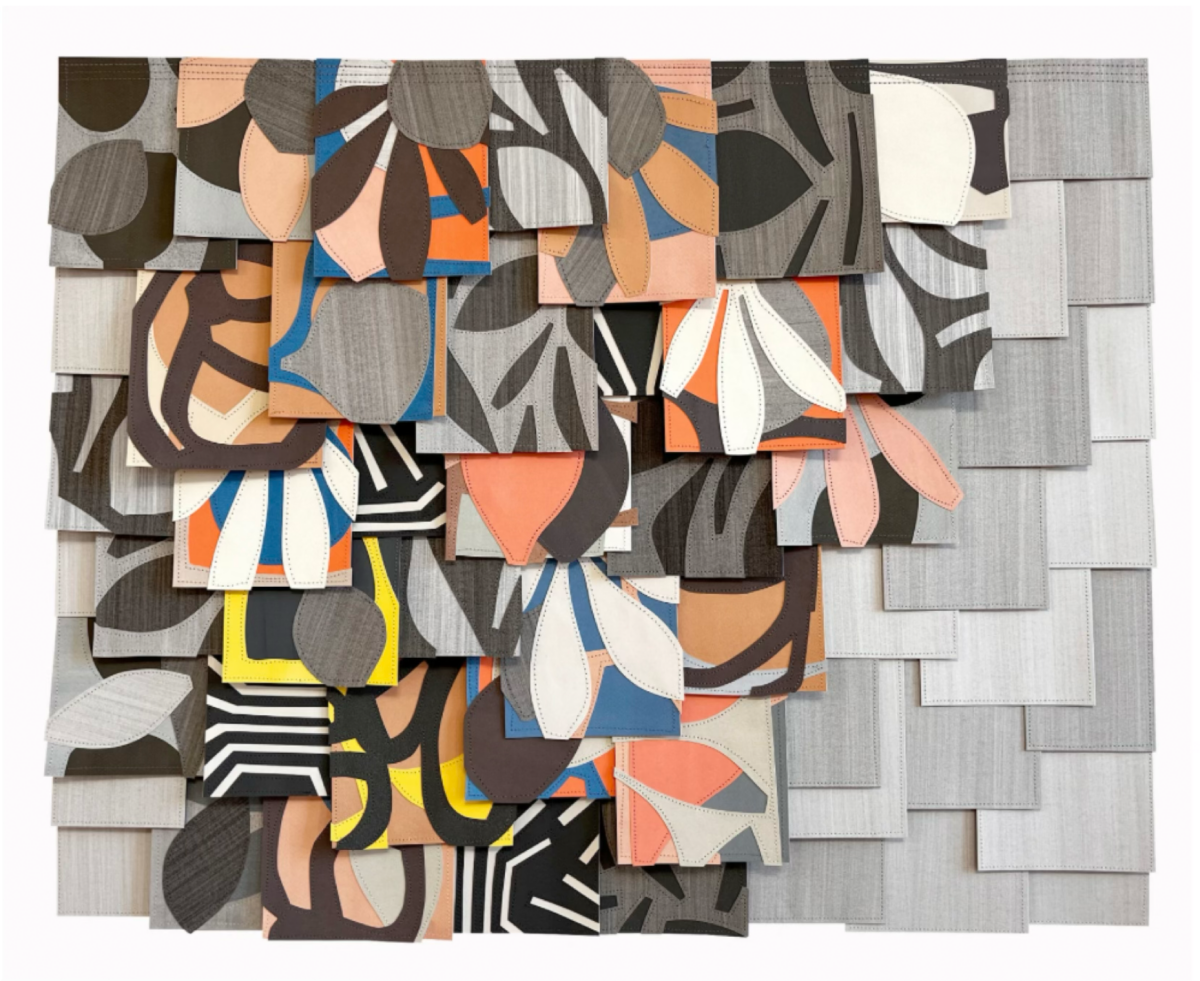
Raymond Saá is a Cuban American artist born in New Orleans and raised in Miami. He deconstructs and reassembles natural elements, creating motifs that reflect his roots and connect natural forms with architectural processes.
His collages start with hand-painted sheets of paper, carefully cut and sewn into small, detailed structures. His use of sewing, inspired by his mother’s textile work, adds a sculptural feel to the pieces while highlighting texture and physicality. This labor-intensive, intuitive process allows his works to develop organically.
Jazz, with its fluidity and structure, plays a central role in Saá’s artistic practice. Just as jazz invites innovation and interplay, Saá’s works thrive on the unexpected, drawing from formal mastery and personal intuition to create vibrant harmonies.
Selected exhibitions include White Columns, the Islip Museum; Wave Hill, the Museum of Art Puerto Rico; and El Museo del Barrio. Saá received a 2019 fellowship from the New Jersey State Council on the Arts, in addition to awards from Public Art for Public Schools, the Pollack-Krasner Foundation, the Joan Mitchell Foundation, and New Jersey Fellowship in Art.
Saá lives and works in New Jersey.
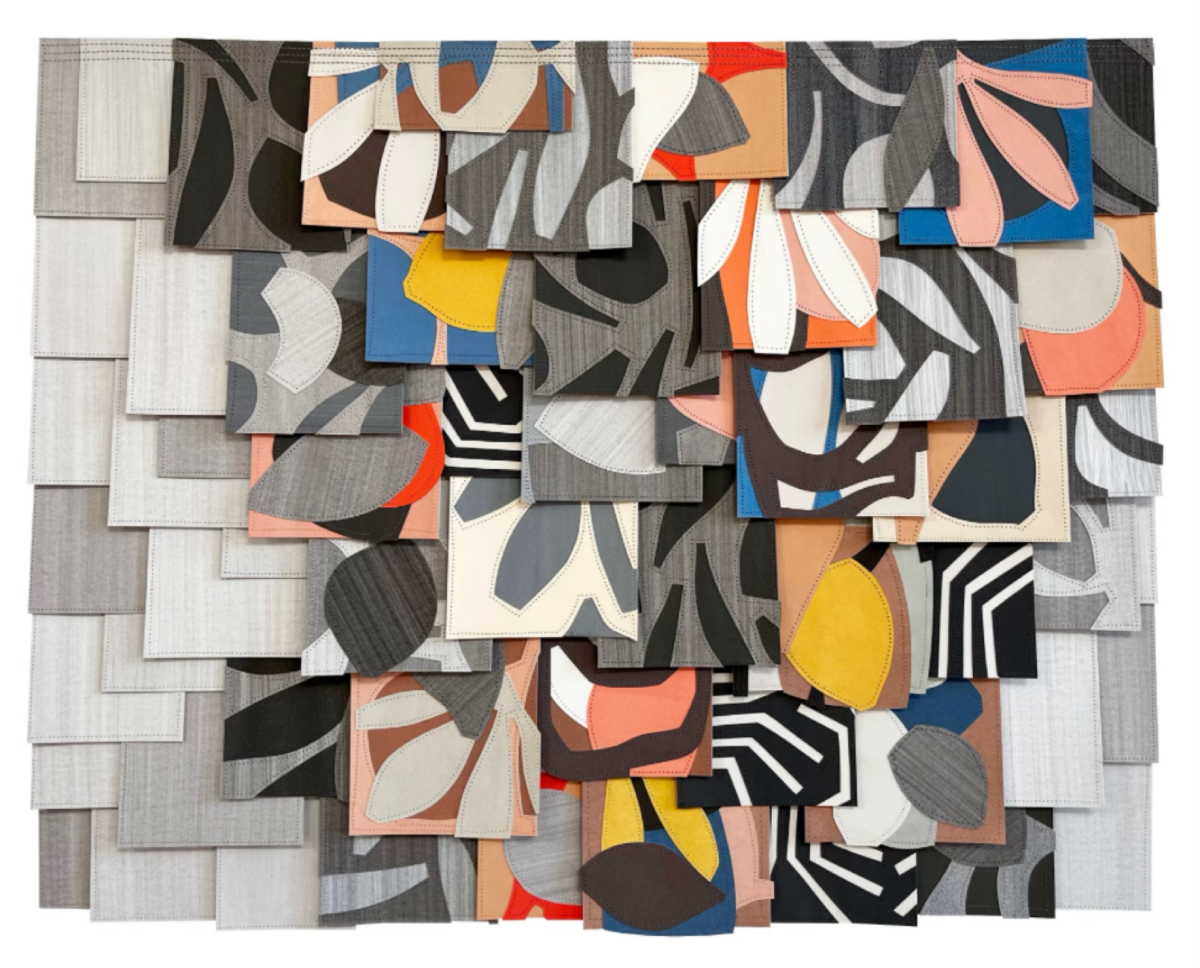
Gouache collage on sewn paper
26 x 32 inches each
Gouache collage on sewn canvas
27 x 21 inches – Green and Yellow
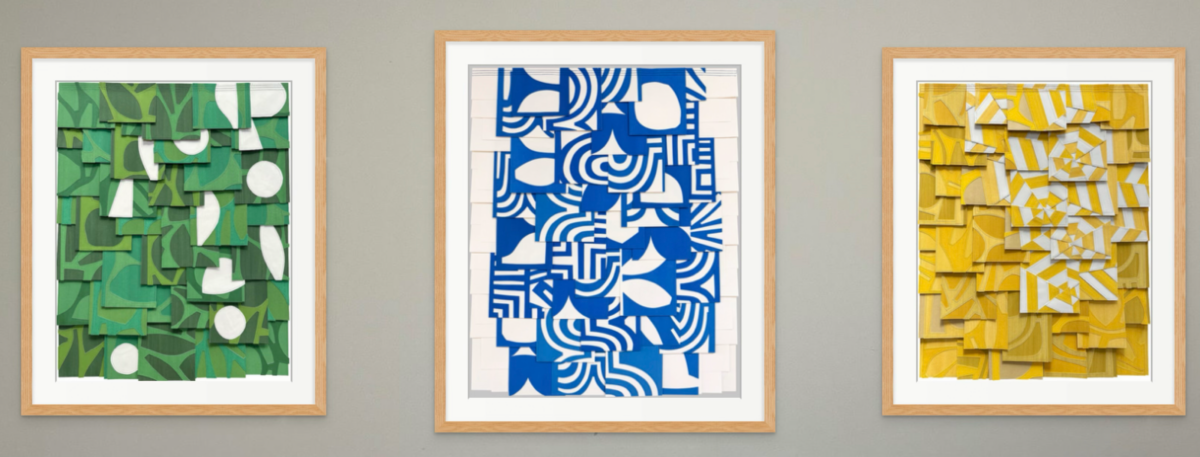
Gouache collage on sewn canvas
30 x 24 inches – Blue
Paula Scher
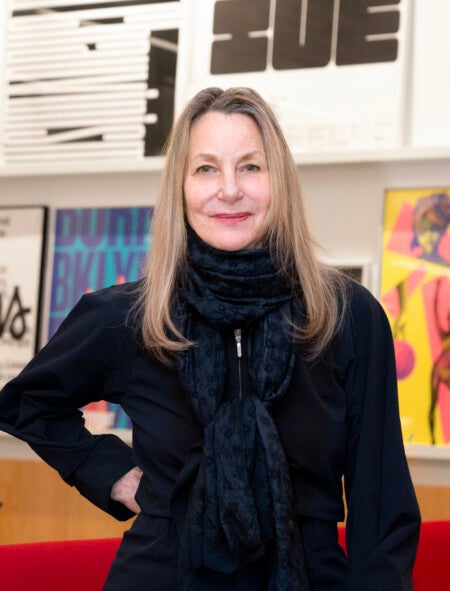
Image courtesy of Pentagram Design photo ©Claudia Mandlik
(American, b. 1948)
Level 3, Corridor
An acclaimed graphic designer, Paula Scher lives in New York, where she has been a principal in the New York office of the international design consultancy Pentagram since 1991. She has designed identity and branding systems, environmental graphics, packaging and publications for clients including Citibank, Microsoft, Bloomberg, the Museum of Modern Art, Tiffany & Co, the High Line, the Public Theater, the Metropolitan Opera, the Sundance Institute, and the Philadelphia Museum of Art.
During the 1990s, Scher began painting colorful typographic maps of the world, its continents, countries, islands, oceans, cities, streets, and neighborhoods as a reaction to information overload. Like a constant stream of news, the paintings present skewed versions of reality in a deceptively authoritative way.
Scher has received hundreds of industry honors and awards including the National Design Award for Communication Design, the AIGA medal, and the Chrysler Award for Innovation in Design.
Her designs are in the permanent collection of the Museum of Modern Art, the Cooper Hewitt National Design Museum, the Library of Congress, the Victoria and Albert Museum, and other institutions.
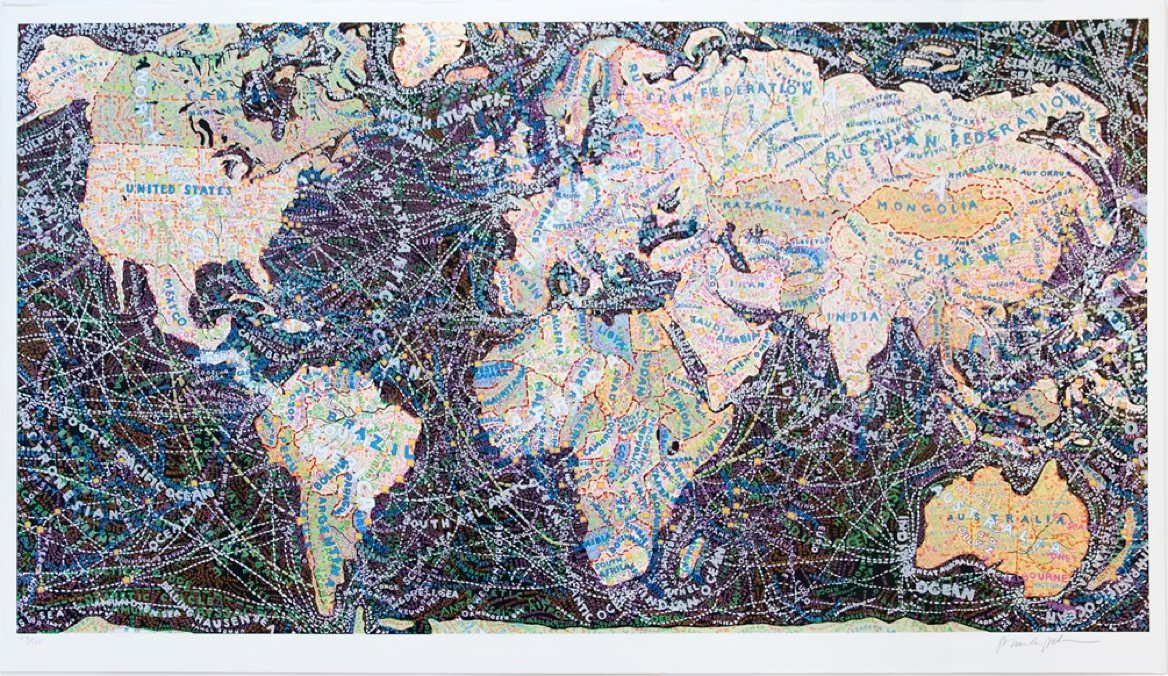
Hand-pulled screenprint
35 x 60 inches Edition of 150
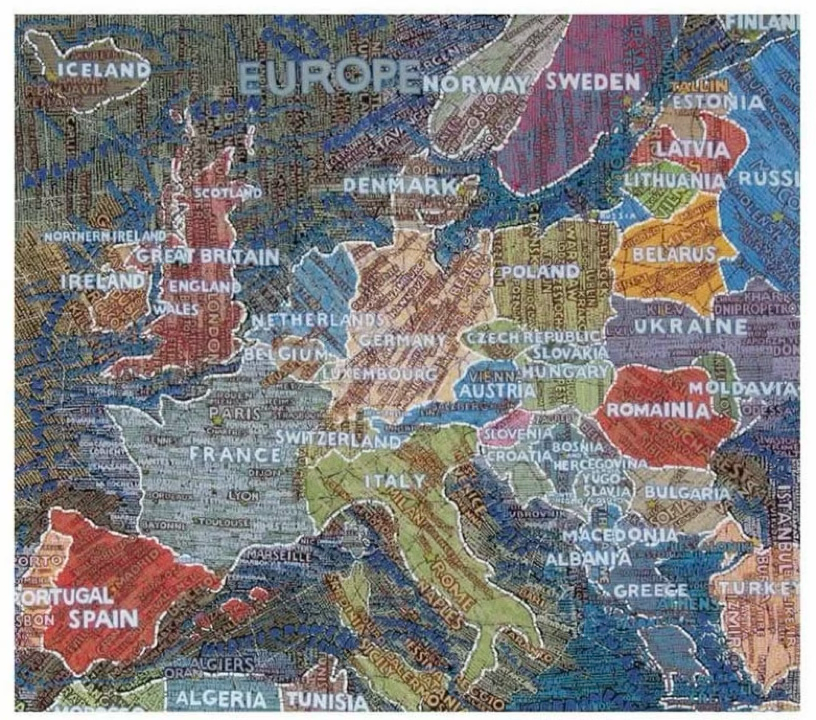
Hand-pulled screenprint
41 x 46 inches, Edition of 90
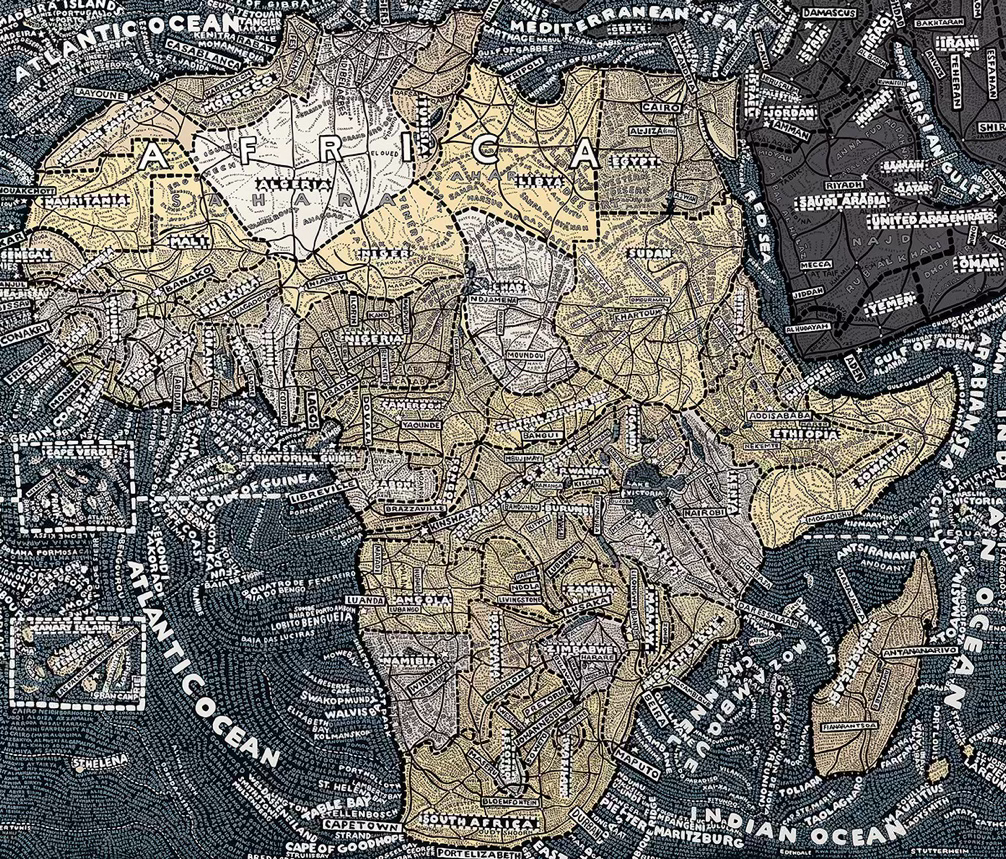
Hand-pulled screenprint
60 x 53 inches, Edition of 60
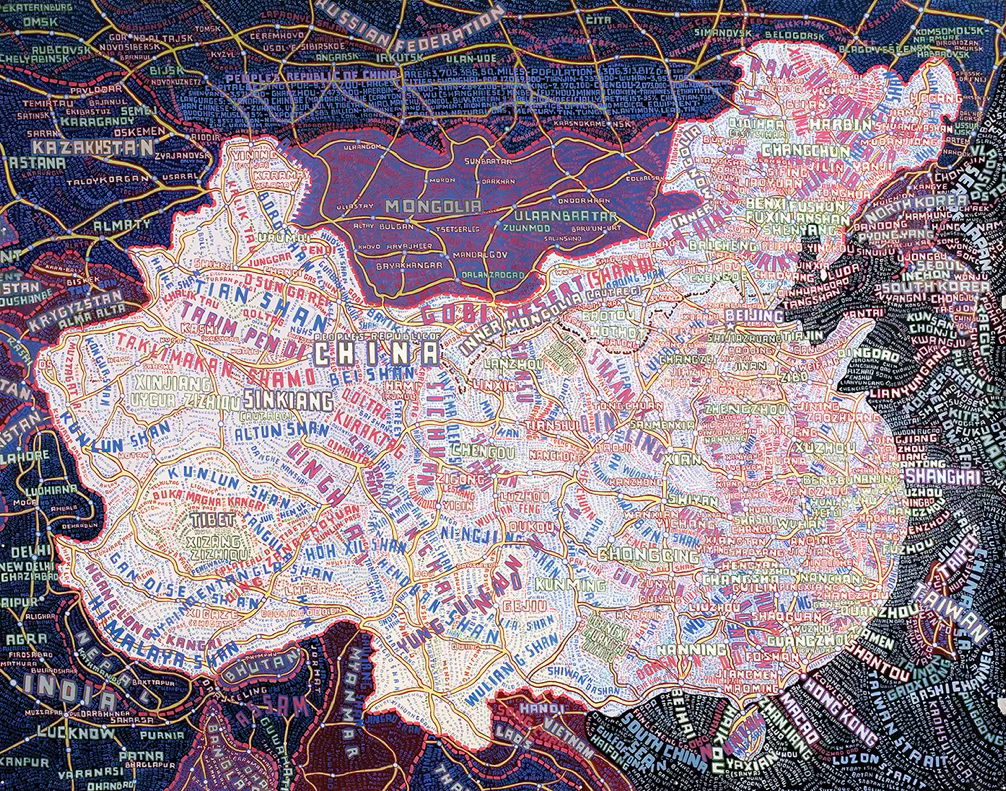
Hand-pulled screenprint
41 x 49 inches, Edition of 90
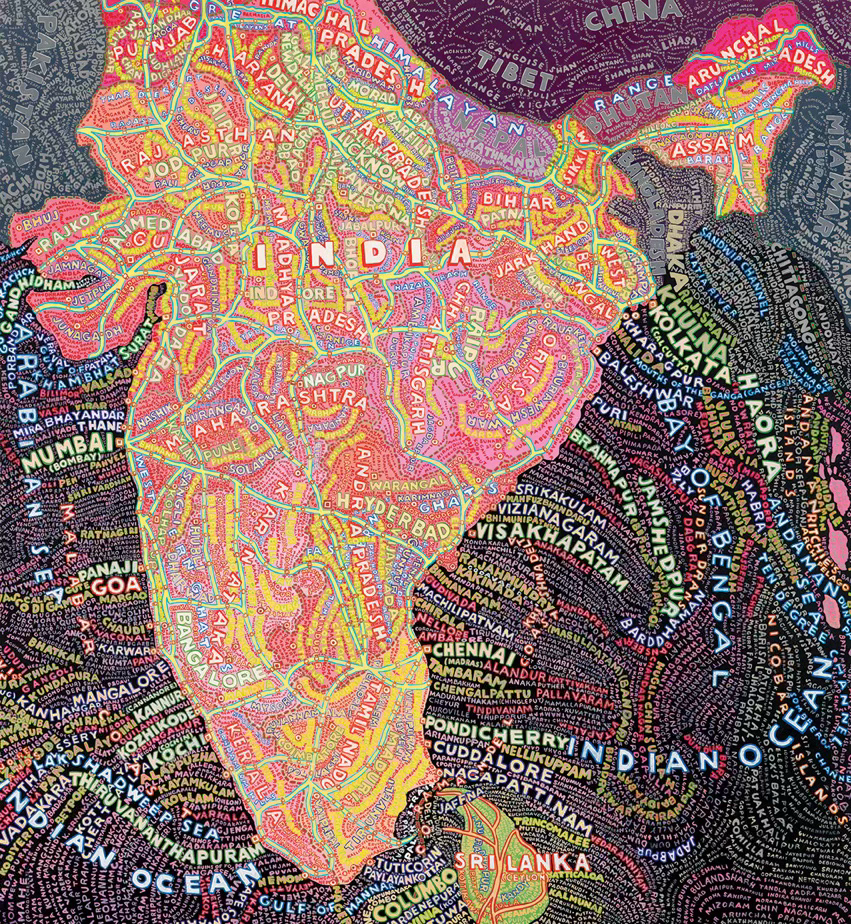
Hand-pulled screenprint
44 x 40 inches, Edition of 60
Donald Sultan
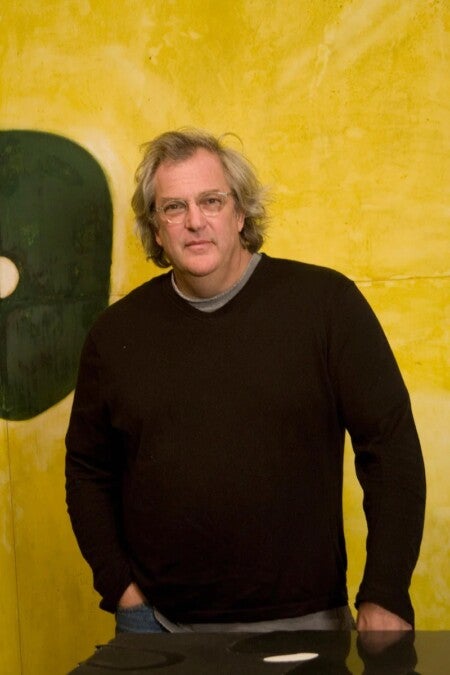
Image courtesy of the artist Photo ©Phyllis Rose
(American, b. 1951)
Level 3, Corridor
Donald Sultan, who rose to prominence as an artist in the late 1970s as part of the “New Image” movement, is known for pushing boundaries between painting and sculpture.
His early experiences building theater sets, working in his father’s tire
company, and working in construction as a young artist in New York had a profound influence on his development.
Using industrial materials such as roofing tar, aluminum, linoleum, and enamel, Sultan builds richly textured compositions often made of the same materials as the rooms in which they are displayed.
His imagery, often flowers or daily objects, is immediately recognizable but reduced to simple geometric and organic shapes.
Sultan lives and works in New York City, and his art is included in more than 20 collections including Art Institute of Chicago; Denver Art Museum; Detroit Institute of Arts; Fogg Art Museum at Harvard University; Hirshhorn Museum and Sculpture Garden, Washington, D.C.; Metropolitan Museum of Art, New York; Modern Art Museum of Fort Worth; Museum of Contemporary Art, Tokyo; Museum of Contemporary Art San Diego; Museum of Fine Arts, Boston; Museum of Fine Arts, Houston; and Museum of Modern Art, New York.
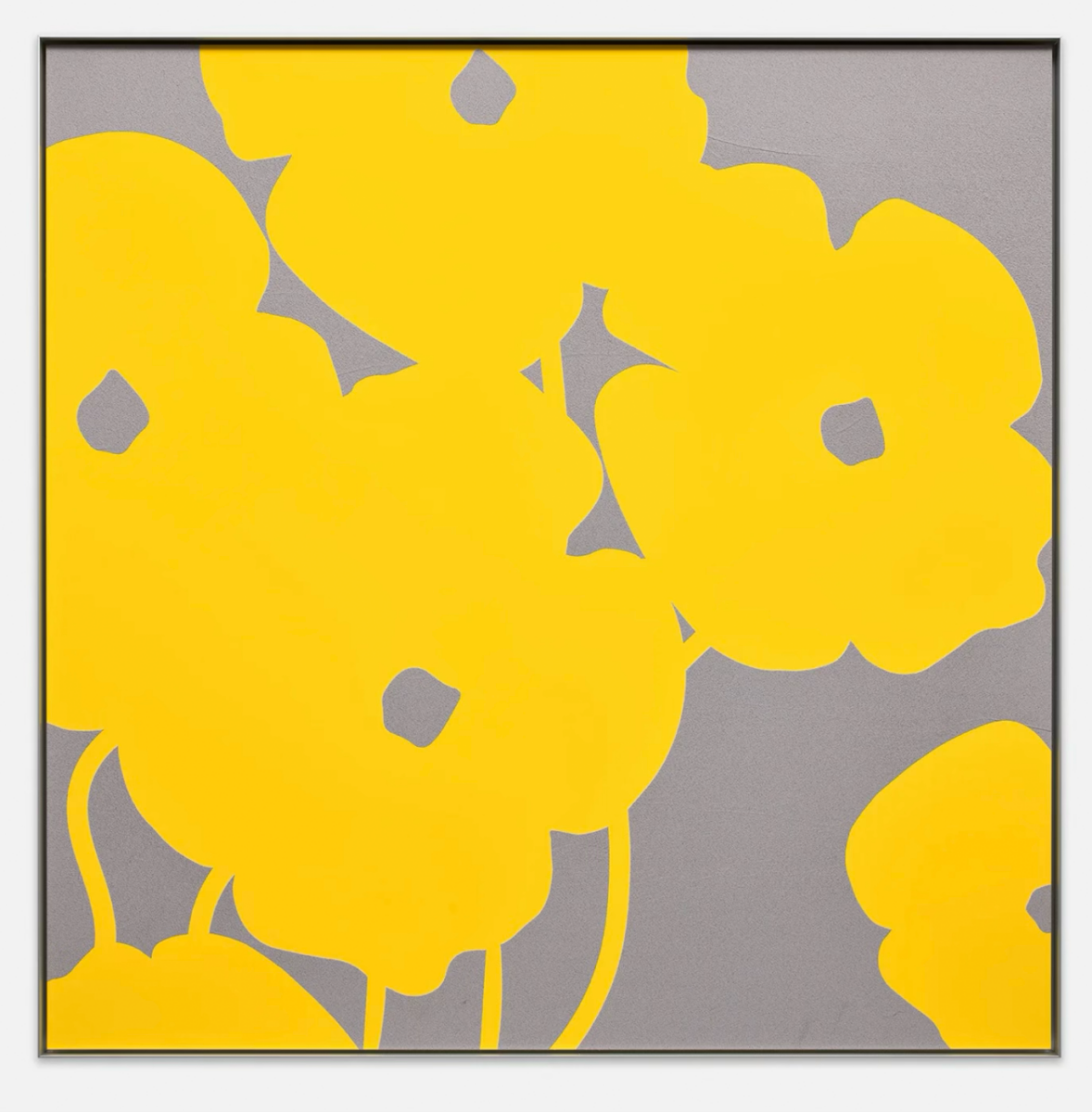
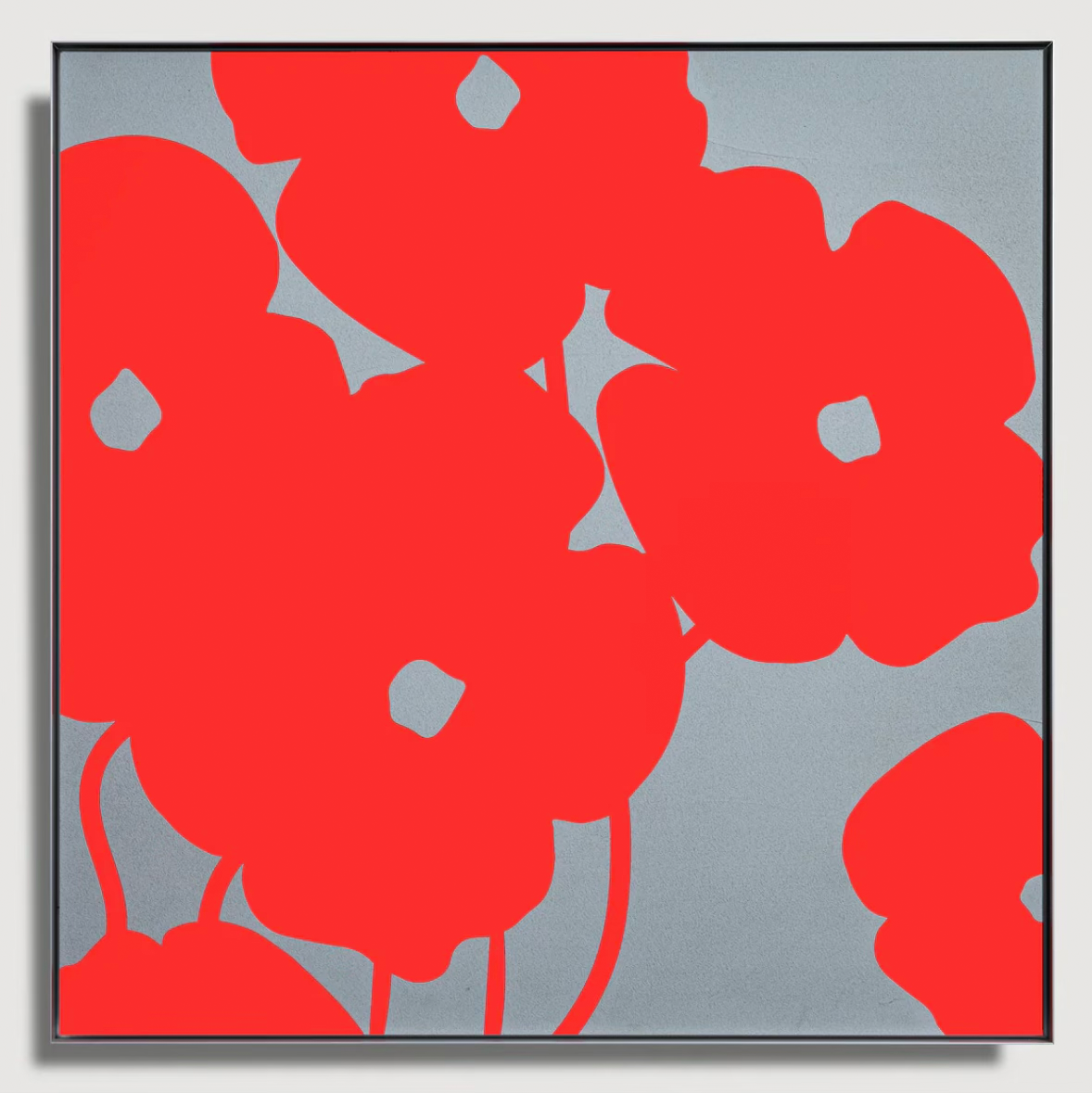
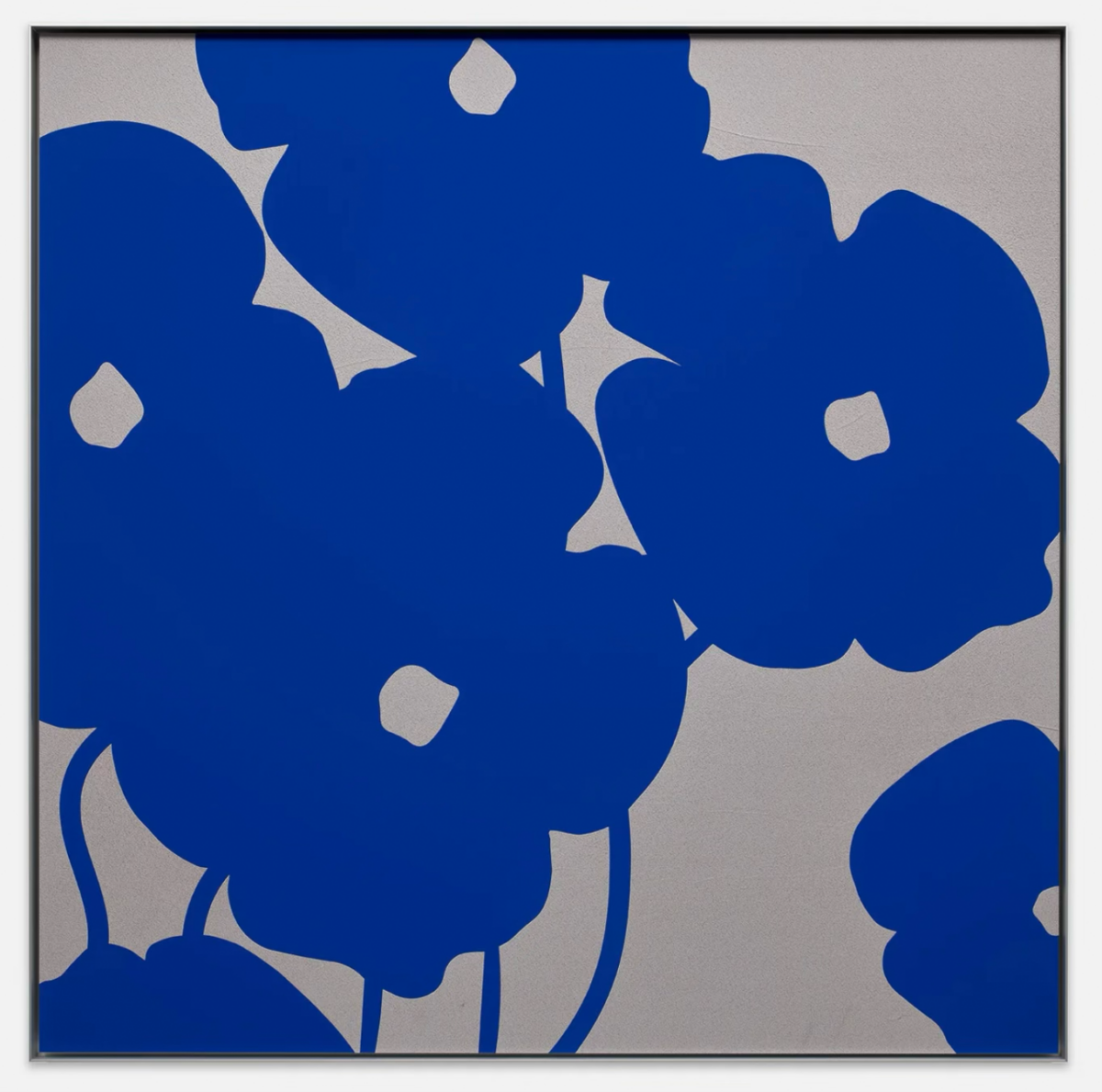
“Poppies in Cement (Yellow, Red, and Blue),” 2024
Acrylic and concrete high-rendered print on aluminum,
LITO Hi-Rnd© Technology; Edition of 20
39 3/8 x 39 3/8 inches each
Mickalene Thomas
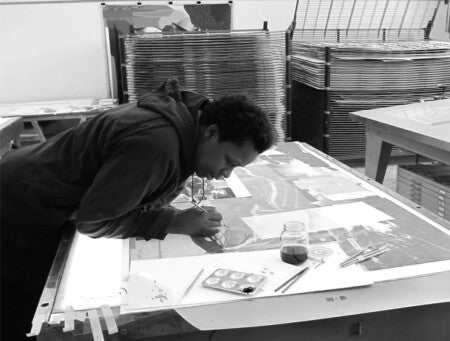
Image courtesy of Durham Press
(American, b. 1971)
Level 2, MBA Office
Called one of the most influential artists of our time, multidisciplinary artist Mickalene Thomas began her career as a lawyer, but a visit to an art exhibition inspired her to create through paintings, photography, videos, and installations.
Her work often critically examines accepted ideas of beauty, race, and gender, particularly as they pertain to Black women. Known for her large, rhinestone-covered paintings of domestic scenes and female subjects, Thomas created “Landscape Majestic” as a love letter to Mother Nature. The piece explores the intersection of traditional art forms with her distinctive visual language, combining collage, graphic design, and decorative details to offer a fresh perspective on landscape imagery.
Thomas lives in New York and has had numerous solo exhibitions, including the Broad Museum, Los Angeles; Dayton Art Institute; Henry Art Gallery, Seattle; Pomona College Museum of Art, Claremont; Georgia Museum of Art, Athens; Newcomb Art Museum, Tulane University, New Orleans; Spelman College Museum of Fine Art, Atlanta; Museum of Contemporary Art, Los Angeles; Aspen Art Museum, Colorado; Aperture Foundation, New York; George Eastman Museum, Rochester, New York; Brooklyn Museum, New York; Santa Monica Museum of Art; Institute of Contemporary Art, Boston; Hara Museum of Contemporary Art, Tokyo; and La Conservera Centro de Arte Contemporaneo, Ceutí, Spain.
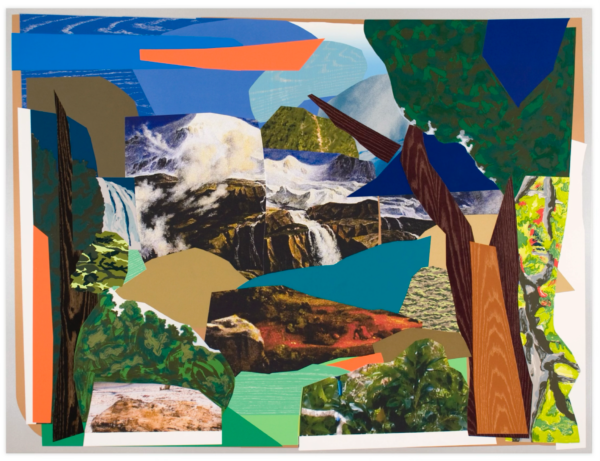
Woodblock, Silkscreen, and Digital Print Collage
Edition of 30
52 x 68 5/8 inches
Dyani White Hawk
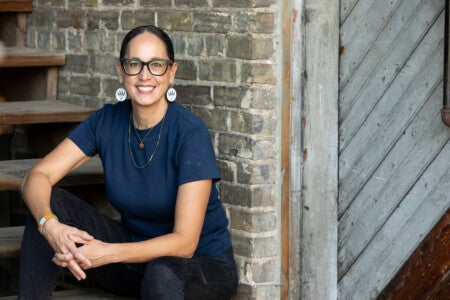
Image courtesy of the John D. and Catherine T. MacArthur Foundation used with permission
(Sičáŋǧu Lakota American, b. 1976)
Level 4, Study Room
As an artist of Lakota, German, and Welsh heritage who grew up within both Indigenous and urban American communities, Dyani White Hawk draws from personal experiences and the history of both Lakota and Euro-American abstraction to create works that ask us to think critically about how the mainstream retelling of histories has excluded vast segments of our population.
White Hawk’s painting and sculptural works reflect cross-cultural experiences including modern abstract painting and abstract Lakota art forms.
Some are executed strictly in paint on canvas while others incorporate materials such as beads, porcupine quillwork, and buckskin, weaving aesthetics and concepts from intertwined histories.
White Hawk lives and works in Minneapolis and has received numerous national and international fellowships, grants, and residencies.
Her work is in the collections of the Guggenheim Museum; Brooklyn Museum; Museum of Modern Art, New York; Whitney Museum of American Art; Walker Art Center; Crystal Bridges Museum of American Art; Pennsylvania Academy of the Fine Arts Museum; Denver Art Museum; Minneapolis Institute of Art; Smithsonian National Museum of the American Indian; Tweed Museum of Art; IAIA Museum of Contemporary Native Arts; Akta Lakota Museum; and other public and private collections.
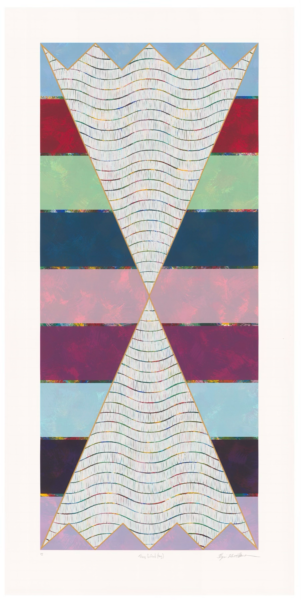
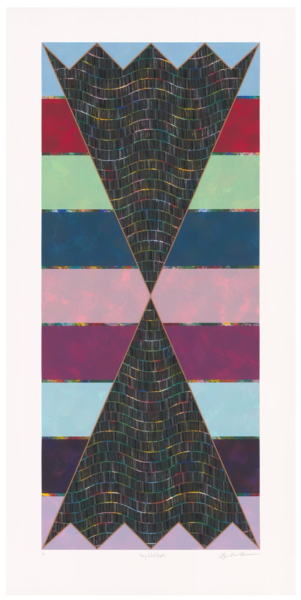
“They Gifted (Day), They Gifted (Night),” 2024
Screenprint on Lanaquarelle, Edition of 24
58 x 28 1/2 inches each
Explore the Collection
Connecting Through Art
Student and staff art ambassadors build appreciation, dialogue around new installation in Rowling Hall
Artistic Inspiration in Rowling Hall
Gift of contemporary art creates moments of discovery throughout McCombs’ graduate programs building
Discovery Guide
Learn about the artists behind the 71 works of contemporary art housed in Robert B. Rowling Hall
Floating on Air
Stunning Hashimoto art re-defines Rowling Hall gathering spaces
About this Post
Share:


![Jovon 00059[10]](https://news.mccombs.utexas.edu/wp-content/uploads/2026/10/Jovon_0005910-600x400-1.jpg?v=1791229930)